The alumina 96% Al2O3 PCB is the most widely specified ceramic circuit board substrate in production today. It delivers thermal conductivity of 24–28 W/mK at 25 °C, a dielectric constant of 9.4–9.8 at 1 MHz, and flexural strength of 350–380 MPa (per ASTM C1161). Those numbers sit far above FR-4 on thermal and electrical performance while keeping cost well below higher-purity alumina or aluminum nitride. If your design needs better heat spreading than organic laminates but does not demand the extreme conductivity of AlN, an alumina 96% Al2O3 PCB is almost always the right starting point.
Key Takeaways
- An alumina 96% Al2O3 PCB provides 24–28 W/mK thermal conductivity — roughly 100× that of standard FR-4 (0.25–0.30 W/mK).
- Dielectric strength exceeds 15 kV/mm (per IEC 60672), making it suitable for high-voltage isolation in power electronics.
- Compatible with thick-film, thin-film, DPC, DBC, HTCC, and LTCC metallization processes.
- Substrate cost per cm² is typically 3–8× that of FR-4 but 40–60% less than 99.6% alumina or AlN.
- The material is brittle (fracture toughness ~3.5–4.0 MPa·√m); mechanical design must account for this.
Material Properties of the Alumina 96% Al2O3 PCB Substrate
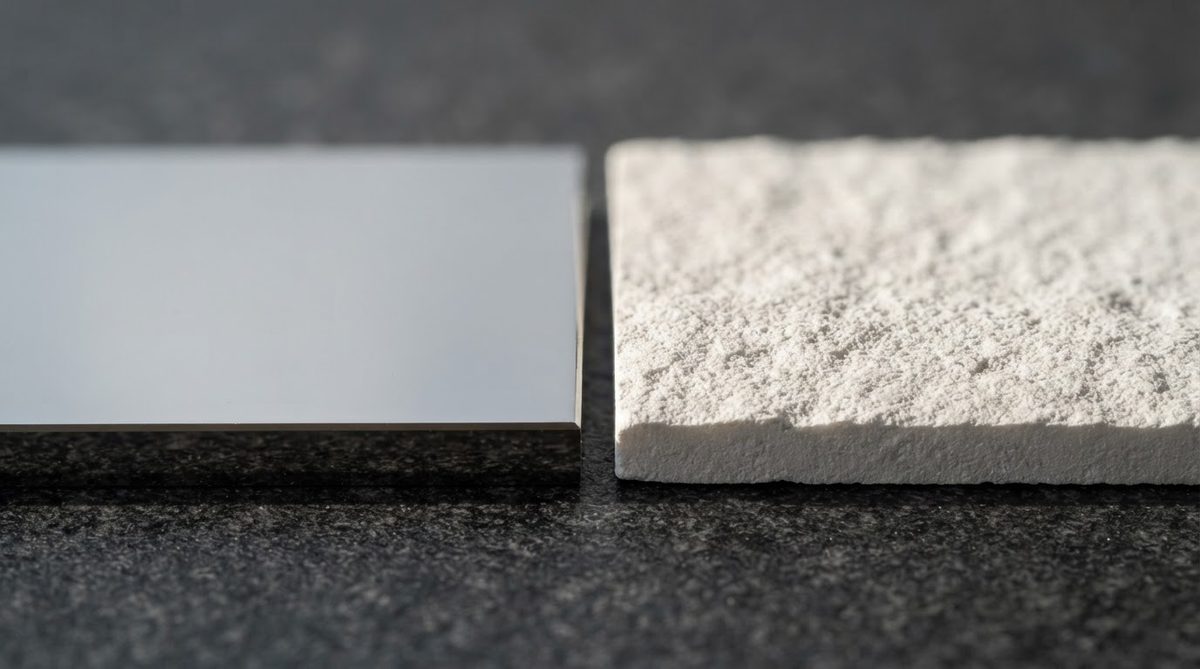
The table below compiles typical values from commercially available 96% Al2O3 substrates. Grades from CoorsTek (ADS-96R), Kyocera (A-473), and CeramTec (Rubalit 708S) all fall within these ranges, though exact numbers vary by manufacturer and sintering profile. For a complete specification sheet, see the alumina 96% Al2O3 material properties page.
| Parameter | Value | Unit | Condition | Source / Standard |
|---|---|---|---|---|
| Al2O3 purity | 96 ± 0.5 | % | — | Manufacturer spec |
| Thermal conductivity | 24–28 | W/mK | 25 °C | ASTM E1461 |
| Dielectric constant (εr) | 9.4–9.8 | — | 1 MHz, 25 °C | IEC 60250 |
| Dielectric loss (tan δ) | 0.0001–0.0004 | — | 1 MHz, 25 °C | IEC 60250 |
| Dielectric strength | 15–20 | kV/mm | AC, 60 Hz | IEC 60672 |
| Flexural strength | 350–380 | MPa | 4-pt bend | ASTM C1161 |
| CTE | 7.0–7.4 | ppm/°C | 25–400 °C | ASTM E228 |
| Volume resistivity | >10¹⁴ | Ω·cm | 25 °C | IEC 60672 |
| Max continuous service temp. | 1 600 | °C | Inert atmosphere | CoorsTek ADS-96R datasheet |
| Density | 3.72–3.78 | g/cm³ | — | ASTM C373 |
| Surface roughness (as-fired) | 0.5–1.0 | µm Ra | — | Manufacturer spec |
Typical values for commercially available material, for comparison only. Confirm against the datasheet for your specific grade.
The CTE of 7.0–7.4 ppm/°C is a close match to silicon (2.6 ppm/°C) and GaN-on-SiC (4.5 ppm/°C) compared with FR-4 at 14–17 ppm/°C. This reduces solder-joint fatigue during thermal cycling, which is why ceramic substrates dominate in power modules and high-reliability LED assemblies. For deeper detail on the dielectric behavior of 96% alumina at RF frequencies, we maintain a separate reference page.
How the Alumina 96% Al2O3 PCB Compares to Other Ceramic Grades
Engineers often ask whether 96% purity is enough, or whether they should step up to 99.6% alumina, AlN, or Si3N4. The short answer: 96% alumina covers roughly 70–80% of ceramic PCB applications by volume. You move to a different grade only when a specific parameter forces it.
| Parameter | 96% Al2O3 | 99.6% Al2O3 | AlN | Si3N4 |
|---|---|---|---|---|
| Thermal cond. (W/mK, 25 °C) | 24–28 | 28–35 | 170–200 | 70–90 |
| Dielectric constant (1 MHz) | 9.4–9.8 | 9.7–10.0 | 8.6–8.9 | 8.0–9.0 |
| CTE (ppm/°C) | 7.0–7.4 | 7.0–7.2 | 4.5–4.8 | 2.5–3.5 |
| Flexural strength (MPa) | 350–380 | 380–450 | 300–350 | 700–900 |
| Fracture toughness (MPa·√m) | 3.5–4.0 | 3.8–4.2 | 2.5–3.0 | 6.0–7.0 |
| Relative substrate cost | 1× | 1.5–2× | 3–5× | 4–6× |
Typical values for commercially available material, for comparison only. Confirm against the datasheet for your specific grade.
If you need thermal conductivity above 30 W/mK, look at 99.6% alumina substrates or AlN. If mechanical shock and vibration resistance are primary concerns — automotive inverters, for example — silicon nitride (Si3N4) substrates offer roughly double the fracture toughness.
Compare the full property sets of common PCB substrate materials side by side using the tool below. Enter your thermal and dielectric requirements to see which laminate or ceramic grade fits your alumina 96% Al2O3 PCB evaluation.
[pcb_calc type=”material-compare”]
Manufacturing Processes Used with 96% Alumina
96% alumina is compatible with every major ceramic metallization method. The process you choose depends on line/space resolution, copper thickness, and production volume.
- Thick film (screen print + fire): Most common for hybrid circuits. Typical line/space 100–150 µm. Uses Ag, AgPd, or Au conductors fired at 850 °C. Low tooling cost, fast turnaround.
- Thin film (sputter + etch): Achieves line/space down to 10–25 µm. Suitable for RF matching networks, MEMS packages, and precision resistor networks.
- DPC (direct plated copper): Sputtered seed layer followed by electrolytic copper plating. Reaches 50–75 µm line/space with copper thickness up to 100 µm. Good balance of resolution and current capacity.
- DBC (direct bonded copper): Eutectic bonding of copper foil (typically 0.127–0.635 mm) at ~1 065 °C. Standard for power modules. Limited to coarser features (~200 µm minimum).
- HTCC (high-temperature co-fired ceramic): Multilayer alumina tape fired at 1 500–1 600 °C with tungsten or molybdenum conductors. Used for hermetic packages and multilayer interconnects.
- LTCC (low-temperature co-fired ceramic): Fires at 850–900 °C with Ag or Au conductors. Enables embedded passives and multilayer RF structures. Note: LTCC uses its own glass-ceramic tape system, not 96% alumina substrates directly, but the base composition is alumina-filled.
For custom alumina 96% PCB fabrication, the choice between these processes is the single largest driver of cost and lead time. Thick-film prototypes can ship in days; DBC power substrates typically require two to four weeks.
Surface Finish Options
The metallized alumina 96% Al2O3 PCB still needs a solderable or bondable surface finish. Standard options include ENIG (electroless nickel / immersion gold), ENEPIG, OSP, and bare gold for wire bonding. The right finish depends on your assembly method and shelf-life requirements.
Use the selector below to compare surface finishes by solderability, shelf life, wire-bondability, and cost for your alumina 96% Al2O3 PCB project.
[pcb_calc type=”surface-finish”]
For applications requiring very smooth metallization, a polished or lapped alumina substrate (Ra < 0.1 µm) reduces thin-film defect density and improves adhesion uniformity.
Typical Applications for 96% Al2O3 PCBs
96% alumina appears wherever an organic board cannot meet thermal, electrical, or environmental demands, but cost must remain controlled.
- Power electronics: IGBT and MOSFET modules, SiC half-bridge circuits. DBC on 96% alumina handles 50–150 A continuously in a compact footprint.
- LED thermal substrates: High-brightness LED arrays where junction temperature directly affects lumen output and lifetime. The 24–28 W/mK conductivity of 96% alumina keeps junction-to-board thermal resistance low enough for most mid-power LEDs (1–5 W per die).
- Sensors and MEMS: Pressure sensors, accelerometers, and gas sensors where CTE matching to silicon and chemical inertness are critical.
- Automotive under-hood: Engine control units, exhaust gas sensors (lambda probes), and transmission controllers exposed to ambient temperatures above 150 °C.
- RF hybrids: Low-loss substrates for microwave circuits up to a few GHz. Above 10 GHz, the εr of 9.5 can make line widths inconveniently narrow; LTCC or quartz may be preferable.
- Medical implants and instruments: Biocompatible, hermetically sealable, sterilization-resistant.
Worked Example: Thermal Resistance of an Alumina 96% Al2O3 PCB
Suppose you mount a 3 W LED on a 96% alumina substrate that is 0.635 mm thick, with a copper pad area of 5 mm × 5 mm (25 mm²). The conduction thermal resistance through the ceramic directly beneath the pad is:
Rth = t / (k × A)
Rth = 0.000635 m / (26 W/mK × 0.000025 m²) = 0.98 °C/W
At 3 W dissipation, the temperature rise across the substrate is roughly 2.9 °C. By contrast, the same geometry in FR-4 (k ≈ 0.27 W/mK) yields Rth ≈ 94 °C/W and a 282 °C rise — clearly unworkable. This is the core reason ceramic substrates exist for power and LED applications.
Sourcing an Alumina 96% Al2O3 PCB: What to Specify
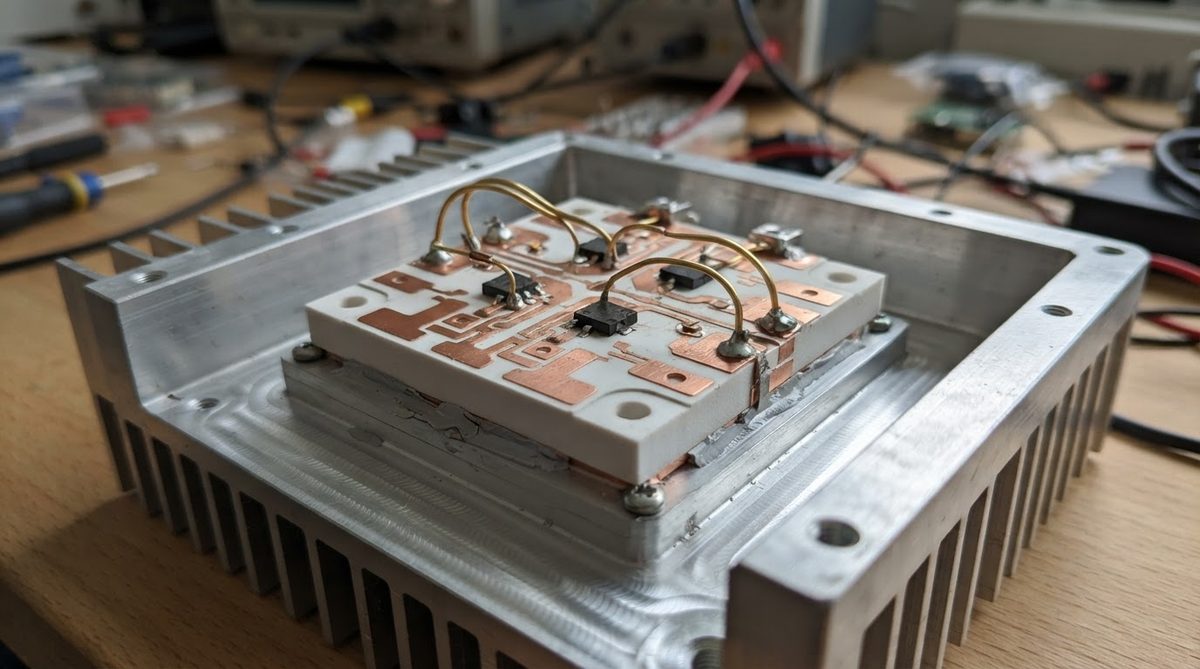
When requesting a quote, include these parameters at minimum:
- Substrate purity: 96% Al2O3 (not just “alumina”).
- Dimensions and thickness: Standard thicknesses are 0.25, 0.38, 0.50, 0.635, and 1.0 mm. Non-standard thicknesses are possible but add cost.
- Metallization process: Thick film, thin film, DPC, or DBC.
- Conductor material and thickness: Cu, Ag, AgPd, Au, W, Mo — each changes cost and performance.
- Surface finish: ENIG, ENEPIG, bare Au, OSP, etc.
- Surface roughness requirement: As-fired (~0.5–1.0 µm Ra) vs. polished alumina (< 0.1 µm Ra).
- Quantity and delivery schedule: Prototype quantities (5–50 pcs) vs. production volumes (1 000+) affect unit price significantly.
Missing any of these forces the supplier to assume, which delays quoting and risks mismatched expectations.
When NOT to Use 96% Alumina
96% alumina is not the right choice in every situation. Choose something else when:
- Thermal conductivity above 30 W/mK is required. Step up to 99.6% alumina (28–35 W/mK) or AlN (170–200 W/mK).
- High mechanical shock or vibration loads dominate the failure mode. Si3N4 offers nearly double the fracture toughness (6–7 MPa·√m vs. 3.5–4.0).
- Cost is the primary constraint and thermal loads are moderate. A metal-core PCB (MCPCB) at 1–3 W/mK or a high-Tg FR-4 may suffice at a fraction of the price.
- Large board sizes (>150 mm per side) with complex routing. Ceramic substrates are limited in panel size and layer count compared to organic boards. A hybrid approach — ceramic sub-mount on an FR-4 or metal carrier — often works better.
- Frequencies above 20 GHz where lower εr is needed. Quartz (εr ≈ 3.8) or specialized LTCC tapes may give better impedance control and lower loss.
Frequently Asked Questions
Can you solder directly to a 96% alumina PCB?
Yes, provided the substrate has been metallized and finished with a solderable surface (ENIG, ENEPIG, or tin plating). Bare alumina is not solderable. Standard reflow profiles (peak 245–260 °C for SAC305) work without risk to the ceramic, which tolerates temperatures far above any solder liquidus.
Is 96% alumina the same as “white ceramic PCB”?
In most cases, yes. The off-white or ivory appearance of a ceramic PCB almost always indicates 96% alumina. Higher-purity alumina (99.6%) appears similar but slightly whiter. AlN is typically grey or tan. If a supplier quotes “white ceramic” without specifying purity, ask for the exact grade.
How does an alumina 96% Al2O3 PCB handle thermal cycling?
96% alumina substrates routinely pass 1 000+ cycles of −40 °C to +150 °C (per IEC 60068-2-14) without cracking. The weak point in thermal cycling is usually the solder joint or the copper-ceramic bond (in DBC), not the alumina itself. CTE mismatch between the substrate and large copper areas must be managed through design — segmented copper planes, stress-relief slots, or active metal brazing (AMB) bonds.
What is the shelf life of a metallized 96% alumina PCB?
Alumina is chemically inert, so the substrate itself does not degrade. Shelf life is determined by the surface finish: ENIG-finished boards maintain solderability for 12+ months in sealed, dry packaging. OSP finishes have a shorter window of roughly 6 months. Store boards in vacuum-sealed bags with desiccant, away from sulfur-containing materials.
Does 96% alumina work for multilayer circuits?
Single-layer and two-layer (double-sided) designs are standard. True multilayer ceramic circuits (3+ conductor layers) are typically built with HTCC or LTCC tape technology rather than pre-fired 96% alumina substrates. If you need more than two layers, specify HTCC with tungsten/moly conductors or LTCC with silver/gold.
What tolerances can I expect on an alumina 96% Al2O3 PCB?
As-fired substrates typically hold ±1% on linear dimensions (e.g., ±0.5 mm on a 50 mm part). Laser-machined alumina substrates achieve ±0.025–0.050 mm. Thickness tolerance is usually ±5–10% of nominal for as-fired, tightened to ±0.025 mm with grinding or lapping.
Next Step
If 96% alumina fits your thermal and electrical requirements, the next step is specifying your substrate and metallization. Review the 96% alumina substrate datasheet for downloadable specifications, or request a quote with your Gerber files and the parameters listed in the sourcing section above.