Aluminum vs Silicon Substrate: Which Ceramic Should You Use?
In the aluminum vs silicon substrate debate, aluminum nitride (AlN) conducts heat 2–3× better than silicon nitride (Si3N4), with typical values of 170–200 W/mK versus 70–90 W/mK. Silicon nitride is roughly 3× stronger mechanically, with flexural strength of 600–800 MPa compared to AlN’s 300–350 MPa. The right choice depends on whether your design is limited by thermal resistance or by mechanical stress and reliability under thermal cycling.
Key Takeaways
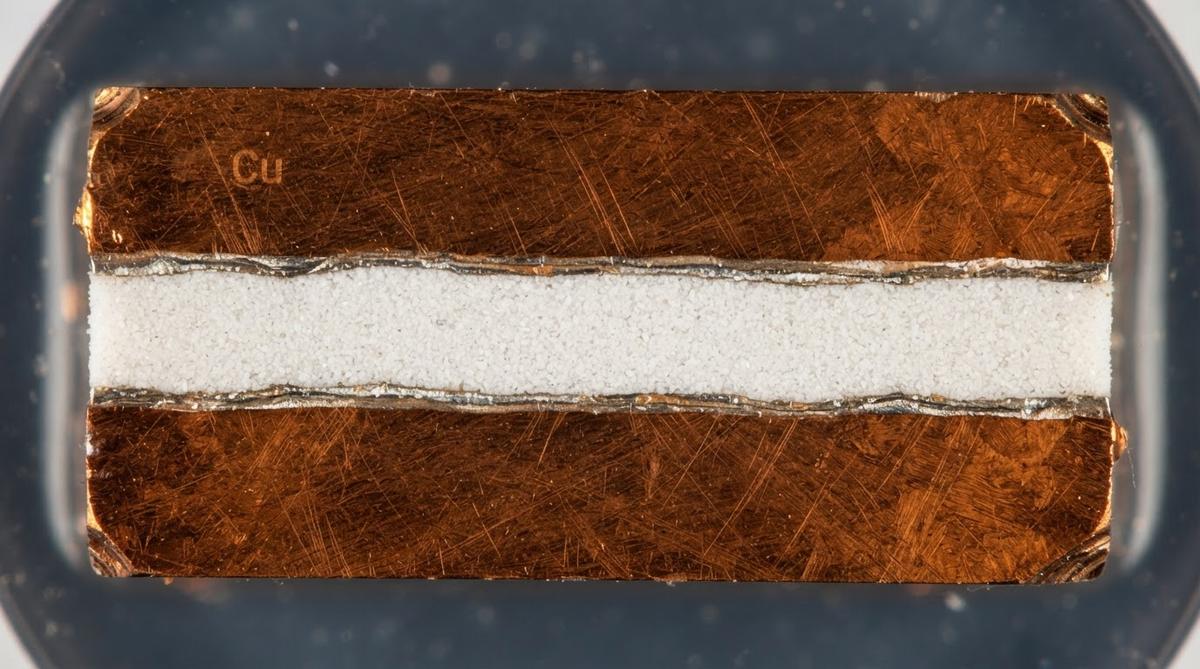
- AlN thermal conductivity: 170–200 W/mK at 25 °C; Si3N4: 70–90 W/mK at 25 °C (per Kyocera SN series and Maruwa AlN datasheets).
- Si3N4 fracture toughness (6–7 MPa·√m) is roughly 3× that of AlN (2.5–3.0 MPa·√m), making it far more resistant to cracking under thermal cycling.
- AlN CTE (4.5–4.7 ppm/°C) closely matches silicon die (2.6–4.1 ppm/°C), reducing solder-joint stress in direct die-attach designs.
- Si3N4 substrates typically cost 2–4× more than AlN substrates of the same dimensions.
- For applications above 1,200 thermal cycles (–40 °C to +150 °C), Si3N4 with AMB copper is the industry standard for long-life power modules.
Aluminum vs Silicon Substrate Property Comparison Table
| Parameter | AlN | Si3N4 | Unit | Condition | Source |
|---|---|---|---|---|---|
| Thermal conductivity | 170–200 | 70–90 | W/mK | 25 °C | Maruwa AlN datasheet; Kyocera SN series datasheet |
| Flexural strength | 300–350 | 600–800 | MPa | 3-point bend, ASTM C1161 | CoorsTek; Kyocera |
| Fracture toughness (KIC) | 2.5–3.0 | 6.0–7.0 | MPa·√m | SEVNB, 25 °C | CeramTec datasheets |
| CTE | 4.5–4.7 | 2.7–3.4 | ppm/°C | 25–400 °C | Maruwa; Kyocera |
| Dielectric constant (εr) | 8.5–9.0 | 8.0–9.0 | — | 1 MHz, 25 °C | Maruwa; Kyocera |
| Dielectric strength | 15–17 | 12–15 | kV/mm | 25 °C | Maruwa; CeramTec |
| Density | 3.26 | 3.20–3.25 | g/cm³ | — | Maruwa; Kyocera |
| Max continuous use temp | ~1,000 | ~1,000 | °C | In inert atmosphere | CoorsTek |
| Relative substrate cost | 1× | 2–4× | — | Same size, 0.32 mm thick | Industry pricing, 2024 |
Typical values for commercially available material, for comparison only. Confirm against the datasheet for your specific grade.
For full material specifications, download the AlN substrate datasheet and the Si3N4 substrate datasheet.
Thermal Performance: Where the Aluminum Substrate Wins
AlN’s thermal conductivity of 170–200 W/mK makes the aluminum nitride substrate the better conductor by a wide margin. For designs where junction-to-case thermal resistance is the binding constraint, AlN lets you use a thinner substrate or a smaller footprint to hit the same thermal target.
Worked example — thermal resistance through the substrate: For a 10 mm × 10 mm die on a 0.635 mm thick substrate, the conduction resistance Rth = t / (k × A).
- AlN (k = 180 W/mK): Rth = 0.000635 / (180 × 0.0001) = 0.035 °C/W
- Si3N4 (k = 80 W/mK): Rth = 0.000635 / (80 × 0.0001) = 0.079 °C/W
That 0.044 °C/W difference matters. On a 300 W IGBT module, it adds 13 °C to the junction temperature. In traction inverters running at high ambient, those 13 °C can push you past derating limits or force a larger heatsink.
Enter your own substrate dimensions, material, and power dissipation below to estimate junction temperature rise for either side of the aluminum vs silicon substrate comparison.
AlN’s CTE of 4.5–4.7 ppm/°C also sits closer to silicon (2.6–4.1 ppm/°C) and SiC (4.0 ppm/°C) than Si3N4’s 2.7–3.4 ppm/°C. For bare die soldered directly to the substrate, this reduces shear stress in the solder layer during thermal excursions.
Mechanical Reliability: Where the Silicon Substrate Wins
Silicon nitride’s fracture toughness of 6–7 MPa·√m is roughly 3× that of AlN. This is not a minor advantage. It is the reason Si3N4 dominates in automotive traction inverters and railway power modules that must survive tens of thousands of thermal cycles between –40 °C and +175 °C.
In an active metal brazing (AMB) process, thick copper (0.3–0.8 mm) is bonded to the substrate. During thermal cycling, CTE mismatch between copper (17 ppm/°C) and the ceramic creates tensile stress at the copper-ceramic interface. AlN substrates crack at the edges of the copper pattern after 500–1,500 cycles in standard –40/+150 °C tests. Si3N4 substrates routinely survive 3,000–5,000+ cycles under the same conditions, per published data from Infineon and Hitachi Energy application notes.
This mechanical toughness also allows Si3N4 substrates to be thinned to 0.25–0.32 mm without becoming fragile. Thinner substrates partially offset Si3N4’s lower thermal conductivity by reducing the conduction path length. A 0.32 mm Si3N4 substrate gives Rth = 0.00032 / (80 × 0.0001) = 0.040 °C/W — much closer to the AlN figure above.
Compatible Metallization Processes
Both materials in the aluminum vs silicon substrate comparison are used with DBC (direct bond copper) and AMB (active metal brazing). However, the industry has largely moved to AMB for Si3N4 because DBC requires oxidation of the substrate surface, and Si3N4 does not oxidize as readily as Al2O3 or AlN. AMB uses a titanium-containing braze alloy that bonds chemically to Si3N4 without a pre-oxidation step.
AlN works well with both DBC and AMB, and is also compatible with DPC (direct plated copper) for thin-copper applications such as RF and LED substrates. Si3N4 with DPC is uncommon because the cost premium of Si3N4 is rarely justified when thin copper is sufficient.
| Process | AlN | Si3N4 | Typical Cu thickness |
|---|---|---|---|
| DBC | Yes | Possible but uncommon | 0.15–0.30 mm |
| AMB | Yes | Yes (preferred) | 0.30–0.80 mm |
| DPC | Yes | Rare | 1–100 µm |
Typical values for commercially available material, for comparison only. Confirm against the datasheet for your specific grade.
Cost and Sourcing Considerations
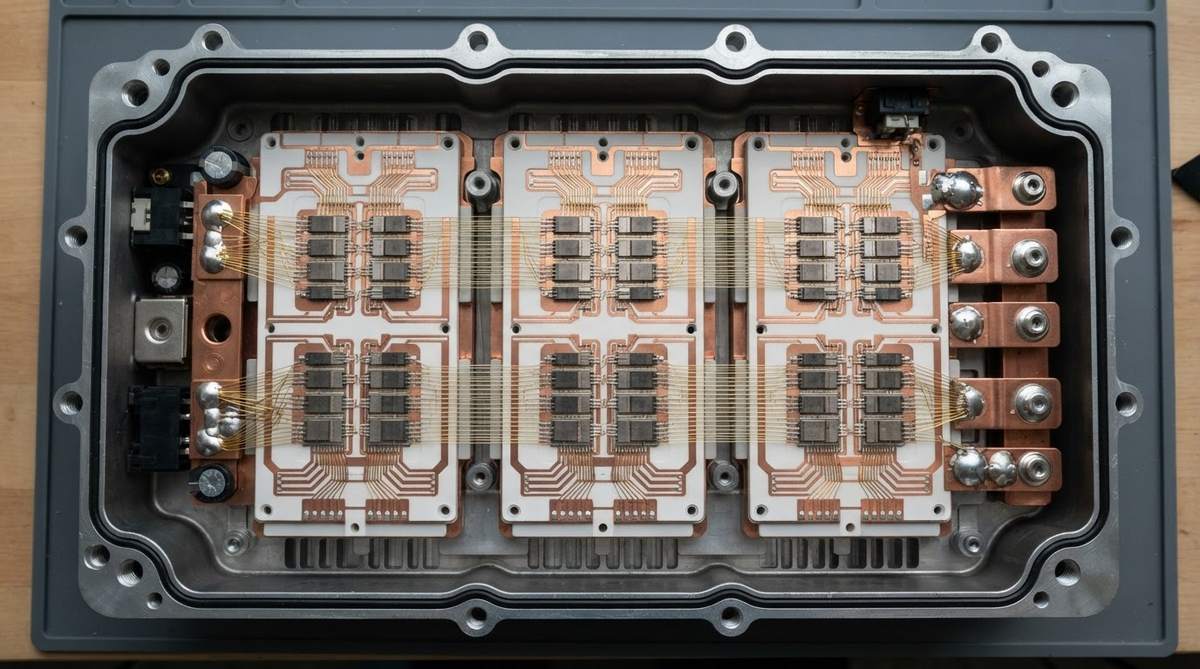
AlN substrates cost roughly $2–$8 per cm² depending on size, thickness, and order volume. Si3N4 substrates cost $5–$20+ per cm² for the same dimensions. The gap narrows at thinner gauges (0.25–0.32 mm) because Si3N4’s superior strength makes thin substrates viable where AlN would require 0.635 mm to avoid handling breakage.
AlN is produced by more suppliers globally, including Maruwa, Kyocera, CoorsTek, and several Chinese manufacturers. High-grade Si3N4 (≥ 70 W/mK) is produced primarily by Kyocera (SN series), Toshiba Materials, and a smaller number of specialty suppliers. Lead times for Si3N4 blanks tend to be longer, and dual-sourcing is harder.
If your application does not require extreme thermal cycling endurance, AlN delivers better thermal performance at lower cost. You can purchase AlN substrates with shorter lead times and from a wider supplier base.
When NOT to Use Each Material
Skip the aluminum nitride substrate when:
- Your module must survive > 1,500 power cycles at ΔT > 100 °C. AlN substrates will crack at the copper-ceramic interface before Si3N4 does.
- You need thick copper (> 0.3 mm) and cannot accept the risk of substrate cracking during AMB processing or in-service cycling.
- Your design uses a 0.25 mm substrate. AlN at that thickness is too fragile for automated handling.
Skip the silicon nitride substrate when:
- Thermal resistance is your primary constraint and your cycling requirement is moderate (< 500 cycles). AlN gives you 2–3× better conductivity at half the cost.
- Your application is cost-sensitive and high-volume (LED substrates, consumer electronics). 96% alumina or AlN on DPC will serve at a fraction of the price.
- You need thin-film metallization or DPC processing. Si3N4 is rarely used with these methods.
For a broader view of how these ceramics compare to alumina and other options, see the Si3N4 vs AlN power module comparison.
Decision Framework for the Aluminum vs Silicon Substrate Choice
Use this checklist against your own design requirements:
- What is your thermal cycling requirement? If > 1,500 cycles at ΔT > 100 °C, choose Si3N4 + AMB.
- What is your maximum junction temperature budget? If every degree counts and cycling is moderate, choose AlN.
- What copper thickness do you need? For ≥ 0.3 mm Cu, AMB on Si3N4 is the safer long-term bet. For ≤ 0.15 mm Cu, AlN with DPC or DBC is simpler and cheaper.
- What is your unit cost target? If substrate cost must stay below $4/cm², Si3N4 is unlikely to fit.
- Is dual-sourcing required? AlN has more qualified suppliers. Si3N4 supply chains are narrower.
Frequently Asked Questions
Can I use Si3N4 with DBC instead of AMB?
It is technically possible but uncommon. DBC relies on a cuprous oxide eutectic bond that forms more readily on alumina and AlN surfaces. Si3N4 does not oxidize easily, so bond strength with DBC is lower and less consistent. AMB is the standard metallization for Si3N4 in production power modules.
Does Si3N4 thermal conductivity vary much between suppliers?
Yes. Standard-grade Si3N4 ranges from 25–30 W/mK, while high-thermal-conductivity grades reach 70–90 W/mK. The difference comes from grain boundary engineering and sintering additives. Always confirm the specific grade. A “Si3N4 substrate” without a thermal conductivity spec is not a useful comparison point.
Is AlN sensitive to moisture?
AlN reacts slowly with water to form aluminum hydroxide, which degrades the surface over time. In humid environments or aqueous cleaning processes, unmetallized AlN surfaces need protection. Si3N4 is chemically inert to moisture. If your assembly process involves water-based flux cleaning, factor this into your aluminum vs silicon substrate decision.
Which substrate is better for SiC power devices?
SiC devices run hotter (junction temperatures up to 200 °C) and benefit from AlN’s superior thermal conductivity. However, high-temperature operation also increases thermal cycling stress, which favors Si3N4’s mechanical toughness. Most SiC traction inverter modules today use Si3N4 + AMB because long-term reliability outweighs the thermal resistance penalty. For lower-power SiC applications with moderate cycling, AlN is a cost-effective choice.
What substrate thickness should I specify?
For AlN, 0.635 mm is the most common standard thickness, balancing dielectric strength and handling robustness. For Si3N4, 0.32 mm is standard in power modules because the material’s strength allows it. Thinner Si3N4 also partially compensates for its lower thermal conductivity.
Next Step
If you have narrowed your aluminum vs silicon substrate choice and need substrates or metallized boards, compare AMB and DPC processes to determine which metallization method fits your copper thickness and volume requirements. When you are ready to move forward, request a quote with your substrate dimensions and copper requirements.