So, what is alumina 96% Al2O3? It is a polycrystalline ceramic composed of roughly 96 wt% aluminum oxide and 4 wt% sintering aids—typically silica, magnesia, and calcia. Alumina 96% Al2O3 is the workhorse substrate material in ceramic electronics: affordable enough for volume production, thermally and electrically capable enough for most power, RF, and sensor applications. If you are evaluating ceramic PCBs for your next design, 96% alumina is almost always the first grade to consider.
Key Takeaways
- Alumina 96% Al2O3 offers thermal conductivity of 24–28 W/m·K at 25 °C—roughly 100× that of FR-4 (0.25 W/m·K) but well below aluminum nitride (170–200 W/m·K).
- Its dielectric strength exceeds 15 kV/mm (per ASTM D149), making it suitable for high-voltage isolation up to several kilovolts.
- The material is compatible with thick-film, thin-film, DPC, DBC, and HTCC metallization processes.
- Cost per unit area is roughly 3–5× that of FR-4 but only one-third to one-fifth the cost of AlN substrates of the same size.
- The 4% glassy phase limits maximum continuous use temperature to about 1 000 °C in inert atmospheres; above that, grain-boundary softening begins.
Composition and Microstructure of Alumina 96% Al2O3
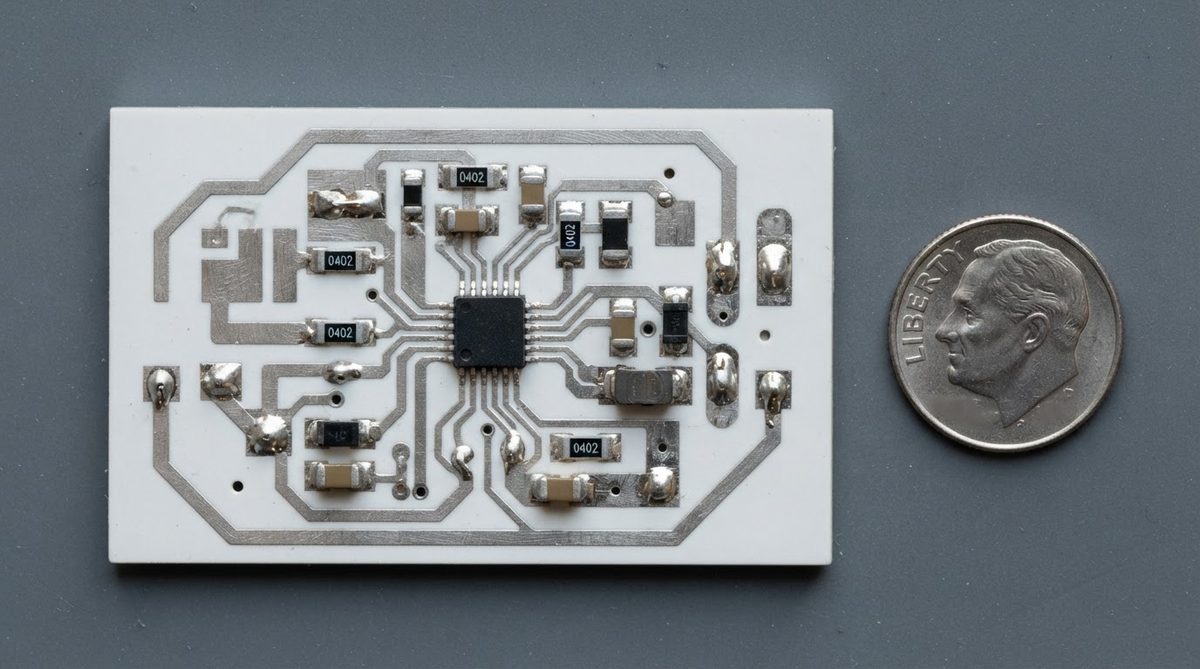
The “96%” label refers to the weight fraction of Al2O3 after sintering. The remaining 4% consists of a glassy intergranular phase formed by the sintering aids. This glass phase serves two purposes: it lowers the sintering temperature from roughly 1 700 °C (needed for 99.6% alumina) to about 1 550–1 600 °C, and it enables co-firing with refractory metallizations such as tungsten or molybdenum in HTCC processing.
The trade-off is measurable. The glassy phase reduces thermal conductivity by 10–20% compared with 99.6% alumina, slightly lowers flexural strength, and introduces a modest increase in dielectric loss at microwave frequencies. For the vast majority of power-electronics and sensor applications, these differences do not matter. For high-frequency circuits above 10 GHz or very high heat-flux designs, they sometimes do.
Material Properties of 96% Alumina
| Parameter | Value | Unit | Condition | Source |
|---|---|---|---|---|
| Thermal conductivity | 24–28 | W/m·K | 25 °C | CoorsTek ADS-96R datasheet |
| CTE | 7.1–7.4 | ppm/°C | 25–300 °C | Kyocera A-473 datasheet |
| Dielectric constant (εr) | 9.0–9.5 | — | 1 MHz, 25 °C | CoorsTek ADS-96R datasheet |
| Loss tangent (tan δ) | 0.0002–0.0010 | — | 1 MHz, 25 °C | CoorsTek ADS-96R datasheet |
| Dielectric strength | 15–18 | kV/mm | ASTM D149, 60 Hz | CeramTec Rubalit 710 datasheet |
| Flexural strength | 330–380 | MPa | ASTM C1161, 4-pt bend | CoorsTek ADS-96R datasheet |
| Density | 3.72–3.78 | g/cm³ | — | Kyocera A-473 datasheet |
| Volume resistivity | >10¹⁴ | Ω·cm | 25 °C | CeramTec Rubalit 710 datasheet |
| Max. continuous use temp. | ~1 000 | °C | Inert atmosphere | CoorsTek application guide |
Typical values for commercially available material, for comparison only. Confirm against the datasheet for your specific grade.
For a downloadable version of these numbers with additional parameters, see the full 96% alumina property sheet.
Enter your substrate dimensions, material grade, and power dissipation below to estimate junction-to-heatsink temperature rise for alumina 96% Al2O3 and other ceramics.
How 96% Alumina Substrates Are Made
Raw alumina powder is mixed with sintering aids and an organic binder, then formed into green-state sheets by tape casting or dry pressing. The green sheets are laser-cut or punched to shape, then sintered in air or a controlled atmosphere at 1 550–1 600 °C. Shrinkage during sintering is typically 16–20% linearly, which must be accounted for in tooling design.
After sintering, the substrates are lapped or polished to the required thickness tolerance and surface roughness. A typical as-fired surface roughness is Ra 0.5–1.0 µm; lapping can bring this to Ra 0.15–0.4 µm, and polishing below Ra 0.05 µm. Surface finish matters because it directly affects line definition in thin-film and DPC metallization. For more on this, see alumina 96% surface finish and roughness.
Metallization Methods Compatible with 96% Alumina
One reason 96% alumina dominates ceramic electronics is its compatibility with nearly every standard metallization process:
- Thick film: Screen-printed silver, gold, or palladium-silver pastes fired at 850 °C. The glassy phase in 96% alumina promotes adhesion. Minimum trace/space is typically 100–125 µm.
- Thin film: Sputtered or evaporated Ti/Pt/Au or Cr/Ni/Au layers, patterned by photolithography. Achieves trace/space down to 10–25 µm.
- DPC (Direct Plated Copper): Sputtered seed layer followed by electroplated copper, patterned by lithography and etching. Trace/space of 30–75 µm with copper thickness up to 50–100 µm.
- DBC (Direct Bonded Copper): Copper foil bonded to the substrate via a copper-oxide eutectic at ~1 065 °C. Used for power modules requiring high current-carrying capacity (0.3 mm copper typical).
- HTCC (High-Temperature Co-fired Ceramic): Tungsten or molybdenum conductors co-fired with the alumina at 1 550–1 600 °C. Enables buried vias and multilayer structures.
Details on adhesion mechanisms and process selection are covered in our guide to how alumina 96% substrates are metallized.
Typical Applications
Understanding what is alumina 96% Al2O3 used for helps clarify whether it fits your project. These substrates appear across a wide range of industries:
- Power electronics: IGBT and MOSFET modules, LED thermal substrates, DC-DC converter boards. The substrate provides electrical isolation and a thermal path from junction to heatsink.
- Automotive sensors: Exhaust gas sensors (lambda probes), pressure sensors, and thick-film hybrid circuits for engine control units. The material withstands under-hood temperatures and thermal cycling.
- RF and microwave: Hybrid microwave integrated circuits (MICs) at frequencies up to about 10 GHz. Above that, the loss tangent of 96% alumina becomes significant and 99.6% alumina or AlN may be preferred.
- Medical devices: Implantable stimulators, hearing-aid hybrids, and diagnostic sensor modules where biocompatibility and hermeticity matter.
- Industrial: Thick-film heater substrates, thermocouple circuits, and high-voltage isolation boards in test equipment.
Worked Example: Thermal Resistance of an Alumina 96% Al2O3 Substrate
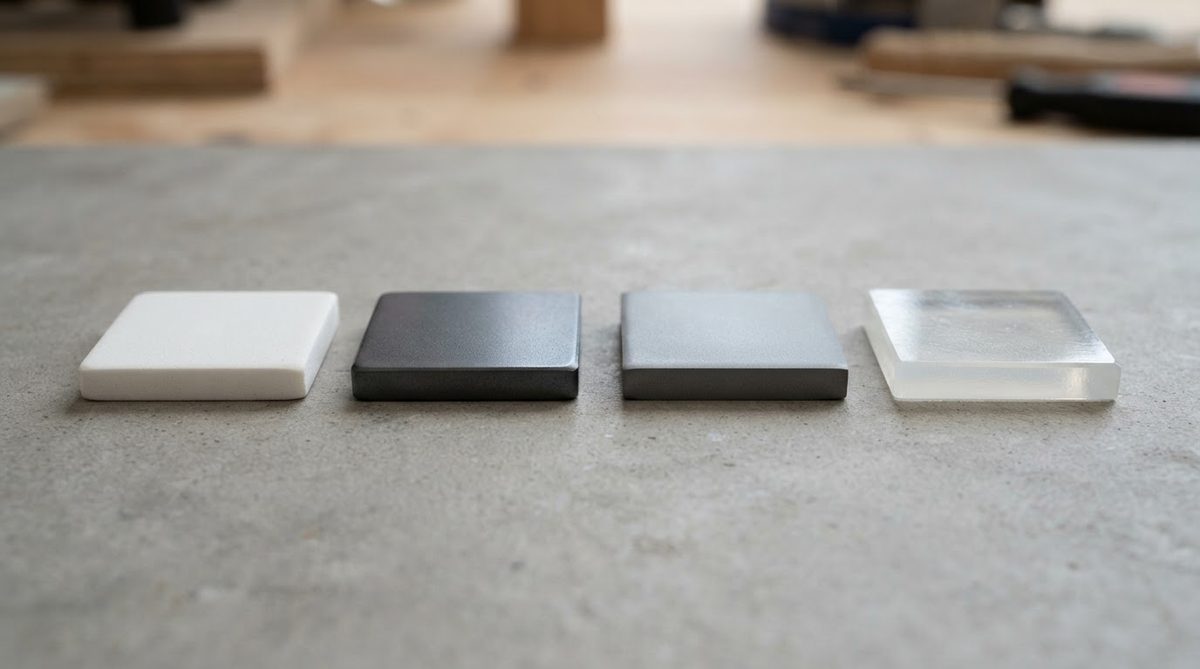
Suppose you have a 25 mm × 25 mm substrate, 0.635 mm thick, with a 10 W heat source centred on top. Ignoring spreading effects and assuming one-dimensional conduction:
Rth = t / (k × A)
Where t = 0.635 × 10⁻³ m, k = 25 W/m·K (mid-range for 96% alumina at 25 °C), A = 625 × 10⁻⁶ m².
Rth = 0.000635 / (25 × 0.000625) = 0.041 °C/W
Temperature rise through the substrate: ΔT = 10 W × 0.041 °C/W = 0.41 °C.
For the same geometry in FR-4 (k ≈ 0.25 W/m·K), Rth would be 4.06 °C/W and ΔT = 40.6 °C. That hundred-fold difference is the core reason engineers move to ceramic. If even 0.41 °C matters—say in a high-power-density GaN module—you would step up to aluminum nitride (AlN), which cuts Rth by another 6–8×.
96% Alumina vs. Other Ceramic Grades
| Parameter | 96% Al2O3 | 99.6% Al2O3 | AlN | Si3N4 |
|---|---|---|---|---|
| Thermal conductivity (W/m·K, 25 °C) | 24–28 | 28–35 | 170–200 | 70–90 |
| CTE (ppm/°C, 25–300 °C) | 7.1–7.4 | 7.0–7.2 | 4.5–4.8 | 2.5–3.5 |
| Flexural strength (MPa) | 330–380 | 350–400 | 300–350 | 700–900 |
| Dielectric constant (1 MHz) | 9.0–9.5 | 9.7–9.9 | 8.5–9.0 | 8.0–8.5 |
| Relative substrate cost (1× = 96% Al2O3) | 1× | 1.5–2× | 3–5× | 4–8× |
Typical values for commercially available material, for comparison only. Confirm against the datasheet for your specific grade.
Alumina 96% Al2O3 wins on cost and process flexibility. Choose 99.6% when you need lower dielectric loss above 10 GHz or slightly better thermal performance without a large cost jump. Choose AlN when heat flux demands it. Choose Si3N4 when mechanical reliability under thermal cycling is the primary concern, such as in automotive power modules subjected to –40 to +175 °C swings.
When Not to Use 96% Alumina
Very high heat flux (>50 W/cm²): AlN or Si3N4 with AMB copper will outperform 96% alumina by a wide margin. The thermal conductivity gap is simply too large to overcome with geometry changes.
High-frequency RF above 10–15 GHz: The glassy phase in 96% alumina raises dielectric loss. At Ka-band and above, 99.6% alumina, AlN, or fused quartz are better choices.
Cost-sensitive, low-power consumer electronics: If your board dissipates under 1 W and operates below 100 °C, FR-4 or metal-core PCB (MCPCB) will do the job at a fraction of the cost. Ceramic adds no value here.
Large panel sizes (>150 mm): Ceramic substrates are brittle and prone to cracking during handling. Very large boards are difficult to manufacture and ship without breakage. Consider segmented designs or MCPCB alternatives.
Extreme mechanical shock: Alumina has no plastic deformation. A single impact can propagate a crack through the entire substrate. If your product faces repeated drops or vibration with large displacement, a flex-rigid FR-4 or metal-backed construction may be more reliable.
Frequently Asked Questions
Is 96% alumina food-safe or biocompatible?
High-purity alumina is generally considered biocompatible and is used in medical implants (hip joints, dental posts). The 4% glassy phase in 96% grades can leach trace amounts of silica and calcia, so for implantable or food-contact applications, verify compliance with the specific regulatory standard (e.g., ISO 10993 for biocompatibility). Many 96% grades pass, but confirmation with the substrate manufacturer’s test data is essential.
Can I solder components directly onto a 96% alumina substrate?
Yes, provided the substrate has been metallized first. You cannot solder directly to bare ceramic. Standard solder alloys (SAC305, SnPb) work well on thick-film silver, thin-film Au, or plated copper surfaces on 96% alumina. Preheat ramps should be gentle (2–4 °C/s) to avoid thermal shock cracking.
What is the shelf life of bare 96% alumina substrates?
Indefinite, for practical purposes. Alumina is chemically inert and does not absorb moisture. Substrates stored in clean, dry conditions for years will perform identically to freshly sintered ones. Metallized substrates may require re-baking if exposed to humidity for extended periods, depending on the finish.
Does 96% alumina pose any health hazard?
Alumina dust generated during machining or grinding is classified as a nuisance particulate, not a carcinogen. Standard dust-control measures (local exhaust ventilation, N95 respirator) are sufficient. This is in sharp contrast to beryllium oxide (BeO), whose dust is a confirmed human carcinogen and requires far more stringent handling controls.
What thickness options are available for 96% alumina substrates?
Standard catalogue thicknesses range from 0.25 mm to 2.0 mm, with 0.381 mm (0.015″) and 0.635 mm (0.025″) being the most common for PCB applications. Custom thicknesses outside this range are possible but may require minimum order quantities and longer lead times.
Next Step
If alumina 96% Al2O3 fits your thermal and electrical requirements, the next step is to check the 96% alumina substrate datasheet against your specific design constraints. When you are ready to get pricing on a prototype or production run, submit your files through our custom alumina 96% PCB fabrication page for a quote.