An alumina 96% Al2O3 DBC (direct bonded copper) substrate is a ceramic circuit board made by bonding a copper sheet directly to a 96% alumina ceramic at roughly 1,065–1,083 °C, just below copper’s melting point. It is the most widely used ceramic power substrate because it balances adequate thermal conductivity (24–28 W/m·K) with a price point well below aluminum nitride or silicon nitride alternatives. For engineers evaluating alumina 96% Al2O3 DBC direct bonded copper for a power module design, this page covers the process, properties, a worked thermal example, and honest guidance on when a different substrate is the better call.
Key Takeaways
- 96% alumina DBC substrates handle continuous operating temperatures up to roughly 800 °C at the ceramic, limited in practice by copper oxidation above ~400 °C in air.
- Standard copper thicknesses range from 0.127 mm (5 mil) to 0.635 mm (25 mil), with 0.3 mm (12 mil) being the most common for IGBT and MOSFET modules.
- Thermal conductivity of the alumina layer is 24–28 W/m·K at 25 °C (per CoorsTek ADS-96R datasheet), roughly 6–8× lower than AlN but adequate for many designs under 150 W/cm².
- The CTE of 96% alumina (6.5–7.2 ppm/°C, 25–300 °C, ASTM E228) sits between silicon (2.6 ppm/°C) and copper (17 ppm/°C), providing a reasonable compromise for die attach reliability.
How the Alumina 96% Al2O3 DBC Direct Bonded Copper Process Works
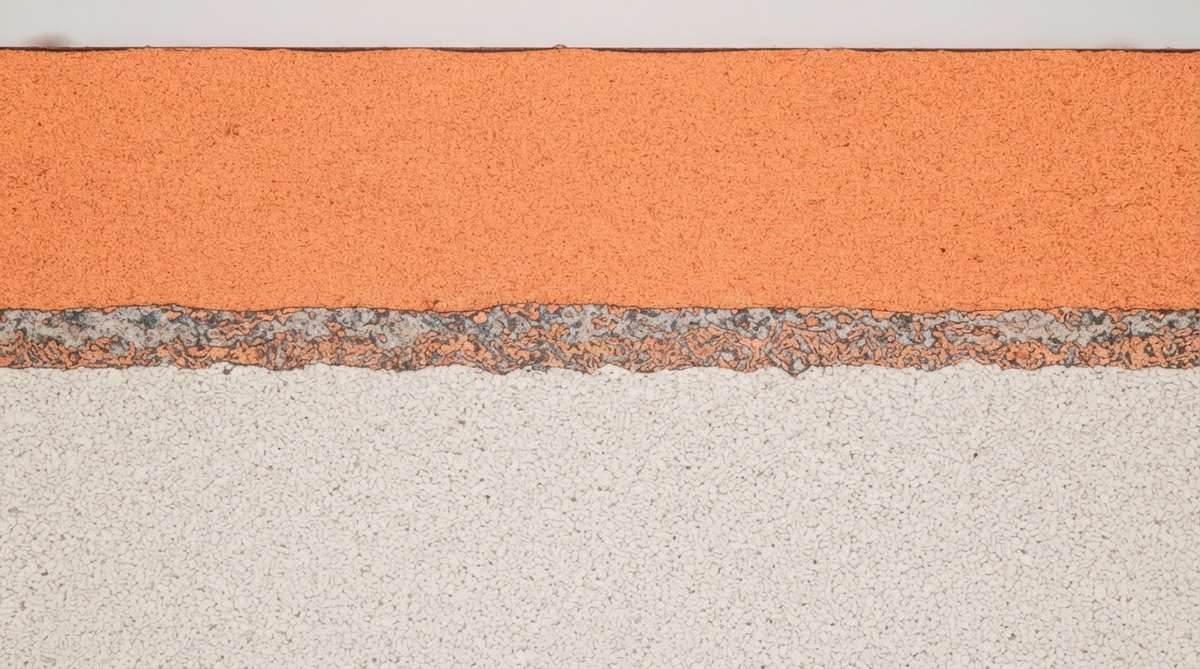
Direct bonded copper relies on a thin copper-oxide eutectic layer that forms at the interface between the ceramic and the copper foil. The assembly is heated in a controlled nitrogen-oxygen atmosphere to 1,065–1,083 °C. At this temperature a Cu–Cu₂O eutectic liquid wets the alumina surface, creating a chemical bond upon cooling. No brazing alloy or adhesive is involved, which keeps the thermal path free of high-resistance interlayers.
The bond strength for well-processed alumina 96% Al2O3 DBC direct bonded copper typically exceeds 8 N/mm in 90° peel tests (per Rogers curamik DBC product documentation). Because the bond is ceramic-to-metal, it withstands thermal cycling far better than organic adhesives. However, the alumina surface must be flat to within roughly 25 µm and free of glaze residues; otherwise, bond voids form and degrade both thermal and electrical performance.
After bonding, the copper is patterned by photolithography and etching, similar to standard PCB processing. Minimum trace and space dimensions depend on copper thickness—thicker copper requires wider etching tolerances. For 0.3 mm copper on alumina DBC, expect minimum trace/space around 0.3–0.4 mm. For thinner 0.127 mm copper, 0.15–0.2 mm is achievable.
Material Properties of 96% Alumina DBC Substrates
| Parameter | Value | Unit | Condition | Source |
|---|---|---|---|---|
| Thermal conductivity (ceramic) | 24–28 | W/m·K | 25 °C | CoorsTek ADS-96R datasheet |
| Dielectric strength | 14–17 | kV/mm | AC, 60 Hz, 25 °C | CoorsTek ADS-96R |
| Flexural strength (ceramic) | 330–380 | MPa | ASTM C1161, 4-pt bend | CoorsTek ADS-96R |
| CTE | 6.5–7.2 | ppm/°C | 25–300 °C, ASTM E228 | Kyocera A-493 datasheet |
| Copper thickness range | 0.127–0.635 | mm | — | Industry standard DBC |
| Copper purity | ≥ 99.9% | % | OF-Cu or ETP-Cu | Rogers curamik |
| Bond peel strength | > 8 | N/mm | 90° peel, 25 °C | Rogers curamik |
| Max continuous temp (ceramic) | ~800 | °C | Inert atmosphere | CeramTec Rubalit 708S |
Typical values for commercially available material, for comparison only. Confirm against the datasheet for your specific grade.
Worked Example: Thermal Resistance of an Alumina 96% Al2O3 DBC Direct Bonded Copper Substrate
Consider a 25 × 25 mm alumina DBC substrate, 0.635 mm ceramic thickness, carrying a 10 × 10 mm SiC MOSFET dissipating 80 W. We estimate the thermal resistance through the ceramic layer alone (ignoring copper and solder layers, which contribute much less).
R_th = t / (k × A)
Where t = 0.635 mm = 0.000635 m, k = 26 W/m·K (mid-range), and A = effective spreading area. Using a 45° spreading rule from the 10 × 10 mm die through 0.635 mm ceramic gives an effective area of roughly 11.27 × 11.27 mm = 1.27 × 10⁻⁴ m².
R_th(ceramic) = 0.000635 / (26 × 1.27 × 10⁻⁴) = 0.192 °C/W
At 80 W, that contributes about 15.4 °C of temperature rise across the ceramic. If your thermal budget is tight, switching to an aluminum nitride DBC substrate (170–200 W/m·K) drops that same layer to roughly 2.5 °C/W—a significant difference at higher power densities.
Enter your own substrate dimensions, ceramic thickness, and dissipated power below to estimate junction temperature rise for your specific design.
When to Choose Alumina 96% Al2O3 DBC Direct Bonded Copper Over Alternatives
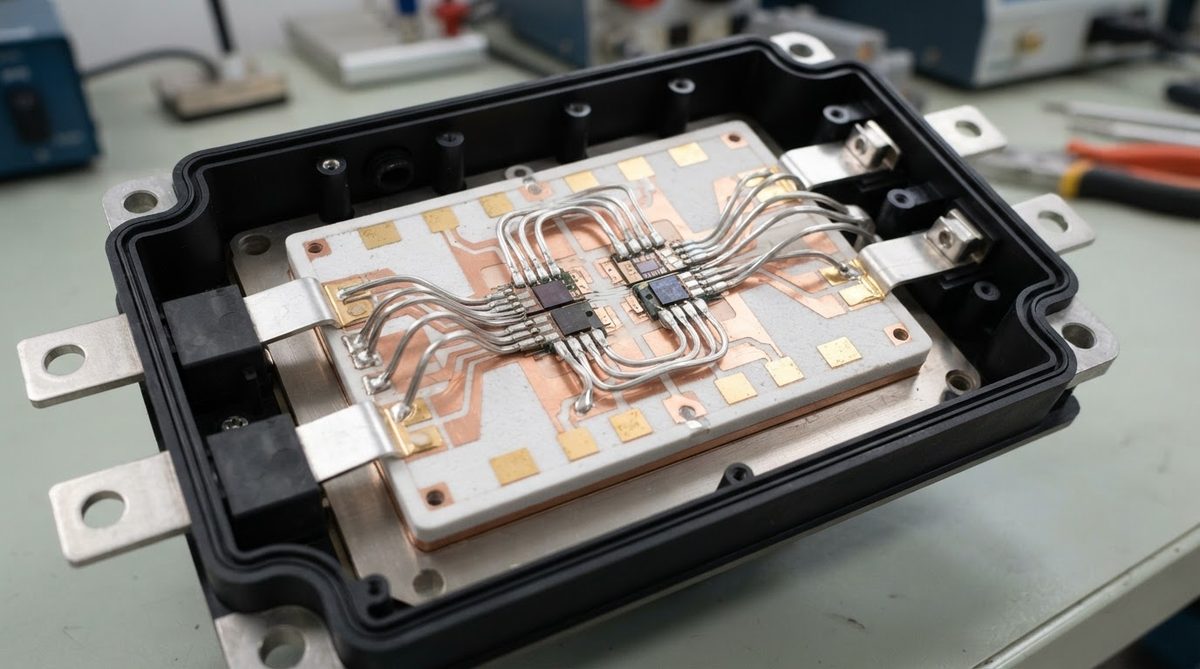
96% alumina DBC is the default choice for power modules in the 50–150 W/cm² range where cost matters. It is widely used in IGBT modules, rectifier bridges, industrial motor drives, and mid-power EV inverters. The supply chain is mature, with multiple qualified sources globally.
If your design needs finer circuit features (below 0.15 mm trace/space) but can accept thinner copper, a 96% alumina DPC substrate offers tighter patterning through sputtered and plated copper. For hybrid circuits requiring embedded passives or multilayer routing, alumina 96% HTCC co-fired ceramic is a better fit.
When NOT to Use 96% Alumina DBC
Above roughly 200 W/cm² heat flux, 96% alumina becomes a thermal bottleneck. Switch to AlN DBC or silicon nitride Si3N4 DBC for better thermal conductivity or superior mechanical reliability under aggressive thermal cycling (–40 to +150 °C, > 3,000 cycles).
For applications below 30 W/cm² with no high-voltage isolation requirement, an aluminum-core MCPCB at a fraction of the cost will usually suffice. If your BOM target is under $0.50 per substrate, ceramic is probably not the right call—standard FR-4 or metal-core boards deserve a look first.
Alumina is also a poor choice where mechanical shock or vibration is severe and the substrate is unsupported. Its flexural strength (330–380 MPa) is good for a ceramic, but it is still brittle. Si3N4 DBC, with fracture toughness roughly 3× higher, handles those conditions better.
Frequently Asked Questions
What copper thickness should I specify for a 96% alumina DBC?
Start with 0.3 mm (12 mil) for most IGBT and power MOSFET applications. Use 0.127 mm for signal-level circuits that need finer etching, and 0.5–0.635 mm only when high current capacity (above ~80 A per trace) is required. Thicker copper increases CTE mismatch stress on the ceramic during thermal cycling.
Can I use alumina 96% Al2O3 DBC direct bonded copper for SiC or GaN devices?
Yes, but with caveats. SiC devices often run junction temperatures above 175 °C, which increases thermal cycling stress on the alumina-copper bond. For designs exceeding 3,000 power cycles between –40 °C and +175 °C, consider AlN or Si3N4 DBC for longer field life. For lower cycle counts or less extreme swings, 96% alumina DBC works and costs less.
Is DBC the same as AMB (active metal brazing)?
No. DBC uses a copper-oxide eutectic bond formed at ~1,070 °C with no filler metal. AMB uses a titanium-containing braze alloy (typically Ag-Cu-Ti) fired at ~850 °C. AMB produces a stronger bond, especially on AlN and Si3N4, but adds cost. On 96% alumina, DBC bond strength is usually sufficient, so AMB is rarely specified for this ceramic grade.
Does alumina DBC need a surface finish before soldering?
The bare copper surface oxidizes in storage, so a finish is recommended. Nickel-gold (Ni/Au electroless) is standard for power module assembly, providing solderability and wire-bondability. Nickel thickness is typically 3–6 µm, gold 0.05–0.1 µm. Bare copper with an OSP coating is acceptable for immediate soldering but has a shorter shelf life.
How does 96% alumina compare to 99.6% alumina for DBC?
99.6% alumina offers slightly higher thermal conductivity (28–35 W/m·K) and better dielectric strength, but costs 30–60% more per substrate. The glassy phase content in 96% alumina (roughly 4% silica and other oxides) slightly reduces thermal performance but also makes it easier to bond and more tolerant of surface finish variation. For most power modules, 96% is the cost-effective default. Reserve 99.6% for high-frequency or high-reliability applications where the tighter property spread matters—see alumina 99.6% DPC substrates for one such option.
Next Step
If alumina 96% Al2O3 DBC direct bonded copper fits your power density and cycling requirements, request a quote with your substrate dimensions, copper thickness, and circuit pattern. Upload your Gerber or DXF files for a faster response. For engineers still comparing substrate options, the ceramic substrate sample kit lets you evaluate material quality before committing to a production order.