Ceramic PCB lead time is typically 2–5 weeks for prototypes and 4–8 weeks for production orders. The exact timeline depends on substrate material (Al₂O₃ is fastest; AlN and Si₃N₄ take longer), metallization method, layer count, and surface finish. Understanding where time is spent at each stage lets you plan around it or compress it when a project demands speed.
Key Takeaways
- Standard Al₂O₃ 96% prototypes ship in 2–3 weeks; AlN prototypes often need 3–5 weeks because of tighter sintering and handling requirements.
- DPC (direct plated copper) metallization is generally the fastest process; DBC and AMB add furnace bonding steps that extend lead time by 3–7 days.
- Surface finish selection matters: ENIG adds 1–2 days versus bare copper; gold thick-film firing adds more.
- Rush or expedited orders can cut prototype lead time to 5–10 business days, but expect a 30–80% cost premium.
- The single largest delay in most ceramic PCB projects is not fabrication — it is design revision cycles and file corrections.
What Determines Ceramic PCB Lead Time?
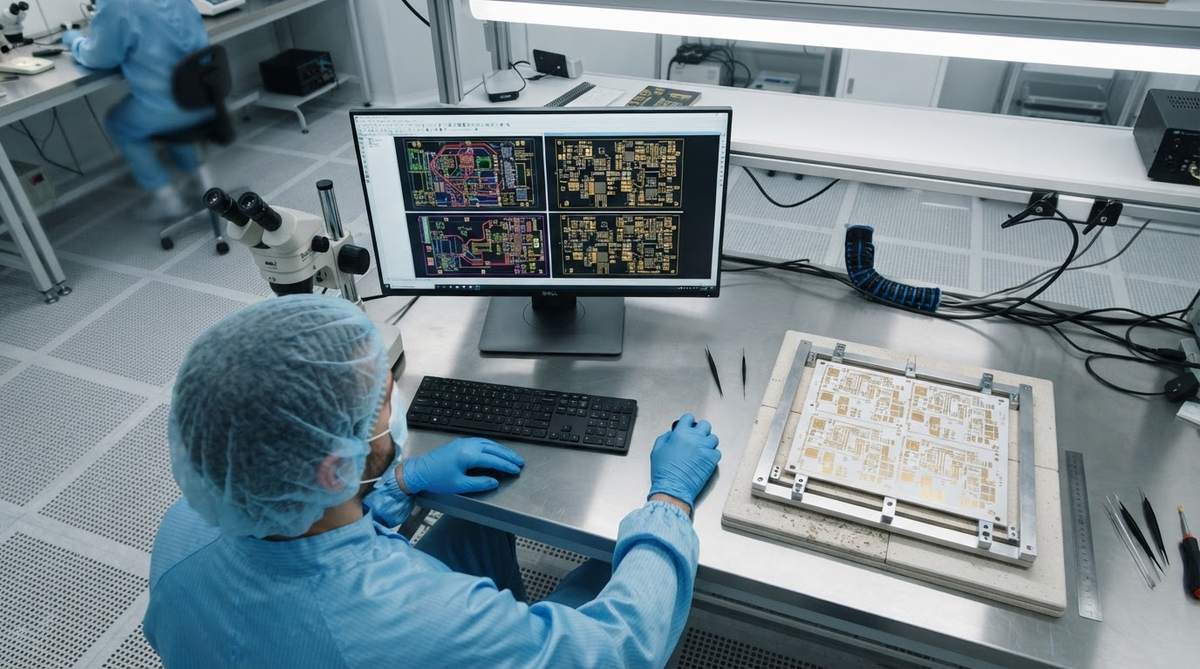
Ceramic board fabrication is a multi-stage process, and each stage has its own clock. The table below breaks a typical order into phases and shows where time accumulates.
| Phase | Typical Duration | What Happens |
|---|---|---|
| File review & DFM check | 1–2 days | Gerber/ODB++ review, panelization, impedance check if applicable |
| Substrate preparation | 1–5 days | Cutting, drilling, or laser via formation on green or sintered blanks |
| Metallization | 2–7 days | DPC sputtering + plating, DBC/AMB furnace bonding, or thick-film screen printing + firing |
| Patterning & etching | 1–3 days | Photolithography, copper etching, resist stripping |
| Surface finish | 1–2 days | ENIG, ENEPIG, OSP, or additional gold plating |
| Electrical & visual inspection | 1–2 days | AOI, hi-pot, dimensional check |
| Packing & shipping | 1–3 days | Vacuum pack, customs docs, courier transit |
Durations are representative ranges. Actual times vary by manufacturer, order size, and material.
For a straightforward single-layer Al₂O₃ 96% DPC board with ENIG finish, the phases above add up to roughly 10–15 working days from approved files to shipment. Add a week or more for AlN substrates, which require diamond-tooled drilling of ceramic substrates and more careful furnace profiles.
Material Choice and Its Effect on Turnaround
Al₂O₃ 96% is the workhorse ceramic substrate. It is widely stocked as sintered blanks in standard sizes, so fabrication can start immediately. Al₂O₃ 99.6%, AlN, and Si₃N₄ blanks are less commonly held in inventory. If a specific thickness or size is not in stock, the substrate itself may need to be ordered from a supplier like Kyocera or Maruwa, adding 1–3 weeks before metallization even begins.
If your timeline is tight, confirm substrate availability before committing to a material. Switching from 99.6% alumina to 96% alumina, or accepting a standard thickness (0.25 mm, 0.38 mm, 0.635 mm, 1.0 mm), can eliminate the longest wait in the process.
Prototype vs. Production Lead Times
Prototypes are smaller panels and fewer units, so they move through each station faster. Many ceramic PCB manufacturers batch prototype orders weekly, meaning your job enters the queue on a fixed day. Production runs require tooling verification, first-article inspection, and sometimes multi-batch sintering or metallization. Expect production lead times of 4–8 weeks for volumes above a few hundred pieces.
If you need just one or two boards for bench testing, some suppliers accommodate single-piece ceramic PCB orders on an expedited prototype line.
How to Shorten Your Lead Time
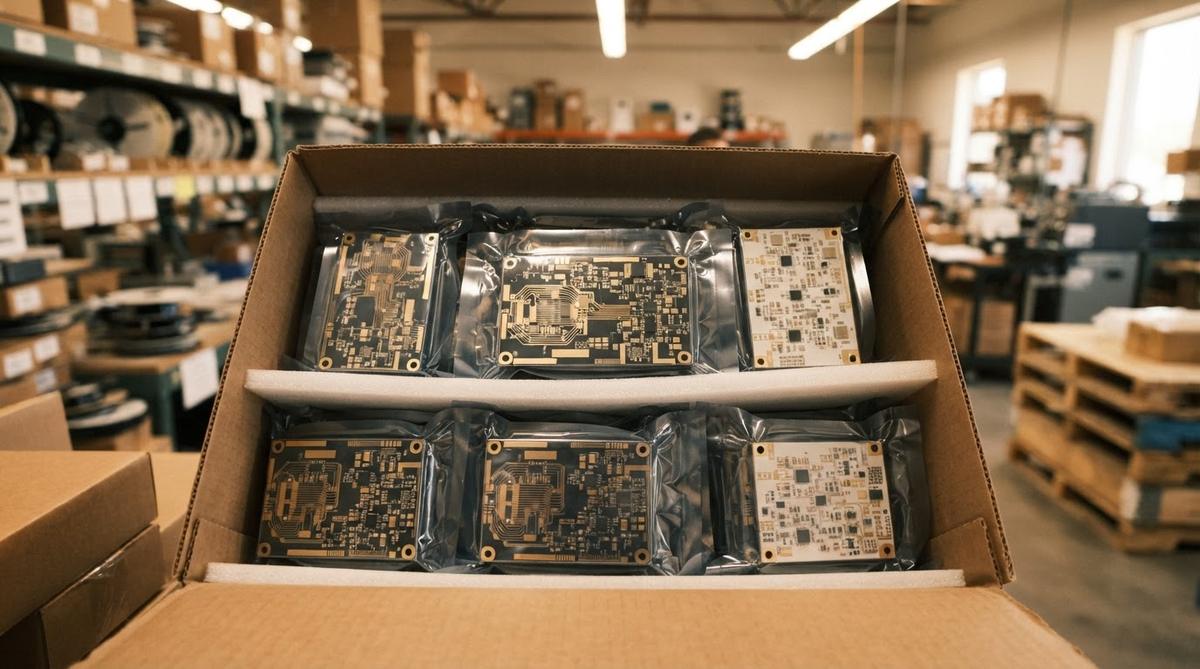
- Submit clean files. Incomplete Gerbers or missing drill files trigger a DFM query loop. Every round-trip email can cost a day. Include a fabrication drawing with tolerances, layer stackup, and finish callouts.
- Choose standard materials and thicknesses. In-stock substrates skip the blank-ordering phase entirely.
- Simplify the finish. Bare copper or OSP is faster than ENIG. If your assembly process allows it, this saves 1–2 days.
- Consolidate design revisions before ordering. A revision after file approval resets the clock to day one.
- Ask about expedite options early. Rush slots are limited. Requesting one after a standard order is placed is harder than specifying it upfront.
Expedite and Rush Pricing
Most ceramic PCB shops offer an expedited tier that compresses prototype lead time to 5–10 business days. The cost premium varies, but 30–80% above standard pricing is common. The premium covers overtime, queue-jumping, and dedicated inspection. For very small quantities the absolute dollar increase is modest; for larger runs it adds up fast.
Use the calculator below to estimate the cost impact of expediting your ceramic PCB order. Enter your board parameters and desired turnaround to see a ballpark rush surcharge.
[pcb_calc type=”expedite-cost”]
When a Ceramic PCB’s Lead Time Is a Problem
If your project needs boards in under a week and the design can tolerate lower thermal performance, an aluminum-core MCPCB or standard FR-4 may be the pragmatic choice. MCPCB prototypes often ship in 3–5 days. FR-4 quick-turn services deliver in 24–48 hours. Ceramic substrates are worth waiting for when the thermal, dielectric, or high-frequency requirements cannot be met any other way. If you are unsure whether ceramic is necessary for your application, the ceramic PCB FAQ covers common decision criteria.
Frequently Asked Questions
Can I get a ceramic PCB in under one week?
It is possible but rare. A few manufacturers offer 5-business-day rush service for simple single-layer Al₂O₃ DPC boards. Expect a significant cost premium and limited material options. Multi-layer or AlN boards almost never ship that fast.
Does the metallization method change the lead time?
Yes. DPC (sputtering + electroplating) is typically the fastest because it uses room-temperature or low-temperature steps. DBC substrates require a high-temperature copper-bonding furnace cycle, adding several days. AMB (active metal brazing) has a similar furnace step plus a vacuum environment, which can add a full week.
Why is AlN lead time longer than alumina?
Aluminum nitride is harder to machine, requires diamond tooling for drilling and cutting, and its metallization demands tighter atmosphere control in the furnace. Fewer manufacturers stock AlN blanks, so substrate procurement alone can add 1–3 weeks.
Does order quantity affect lead time?
Yes. A 10-piece prototype order and a 5,000-piece production order go through the same process steps, but production runs need more substrate panels, longer plating runs, and batch-level inspection. Production orders typically take 4–8 weeks versus 2–5 weeks for prototypes.
What file format gives the fastest turnaround?
Gerber X2 or ODB++ with a complete fabrication drawing (dimensions, tolerances, layer stackup, finish, and copper weight) minimizes DFM review time. Missing or ambiguous information is the most common cause of delays that are entirely within the customer’s control.