Yes, you can place a ceramic PCB single piece order. Most ceramic PCB fabricators accept single-piece orders for prototyping, qualification samples, or failure-analysis replacements. The trade-off is cost: a one-off ceramic board can run 3–10× the per-unit price of the same design ordered in a batch of 25, because setup charges — laser programming, screen preparation, fixture alignment — are amortized across just one piece.
Key Takeaways
- A ceramic PCB single piece order is standard practice at specialist fabricators; no minimum order quantity (MOQ) of 50 or 100 is required.
- Setup and tooling fees typically add $80–$300 to a one-off order, making the effective per-unit price far higher than in production.
- Lead times for a single prototype board usually range from 5–10 working days, depending on substrate material and metallization process.
- Ordering 3–5 pieces instead of 1 barely changes the total cost but gives you spares for rework, destructive testing, or assembly trials.
Why a Ceramic PCB Single Piece Order Makes Sense
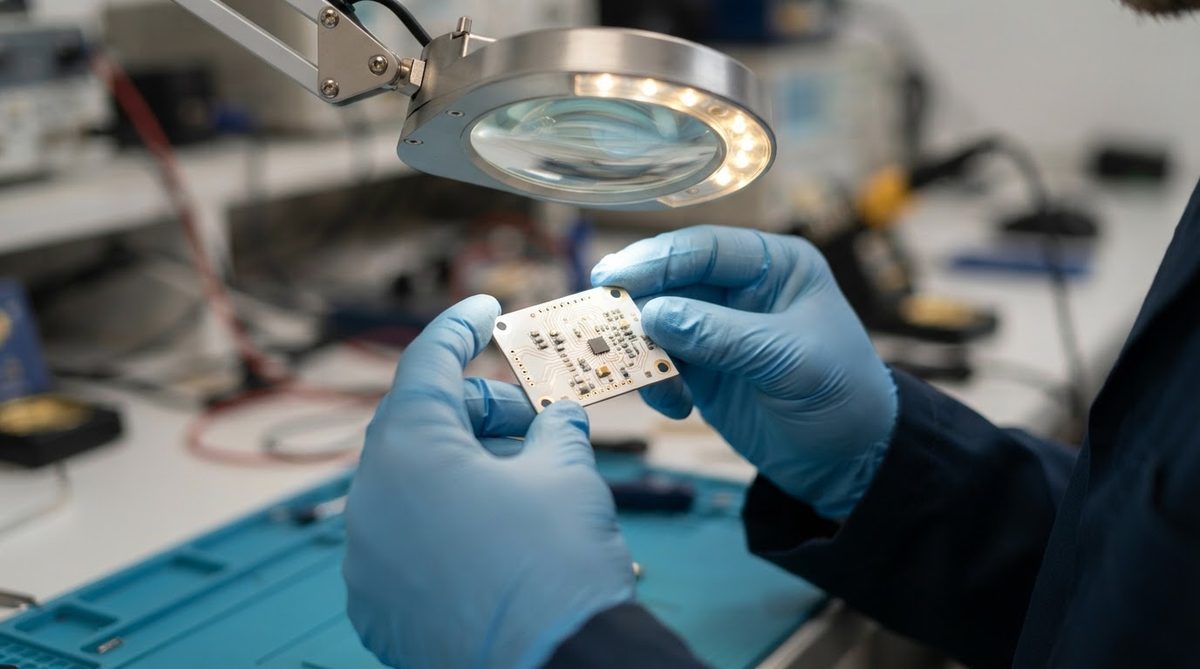
Hardware engineers need single ceramic boards for several reasons: validating a thermal design before committing to production tooling, qualifying a new substrate material, replacing a damaged board in a fielded instrument, or running a one-time lab experiment. None of these situations justify a 50-piece run.
Ceramic PCB fabrication is inherently a batch-of-one-capable process. Unlike organic PCB panel production, where a single board wastes most of an 18 × 24″ panel, ceramic substrates are often processed individually or in small arrays. A 96% alumina substrate blank, for example, is typically scribed and snapped or laser-cut to size per order. This makes single-piece fulfillment technically straightforward — the barrier is economic, not mechanical.
What a Single Ceramic PCB Actually Costs
The total cost of a ceramic PCB single piece order breaks into two buckets: fixed setup costs and variable material/processing costs. On a single piece, the fixed costs dominate.
| Cost Component | Typical Range (1 pc) | Notes |
|---|---|---|
| Substrate blank | $2–$40 | Depends on material: Al₂O₃ 96% is cheapest; aluminum nitride (AlN) is 3–5× more |
| Screen or stencil setup | $50–$150 | Thick-film screen printing; waived if using DPC or thin-film with existing tooling |
| Laser processing setup | $30–$100 | Via drilling, scribing, or DPC patterning programming |
| Metallization (per piece) | $10–$60 | Sputtering, plating, or firing; depends on layer count and metal type |
| Surface finish | $5–$20 | ENIG, ENEPIG, or bare copper with OSP |
| Inspection and packing | $10–$25 | Visual, dimensional check, ESD packaging |
| Total (1 pc, Al₂O₃ 96%, single-layer DPC) | $120–$350 | Ballpark for a 25 × 25 mm board |
Ranges reflect market pricing from multiple fabricators as of mid-2025. Your quote will depend on exact dimensions, material, metallization, and finish.
Worked Example: 1 Piece vs. 5 Pieces
Suppose you need a 20 × 30 mm, single-sided DPC board on 96% alumina with ENIG finish. A fabricator quotes $180 for one piece — $130 in setup fees plus $50 in per-piece processing. If you order five pieces, the setup stays at $130, and per-piece processing totals 5 × $50 = $250. Your five-piece total is $380, or $76 each. That is 58% less per unit than the single piece, for only $200 more out of pocket. If your budget allows it, ordering a handful of extras is almost always the better call.
How to Place a Ceramic PCB Single Piece Order
- Prepare your Gerber files and a fabrication drawing. Include substrate material, thickness, copper weight, surface finish, and any critical tolerances. A clear fab drawing prevents back-and-forth that delays a small order disproportionately.
- Specify the material explicitly. “Ceramic” is not a spec. State the grade — Al₂O₃ 96%, Al₂O₃ 99.6%, AlN, or silicon nitride (Si₃N₄) — because each has different lead times and pricing.
- Ask about panelization. Some fabricators will nest your single design onto a shared panel with other customers’ boards, reducing your setup cost. This is more common with standard alumina than with AlN.
- Confirm the lead time in writing. Single-piece orders sometimes get bumped behind larger production runs. A confirmed date in the order acknowledgment protects your schedule.
- Request a first-article inspection report if the board is for qualification. Many fabricators include dimensional and visual inspection at no extra charge on prototype quantities.
Use the tool below to estimate pricing and lead time for your ceramic PCB single piece order based on material, size, and quantity.
Lead Times for Single-Piece Orders
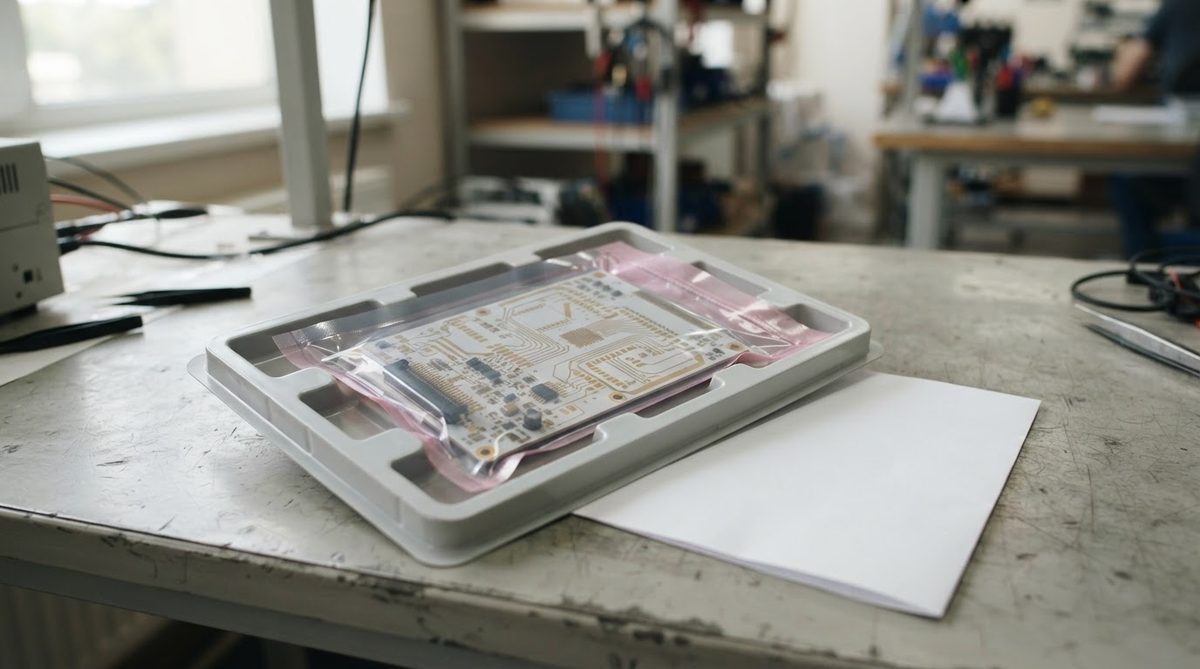
Expect 5–10 working days for a single alumina board with standard metallization. AlN substrates may add 2–5 days because of tighter supply chains for blanks. Expedited service (3–5 days) is available from some fabricators for a surcharge, typically 30–50% on top of the base price.
The biggest lead-time risk on a one-off order is not fabrication — it is the approval cycle. If your drawings need revision, the clock resets. Submit complete, unambiguous files and you avoid the most common delay.
When a Single-Piece Order Is Not the Right Move
If you need more than about 10 identical boards within six months, a small production run with a blanket order will save money. Setup costs are paid once, and per-piece pricing drops sharply above 25 units.
If you are still evaluating whether ceramic is the right substrate at all, consider reading about when a ceramic board is justified before placing an order. An aluminum-core MCPCB or a high-Tg FR-4 may meet your thermal and electrical requirements at a fraction of the cost. A ceramic PCB single piece order makes sense only after you have confirmed that the application genuinely demands ceramic properties — high thermal conductivity, low CTE, or operation above 300 °C.
For standard digital or mixed-signal designs running below 150 °C with moderate power density, FR-4 or metal-core boards are more economical and easier to source in single quantities. Ceramic earns its price in high-power, high-frequency, or extreme-environment applications.
Frequently Asked Questions
Do ceramic PCB fabricators charge extra for a single piece?
Yes. Setup and tooling fees that would be spread across a production batch are charged in full on a single-piece order. This typically adds $80–$300 to the total, depending on the process. The per-piece material and processing cost itself is the same regardless of quantity.
Can I get a single ceramic PCB with copper on both sides?
Double-sided ceramic PCBs are available in single-piece quantities. DPC (direct plated copper) and DBC (direct bonded copper) processes both support prototype runs. Expect a modest cost increase over single-sided boards because of the additional metallization and alignment steps.
Is the quality of a single prototype the same as a production board?
It should be. Reputable fabricators run the same process on one board as on one thousand. Ask for an inspection report — dimensional measurements, visual inspection under magnification, and adhesion verification — to confirm. A first-article report is standard practice for ceramic substrates.
How should I store a ceramic PCB if I only ordered one?
Store it in its ESD-safe packaging, in a dry environment below 30 °C and 60% RH. Ceramic substrates themselves do not degrade, but exposed copper or solder finishes can oxidize over time. For detailed guidance, see ceramic PCB storage and shelf life recommendations.
Can I order one ceramic PCB and one FR-4 PCB from the same vendor?
Generally, no. Ceramic PCB fabricators are specialist shops with different equipment than standard FR-4 houses. You will place two separate orders with two different vendors. Some brokers aggregate both, but you lose visibility into the ceramic fabricator’s process.
Next Step
If you have Gerber files and a fab drawing ready, request a quote for your ceramic PCB single piece order. Most fabricators respond within 24–48 hours. For broader questions about ceramic substrate materials and their properties, start there before finalizing your material call.