Five ceramic substrates dominate electronic packaging: 96% alumina (Al₂O₃), 99.6% alumina, aluminum nitride (AlN), silicon nitride (Si₃N₄), and silicon carbide (SiC). Beryllium oxide (BeO) appears in legacy designs but carries serious health restrictions. The table below gives sourced property ranges for all six grades so you can shortlist a material in minutes instead of hunting through separate datasheets.
Key Takeaways
- AlN offers the highest thermal conductivity of the common non-toxic ceramics at 170–200 W/m·K, roughly 7× that of 96% alumina.
- Si₃N₄ has the highest fracture toughness (6–7 MPa·√m) and flexural strength (600–900 MPa), making it the best choice for mechanically loaded or thermally cycled power modules.
- 96% Al₂O₃ remains the lowest-cost substrate and is adequate for most designs dissipating under ~5 W/cm².
- BeO dust is a confirmed human carcinogen; any design using BeO must comply with OSHA PEL limits and end-of-life handling requirements.
- SiC substrates are electrically semi-insulating (not fully insulating), so they suit resistor networks and high-temperature sensors but not standard circuit isolation.
Master Ceramic Substrate Properties Table
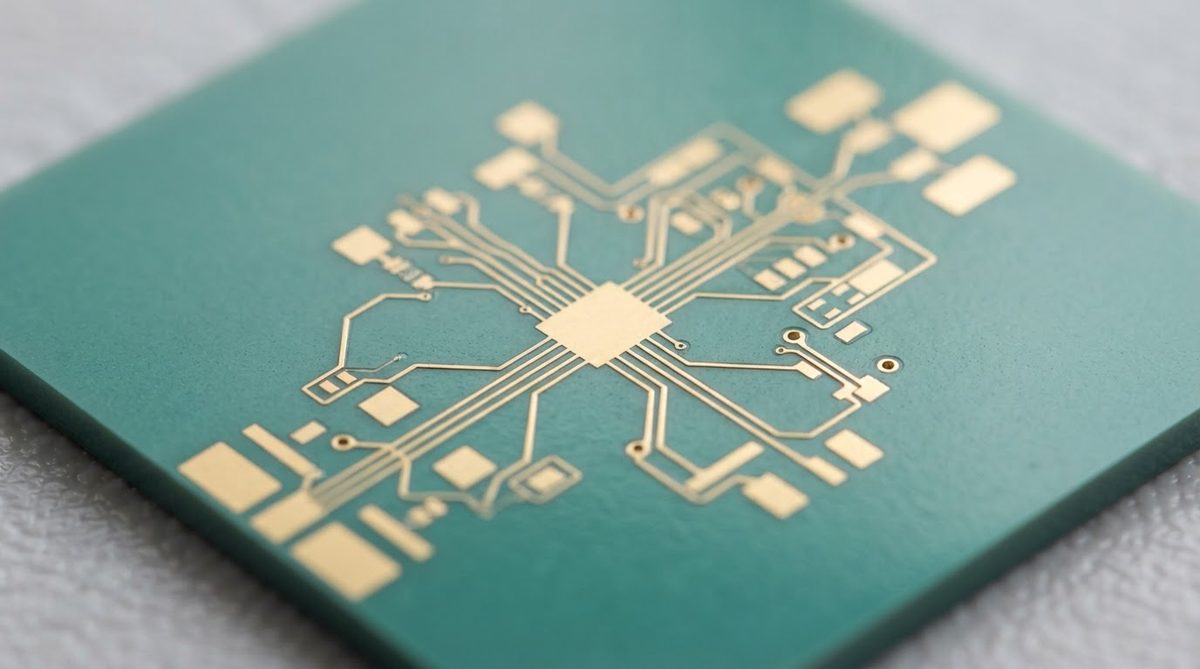
All values are typical for commercially available, fully dense material at 20–25 °C unless noted. Thermal conductivity varies with purity, grain size, and porosity; always confirm against the specific manufacturer’s datasheet for your grade.
| Property | Unit | Al₂O₃ 96% | Al₂O₃ 99.6% | AlN | Si₃N₄ | BeO 99.5% | SiC (CVD / sintered) |
|---|---|---|---|---|---|---|---|
| Thermal conductivity | W/m·K | 24–28 | 30–35 | 170–200 | 60–90 | 250–300 | 120–270 |
| CTE (25–400 °C) | ppm/°C | 7.2–7.4 | 7.0–7.2 | 4.4–4.7 | 2.7–3.2 | 7.5–8.0 | 3.7–4.0 |
| Flexural strength | MPa | 300–380 | 350–450 | 300–400 | 600–900 | 200–250 | 350–500 |
| Fracture toughness (KIC) | MPa·√m | 3.5–4.0 | 3.8–4.2 | 2.5–3.5 | 6–7 | 2.0–2.5 | 3.0–4.0 |
| Dielectric constant (1 MHz) | — | 9.4–9.8 | 9.7–10.0 | 8.5–9.0 | 7.5–8.5 | 6.5–6.7 | Semi-insulating* |
| Dielectric loss tan δ (1 MHz) | ×10⁻⁴ | 1–3 | 1–2 | 3–10 | 5–20 | 1–3 | — |
| Volume resistivity | Ω·cm | >10¹⁴ | >10¹⁴ | >10¹⁴ | >10¹² | >10¹⁴ | 10²–10⁵ * |
| Density | g/cm³ | 3.72–3.78 | 3.89–3.96 | 3.25–3.30 | 3.20–3.25 | 2.85–2.90 | 3.10–3.21 |
| Max continuous use temp. | °C | 1 600 | 1 700 | 1 000 (in N₂) | 1 200 | 1 800 | 1 400 |
| Relative cost index | — | 1× | 1.5–2× | 3–5× | 4–8× | 8–15× | 5–10× |
Typical values for commercially available material, for comparison only. Confirm against the datasheet for your specific grade.
Sources: CoorsTek Advanced Ceramics datasheet (2023), Kyocera Fine Ceramics catalog (SN-220 / SN-240 grades), Maruwa AlN substrate data (HA-200 grade), CeramTec Rubalit product guide. Flexural strength per ASTM C1161 three-point bend. CTE per ASTM E228.
* SiC is semi-insulating, not a true insulator. Its resistivity depends heavily on doping and crystal structure, so it cannot replace Al₂O₃ or AlN for circuit isolation without additional dielectric layers.
How to Read This Table for Your Design
Start with two constraints: how much heat the substrate must move, and how much mechanical stress it will see. Thermal conductivity and CTE mismatch with copper or silicon drive most material selections. Flexural strength and fracture toughness matter when the substrate is large, thin, or subject to thermal cycling.
A practical example: suppose you need to spread 30 W from a bare die across a 25 × 25 mm substrate that is 0.635 mm thick. The steady-state thermal resistance through the substrate is Rth = t / (k × A). For 96% alumina at 26 W/m·K: Rth = 0.000635 / (26 × 0.000625) = 0.039 °C/W. For AlN at 180 W/m·K: Rth = 0.000635 / (180 × 0.000625) = 0.0056 °C/W. That difference — 0.033 °C/W — translates to roughly 1 °C at 30 W, which may or may not justify a 3–5× cost increase. At 150 W, it is a 5 °C delta and the decision changes.
CTE mismatch is equally important. Silicon die has a CTE of about 2.6 ppm/°C. Si₃N₄ at 2.7–3.2 ppm/°C is the closest match, which is why it dominates in direct-bonded copper (DBC) and active metal brazing (AMB) power modules that cycle between –40 °C and +175 °C thousands of times. Silicon nitride properties in detail explain why this material survives where alumina cracks.
Alumina (Al₂O₃): The Default Choice
96% alumina is the workhorse of ceramic electronics. It is inexpensive, widely available, and compatible with thick-film, thin-film, DBC, HTCC, and LTCC processes. Its thermal conductivity of 24–28 W/m·K is roughly 100× that of FR-4 (0.25 W/m·K) but modest compared with AlN or BeO. For LED boards, sensor packages, and hybrid circuits dissipating moderate heat, 96% alumina is usually the right call.
99.6% alumina offers a small bump in thermal conductivity (30–35 W/m·K) and better surface finish for thin-film metallisation. It costs 1.5–2× more. Choose it when you need sub-10 µm line/space on a 99.6% alumina thin-film substrate, or when the dielectric loss at RF frequencies must be minimised.
For standard 96% alumina thick-film substrates, lead times are short and pricing is competitive because the material is commodity-grade.
Aluminum Nitride (AlN): High Thermal Conductivity
AlN conducts heat 6–8× better than 96% alumina while maintaining full electrical insulation (>10¹⁴ Ω·cm). Its CTE of 4.4–4.7 ppm/°C is a closer match to silicon and GaN than alumina, reducing solder-joint fatigue in die-attach applications.
The main drawbacks are cost and moisture sensitivity. Bare AlN hydrolyses slowly in humid environments, so exposed surfaces are usually passivated or metallised. AlN thin-film substrates with sputtered metallisation are common in laser diode submounts, RF power amplifiers, and high-brightness LED packages.
AlN substrates oxidise above roughly 700 °C in air, which limits brazing options. In inert atmospheres, AlN is stable to about 1 000 °C.
Silicon Nitride (Si₃N₄): Mechanical Toughness Leader
Si₃N₄ has the highest fracture toughness and flexural strength of any substrate ceramic in this table. A 0.32 mm Si₃N₄ substrate survives thermal shock and power cycling that would crack a 0.635 mm alumina board. This mechanical advantage makes it the preferred substrate for AMB copper-bonded power modules in EV inverters and railway traction drives.
Thermal conductivity ranges from 60 to 90 W/m·K depending on grade. The highest-conductivity Si₃N₄ grades (Kyocera SN-240 at 90 W/m·K) approach the lower end of AlN, but at higher cost. For designs where reliability under thermal cycling matters more than raw thermal resistance, Si₃N₄ PCB substrates are the standard choice.
If you need thin substrates for compact power modules, Si₃N₄ thin substrates are available down to 0.25 mm with polished surfaces.
Beryllium Oxide (BeO): High Performance, High Hazard
Beryllium oxide dust is a confirmed human carcinogen and causes chronic beryllium disease (CBD). OSHA sets a permissible exposure limit (PEL) of 0.2 µg/m³ as an 8-hour TWA per 29 CFR 1910.1024. Any machining, grinding, or disposal of BeO substrates requires engineering controls, medical surveillance, and worker training. For full safety guidance, see our beryllia safety page.
BeO offers 250–300 W/m·K thermal conductivity with a low dielectric constant of 6.5–6.7 — a combination no other oxide ceramic matches. Legacy microwave and defence systems still use BeO, but new designs increasingly substitute AlN or high-conductivity Si₃N₄ to avoid regulatory and disposal costs. AluminaPCB does not supply BeO substrates.
Silicon Carbide (SiC): Semi-Insulating, High Temperature
SiC substrates are not true insulators. Volume resistivity ranges from 10² to 10⁵ Ω·cm depending on whether the material is sintered, reaction-bonded, or CVD-grown. This makes SiC suitable for high-temperature sensor platforms and thick-film resistor networks, but not for standard circuit isolation without an added dielectric layer.
CVD SiC can reach 270 W/m·K, rivalling BeO, with a CTE of 3.7–4.0 ppm/°C that matches silicon closely. Sintered SiC is cheaper but thermally inferior (120–160 W/m·K). Both grades withstand continuous use above 1 000 °C in air.
When NOT to Use a Ceramic Substrate
Ceramic substrates add cost and design constraints that are not always justified.
- Low power, room-temperature digital logic: FR-4 at $0.01–0.03/cm² handles this. Ceramic at $0.50–5.00/cm² is waste.
- Large-area boards (>150 × 150 mm): Ceramic is brittle. Large panels are fragile, expensive, and hard to handle in assembly. Metal-core PCB (MCPCB) is often a better trade-off for large LED arrays or distributed power.
- High layer count (>4 layers) with fine-pitch digital routing: LTCC can do multilayer, but at far higher cost and lower routing density than organic HDI. Use ceramic only where the thermal or frequency performance demands it.
- Prototype budgets under $500: Minimum order costs for custom ceramic substrates often start above this threshold. Consider standard-size blank substrates instead.
Material Selection Decision Flow
Run through these questions in order:
- Is continuous operating temperature above 300 °C? You need ceramic. FR-4 (Tg 130–180 °C) and polyimide flex (rated to ~260 °C) cannot survive.
- Is power density above ~5 W/cm²? Ceramic or MCPCB. If you also need electrical isolation and low CTE mismatch with the die, ceramic wins.
- Does the substrate experience >1 000 deep thermal cycles (ΔT > 100 °C)? Si₃N₄ with AMB copper. Alumina DBC will crack.
- Is thermal conductivity above 100 W/m·K required through the substrate? AlN or high-grade Si₃N₄. Alumina cannot reach this range.
- Is cost the primary driver and thermal/mechanical requirements are moderate? 96% Al₂O₃. It covers the majority of ceramic PCB applications.
Frequently Asked Questions
Can I use alumina instead of AlN to save cost?
Yes, if your thermal budget allows it. At 30 W dissipation through a 25 × 25 × 0.635 mm substrate, the temperature difference between 96% alumina and AlN is only about 1 °C. At 150 W, that gap grows to ~5 °C. Run the Rth calculation for your actual geometry before deciding.
Which ceramic substrate has the best CTE match to silicon?
Si₃N₄ at 2.7–3.2 ppm/°C is closest to silicon’s 2.6 ppm/°C. AlN at 4.4–4.7 ppm/°C is the next closest. Alumina at 7.0–7.4 ppm/°C has the largest mismatch and generates the most stress at die-attach joints during thermal cycling.
Is SiC a good replacement for AlN?
Only in specific cases. CVD SiC matches AlN in thermal conductivity and CTE, but it is semi-insulating, not fully insulating. You need an additional dielectric layer for circuit isolation, which adds process steps and cost. SiC is best suited for high-temperature resistor platforms and sensor substrates, not general-purpose circuit boards.
What test standards apply to these property values?
Thermal conductivity is typically measured per ASTM E1461 (laser flash) or ASTM C408. Flexural strength follows ASTM C1161 (three-point or four-point bend). CTE is measured per ASTM E228 (push-rod dilatometry). Dielectric properties follow IEC 60250 or ASTM D150. Always check which standard the substrate vendor used, as results vary with test method and specimen geometry.
Are these properties the same at elevated temperatures?
No. Thermal conductivity of AlN drops to roughly 60–80 W/m·K at 300 °C (from 170–200 W/m·K at 25 °C). Alumina’s conductivity drops less steeply but still decreases by 20–30% at 300 °C. Always request the vendor’s temperature-dependent data if your operating point is above 100 °C.
Next Step
If you have narrowed your material choice and need substrates, you can request a quote with your dimensions, material, and quantity. For deeper data on a specific grade, download the manufacturer datasheets linked in the table sources above or contact our engineering team directly.