Aluminum nitride (AlN) is a polycrystalline ceramic with thermal conductivity of 170–230 W/mK at 25 °C, a coefficient of thermal expansion (CTE) of 4.3–4.7 ppm/K closely matching silicon, and dielectric strength exceeding 15 kV/mm. Understanding aluminum nitride AlN properties is essential when evaluating high-performance substrates for power electronics, RF modules, and LED thermal management—applications where 96 % alumina (24–28 W/mK) cannot remove heat fast enough.
Key Takeaways
- AlN thermal conductivity ranges from 170 W/mK (standard grade) to 230 W/mK (high-purity grade) at 25 °C, roughly 6–8× that of 96 % Al₂O₃ (per Kyocera SH-30/SH-50 datasheets).
- CTE of 4.3–4.7 ppm/K (20–400 °C) is close to silicon’s 2.6–4.1 ppm/K, reducing solder-joint fatigue in direct die-attach.
- Volume resistivity >10¹⁴ Ω·cm and dielectric constant of 8.5–8.9 at 1 MHz allow AlN to serve as both heat spreader and electrical insulator in a single layer.
- AlN is more expensive than alumina—typically 3–5× per unit area—and is sensitive to moisture if left unprotected.
- Flexural strength of 300–400 MPa (3-point bend per ASTM C1161) is adequate for most substrates but lower than silicon nitride (Si₃N₄), which reaches 600–900 MPa.
What Is Aluminum Nitride?
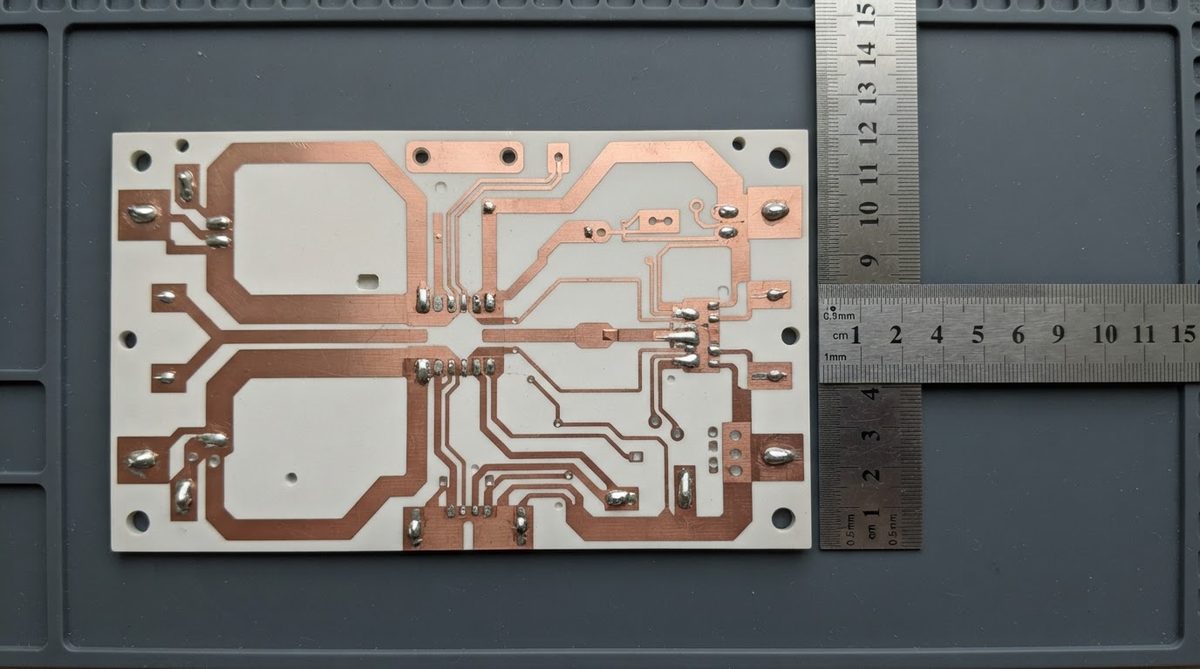
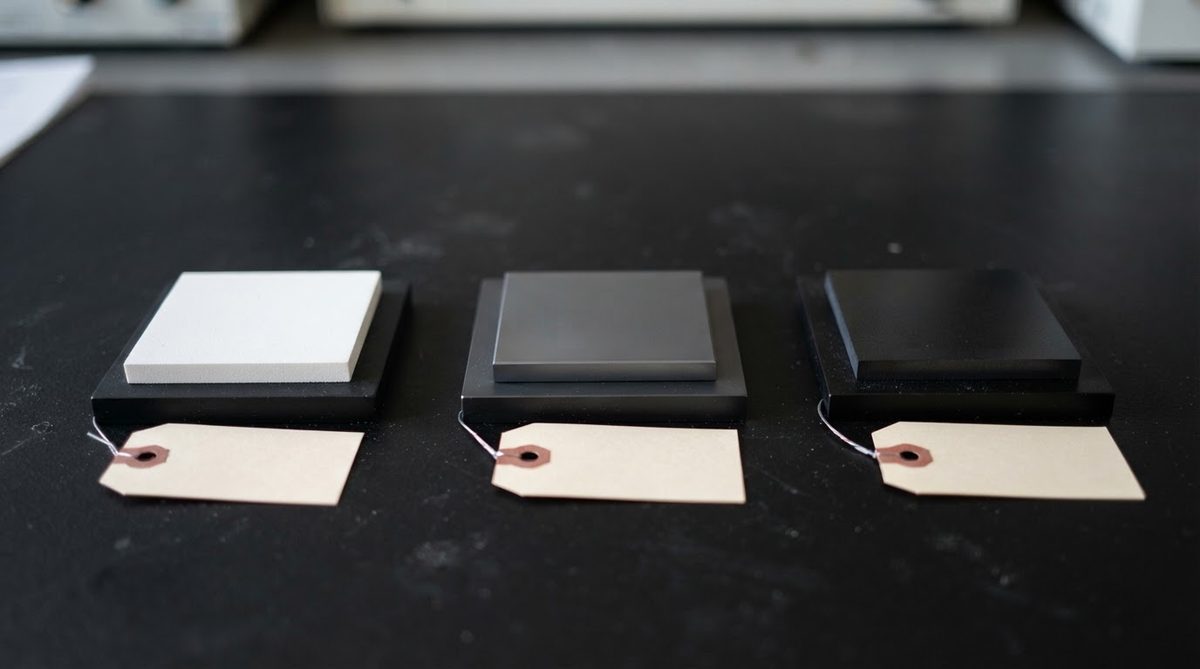
Aluminum nitride is a covalently bonded ceramic compound (chemical formula AlN) with a hexagonal wurtzite crystal structure. It is sintered from AlN powder with yttria (Y₂O₃) or other rare-earth oxide sintering aids at 1750–1900 °C in a nitrogen atmosphere. The sintering-aid chemistry and grain-boundary control determine the final thermal conductivity: higher-purity formulations with fewer oxygen impurities achieve conductivities above 200 W/mK.
AlN substrates are produced as thin, flat plates—commonly 0.25 mm to 1.0 mm thick—and metallized via thin-film sputtering, thick-film printing, or direct bond copper (DBC) / active metal brazing (AMB) processes for circuit fabrication.
Aluminum Nitride AlN Properties Datasheet
| Property | Value | Unit | Condition | Source |
|---|---|---|---|---|
| Thermal conductivity | 170–230 | W/mK | 25 °C | Kyocera SH-30 / SH-50 datasheet; Maruwa HA-230 |
| CTE | 4.3–4.7 | ppm/K | 20–400 °C | CoorsTek AlN datasheet |
| Dielectric constant (εr) | 8.5–8.9 | — | 1 MHz, 25 °C | Kyocera SH-30 datasheet |
| Dielectric strength | 15–17 | kV/mm | AC, 25 °C, 0.635 mm thick | Maruwa HA-230 datasheet |
| Loss tangent (tan δ) | 3–5 × 10⁻⁴ | — | 1 MHz, 25 °C | Kyocera SH-30 datasheet |
| Volume resistivity | >10¹⁴ | Ω·cm | 25 °C | CoorsTek AlN datasheet |
| Flexural strength | 300–400 | MPa | 3-pt bend, ASTM C1161 | CoorsTek; Kyocera |
| Young’s modulus | 310–330 | GPa | 25 °C | CoorsTek AlN datasheet |
| Density | 3.26–3.30 | g/cm³ | Archimedes, ASTM C373 | Maruwa HA-230 |
| Max use temperature (inert/N₂) | ~1000 | °C | Non-oxidizing atmosphere | CeramTec technical guide |
| Oxidation onset (air) | ~700 | °C | Sustained exposure, air | CeramTec technical guide |
| Surface roughness (as-fired) | 0.3–0.8 | µm Ra | As-sintered | Maruwa; varies with grade |
Typical values for commercially available material, for comparison only. Confirm against the datasheet for your specific grade.
Surface finish matters for thin-film metallization adhesion and wire bonding. As-fired AlN is rougher than lapped alumina. Polished AlN substrates can reach Ra < 0.05 µm, but at added cost. For more detail, see the guide on AlN surface roughness and finish options.
How Aluminum Nitride AlN Properties Compare to Alumina and Si₃N₄
Engineers most often compare AlN against 96 % alumina (the cost baseline) and silicon nitride (the toughness champion). The table below puts the three side by side under identical conditions where possible, highlighting how aluminum nitride AlN properties differ on every axis that matters for substrate selection.
| Parameter | 96 % Al₂O₃ | AlN (high grade) | Si₃N₄ | Unit |
|---|---|---|---|---|
| Thermal conductivity (25 °C) | 24–28 | 170–230 | 70–90 | W/mK |
| CTE (20–400 °C) | 7.0–7.4 | 4.3–4.7 | 2.7–3.2 | ppm/K |
| Flexural strength (ASTM C1161) | 300–380 | 300–400 | 600–900 | MPa |
| Fracture toughness (K_IC) | 3.5–4.0 | 2.5–3.5 | 6–7 | MPa·m½ |
| Dielectric constant (1 MHz) | 9.0–9.5 | 8.5–8.9 | 7.9–8.5 | — |
| Relative cost (per cm²) | 1× | 3–5× | 5–10× | — |
Sources: Kyocera, CoorsTek, Maruwa published datasheets. Cost ratios are approximate market averages for bare substrates.
AlN wins on thermal conductivity by a wide margin. Si₃N₄ wins on mechanical toughness and thermal-shock resistance, making it the better choice for high-reliability power modules that undergo deep thermal cycling (ΔT > 150 K). For a deeper comparison of all ceramic substrate types, see the dedicated guide.
Dielectric Performance of AlN
Among the aluminum nitride AlN properties most relevant to power-module designers, dielectric performance stands out. AlN’s dielectric constant of 8.5–8.9 at 1 MHz sits slightly below 96 % alumina’s 9.0–9.5, which is marginally better for high-frequency signal integrity. Its loss tangent of 3–5 × 10⁻⁴ at 1 MHz is low enough for most power-switching and RF applications up to several GHz. At higher frequencies (10–40 GHz), loss tangent rises and designers should request frequency-specific data from the substrate supplier.
Dielectric strength above 15 kV/mm at 0.635 mm thickness means a standard AlN substrate can isolate well beyond the 2.5 kV partial-discharge requirements of many EV traction inverters per IEC 60664-1. For a broader discussion of how ceramic substrates compare on electrical isolation, see ceramic dielectric properties.
CTE Matching with Silicon and GaN
AlN’s CTE of 4.3–4.7 ppm/K (20–400 °C) is close to silicon (2.6–4.1 ppm/K over the same range) and GaN-on-SiC (approximately 3.2–5.6 ppm/K depending on the layer stack). This proximity reduces thermomechanical stress at the die-attach solder joint during power cycling.
For comparison, 96 % alumina has a CTE of ~7.2 ppm/K—a mismatch of roughly 3 ppm/K against silicon. Over thousands of thermal cycles between −40 °C and +150 °C, that mismatch accumulates fatigue damage in the solder. AlN cuts the mismatch roughly in half, extending solder-joint lifetime significantly in automotive-grade qualification (per AQG 324 power-cycling tests).
Worked Example: Thermal Resistance Through an AlN Substrate
A SiC MOSFET dissipates 50 W over a 10 mm × 10 mm footprint. The AlN substrate is 0.635 mm thick with a thermal conductivity of 180 W/mK. What is the conduction thermal resistance through the substrate?
R_th = t / (k × A)
Where t = 0.635 × 10⁻³ m, k = 180 W/mK, A = 10 × 10 × 10⁻⁶ m² = 1 × 10⁻⁴ m².
R_th = 0.000635 / (180 × 0.0001) = 0.035 °C/W
Temperature rise across the substrate: ΔT = 50 W × 0.035 °C/W = 1.8 °C.
Repeating the same calculation with 96 % alumina (k = 26 W/mK):
R_th = 0.000635 / (26 × 0.0001) = 0.244 °C/W → ΔT = 50 × 0.244 = 12.2 °C.
The AlN substrate contributes roughly 10 °C less thermal rise in this single layer alone. In a full thermal stack (die attach + substrate + base plate + TIM + heatsink), that 10 °C saving can be the difference between meeting and missing a junction-temperature target. This worked example illustrates why the thermal aluminum nitride AlN properties dominate substrate selection in high-power designs.
Enter your own substrate area, thickness, and dissipated power below to estimate junction temperature rise for AlN or other ceramic materials.
Moisture Sensitivity and Oxidation
AlN reacts with water vapor at the surface, forming aluminum hydroxide and releasing ammonia. This hydrolysis degrades surface conductivity and can weaken metallization adhesion over time. In humid environments, AlN substrates should be stored in dry nitrogen or vacuum-sealed packaging. Once metallized on both sides, the metal layers act as a moisture barrier.
In air, AlN begins to oxidize above approximately 700 °C, forming a surface layer of Al₂O₃. In non-oxidizing atmospheres (N₂, Ar, vacuum), AlN is stable to roughly 1000 °C. Designers specifying AlN for high-temperature applications above 600 °C in air should account for this oxide growth in long-term reliability models.
When Not to Use AlN
Cost-sensitive, low-power designs. If total dissipation is under 5–10 W and junction temperature targets are easily met with alumina, the 3–5× cost premium of AlN is not justified. Standard 96 % Al₂O₃ will do the job.
Extreme mechanical shock or deep thermal cycling. AlN’s fracture toughness (2.5–3.5 MPa·m½) is lower than Si₃N₄ (6–7 MPa·m½). For automotive power modules that must survive >10,000 cycles at ΔT > 150 K, silicon nitride AMB substrates offer better crack resistance.
Humid, unpackaged environments. If the substrate will be exposed to moisture without a hermetic or conformal-coated enclosure, AlN’s hydrolysis sensitivity becomes a reliability risk. Alumina is inert to moisture.
Large panel sizes on a tight budget. AlN sintering yields drop for panels larger than roughly 140 mm × 190 mm. Alumina is available in much larger formats at lower cost.
Frequently Asked Questions
Is AlN electrically conductive?
No. AlN is an electrical insulator with volume resistivity above 10¹⁴ Ω·cm at 25 °C. It functions simultaneously as a thermal conductor and an electrical isolator, which is why it is widely used as a substrate beneath bare power dies.
Can AlN substrates be soldered directly?
Bare AlN cannot be soldered. The substrate must first be metallized—typically with a sputtered Ti/Pt/Au or Ti/Ni/Au thin-film stack, or via DBC/AMB copper bonding. Once metallized, standard reflow or vacuum soldering processes apply.
How does AlN compare to BeO for thermal conductivity?
High-purity BeO reaches 250–300 W/mK, roughly 20–40 % higher than the best AlN grades. However, beryllium oxide dust is a confirmed human carcinogen and causes chronic beryllium disease, making it subject to strict handling regulations. Most new designs choose AlN to avoid the safety and disposal burden. For details on BeO hazards, see the beryllium oxide safety guide.
What is the maximum operating temperature of an AlN substrate?
In inert or nitrogen atmospheres, AlN is stable to approximately 1000 °C. In air, surface oxidation begins near 700 °C. For most PCB and power-module applications operating below 300 °C, oxidation is not a practical concern. See the full discussion of ceramic PCB maximum operating temperature.
Does AlN need special storage?
Yes. Bare (unmetallized) AlN substrates should be stored in dry nitrogen or vacuum-sealed bags to prevent surface hydrolysis from ambient humidity. Metallized substrates are less sensitive because the metal layers seal the ceramic surface, but dry storage is still recommended as best practice.
Next Step
If the aluminum nitride AlN properties outlined above match your thermal and electrical requirements, the next decision is substrate thickness and surface finish. Review AlN ceramic PCB wholesale options for volume pricing, or request a quote with your specific dimensions and metallization requirements at aluminapcb.com/instant-quote.