Aluminum nitride AlN wholesale substrates are available starting at typical MOQs of 50–500 pieces depending on size and metallization. AlN’s thermal conductivity of 170–200 W/mK at 25 °C (per ASTM E1461) makes it the go-to ceramic for high-power electronics where 96% alumina’s 24–28 W/mK falls short. However, aluminum nitride AlN wholesale pricing runs 3–5× higher per unit area than Al₂O₃. Understanding the grades, cost levers, and order structures lets you lock in the right price without over-specifying.
Key Takeaways
- AlN thermal conductivity ranges from 170 W/mK (standard grade) to 200+ W/mK (high-purity grade) at 25 °C, measured per ASTM E1461.
- Aluminum nitride AlN wholesale pricing typically drops 15–25% when moving from 100-piece to 1,000-piece orders, with the steepest break at the sintering-batch boundary.
- CTE of 4.5 ppm/°C (20–300 °C) closely matches silicon (2.6 ppm/°C) and SiC (4.0 ppm/°C), reducing solder-joint fatigue in die-attach applications.
- AlN requires oxygen-getter sintering atmospheres, which is why lead times for custom sizes run 4–8 weeks even at volume.
Aluminum Nitride AlN Wholesale Grades and What They Mean for Orders
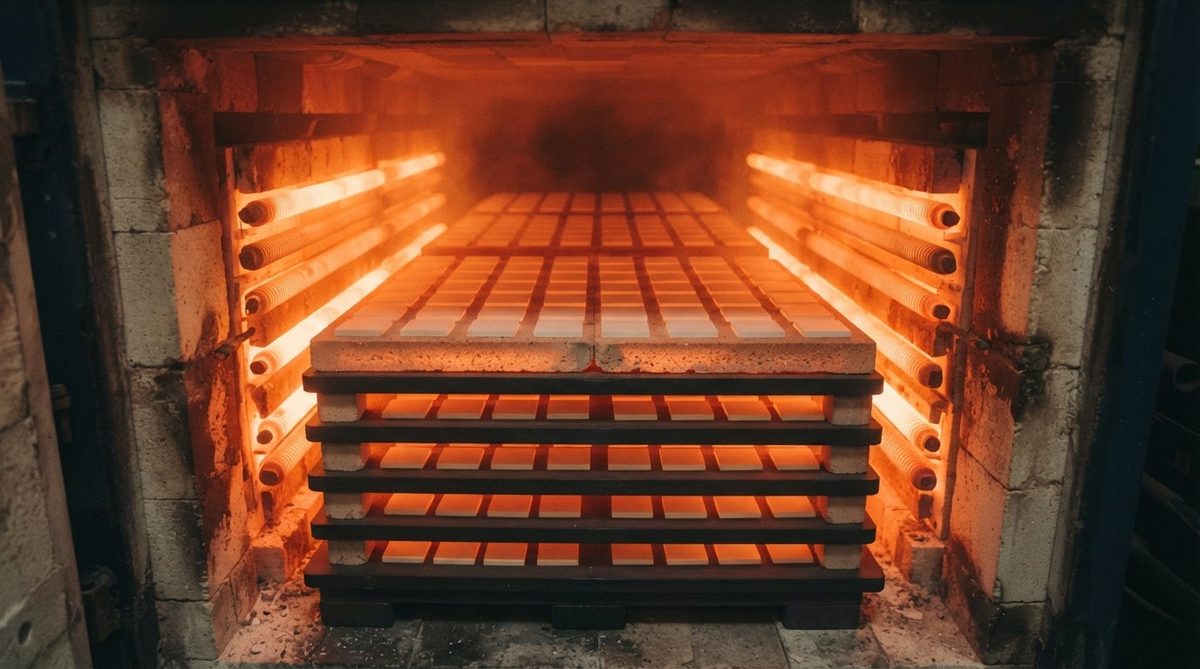
Most suppliers offer two tiers: a standard grade (≥170 W/mK, ~98% AlN purity) and a high-purity grade (≥200 W/mK, ≥99% AlN). The difference comes down to the yttria (Y₂O₃) sintering-aid content and grain-boundary phase. Standard grade is adequate for most power-module and LED applications. High-purity grade is specified when thermal resistance budgets are extremely tight, such as GaN HEMT die attach or high-frequency RF loads.
When ordering aluminum nitride AlN wholesale, confirm the grade explicitly. “AlN” on a quote without a conductivity spec can mean anything from 150 to 200+ W/mK. Ask for the supplier’s lot-test data referencing ASTM E1461 (laser flash diffusivity) or the equivalent JIS R1611. If you need to compare AlN against other ceramic substrate types, the thermal conductivity gap between grades matters more than the gap between AlN and the next-best option.
AlN Wholesale Specifications at a Glance
| Parameter | Standard Grade | High-Purity Grade | Unit | Condition / Standard |
|---|---|---|---|---|
| Thermal conductivity | 170–180 | 190–210 | W/mK | 25 °C, ASTM E1461 |
| Dielectric strength | 15–17 | 15–17 | kV/mm | IEC 60243-1 |
| Dielectric constant (εr) | 8.5–9.0 | 8.5–9.0 | — | 1 MHz, 25 °C |
| CTE | 4.5 | 4.5 | ppm/°C | 20–300 °C |
| Flexural strength | 300–350 | 300–350 | MPa | ASTM C1161, 3-point bend |
| Volume resistivity | >10¹⁴ | >10¹⁴ | Ω·cm | 25 °C |
| Max continuous use temp | 1,000 | 1,000 | °C | Inert / N₂ atmosphere |
Typical values for commercially available material, for comparison only. Confirm against the datasheet for your specific grade. Source: Kyocera SN series and Maruwa AlN datasheets.
What Drives Aluminum Nitride AlN Wholesale Pricing?
Four factors dominate cost at volume:
- Raw powder purity. High-purity AlN powder (≥99%) costs roughly 2× what standard-grade powder costs. This feeds directly into per-substrate pricing.
- Sintering batch size. AlN is sintered in nitrogen with oxygen getters. Furnace runs are expensive, so pricing steps down at batch-fill boundaries—often 200, 500, and 1,000 pieces for standard sizes (25.4 × 25.4 mm to 114.3 × 114.3 mm).
- Surface finish. As-fired AlN has Ra 0.4–0.8 µm. Lapped or polished surfaces (Ra < 0.1 µm) add 20–40% to per-piece cost because of the extra grinding step and yield loss on a brittle material.
- Metallization. Bare substrates are cheapest. Adding DPC (direct plated copper) or thin-film Ti/Pt/Au sputtered layers adds cost and lead time. If you only need bare substrates, say so early—it simplifies quoting.
Worked Example: 1,000-Piece AlN Wholesale Order
Assume 50.8 × 50.8 × 0.635 mm substrates, standard grade (170 W/mK), as-fired surface, no metallization. A representative aluminum nitride AlN wholesale price range is $8–$14 per piece at 1,000 units. The same substrate at 100 units might run $12–$20 per piece. Moving to high-purity grade adds roughly 30–50% at any volume. These are indicative ranges; actual pricing depends on supplier, region, and current powder costs.
Enter your substrate dimensions, grade, and quantity below to estimate per-piece pricing for your specific AlN wholesale order.
CTE Matching: Why It Matters at Volume
AlN’s CTE of 4.5 ppm/°C sits close to silicon (2.6 ppm/°C) and silicon carbide (4.0 ppm/°C). For power modules that cycle between –40 °C and +150 °C, that close match reduces die-attach solder fatigue and extends field life. If your design pairs AlN with a copper heat spreader (CTE ~17 ppm/°C), the mismatch is large enough to warrant a compliant interlayer or active metal brazing (AMB). For more on managing expansion mismatches, see CTE matching in ceramic PCB design.
Dielectric Performance in Bulk AlN Substrates
AlN’s dielectric constant of 8.5–9.0 at 1 MHz is higher than 96% alumina (9.0–9.5) but lower than silicon nitride (~8.0). Its loss tangent at 1 MHz is typically 0.0003–0.001, making it suitable for high-frequency isolation in power converters. For a deeper look at how substrate permittivity affects impedance and isolation, the page on dielectric properties of ceramic substrates covers the math.
When NOT to Use AlN
Thermal loads below ~20 W/cm². If your heat flux is modest, 96% alumina at one-third the price will do the job. Run a quick thermal-resistance calculation: if the substrate’s contribution to total Rth is under 10%, the material choice barely matters.
Mechanical shock or flexure. AlN’s flexural strength (300–350 MPa) is adequate for static mounting but poor compared to silicon nitride Si₃N₄ wholesale substrates at 600–800 MPa. For power modules in automotive or traction inverters where thermal cycling induces mechanical stress, Si₃N₄ is the safer pick despite higher cost.
Humid or unprotected environments. Bare AlN hydrolyzes slowly in moisture, forming aluminum hydroxide on the surface. If your assembly will not be hermetically sealed or conformally coated, specify a passivation layer or consider alumina instead.
How to Structure an Aluminum Nitride AlN Wholesale Purchase
- Fix the grade (standard vs. high-purity) based on your thermal budget.
- Specify dimensions with tolerances—typical is ±0.1 mm on length/width, ±0.025 mm on thickness for ground substrates.
- State surface finish: as-fired, lapped, or polished, with target Ra.
- Declare metallization requirements or confirm bare substrate.
- Request lot-level thermal-conductivity test certificates (laser flash method).
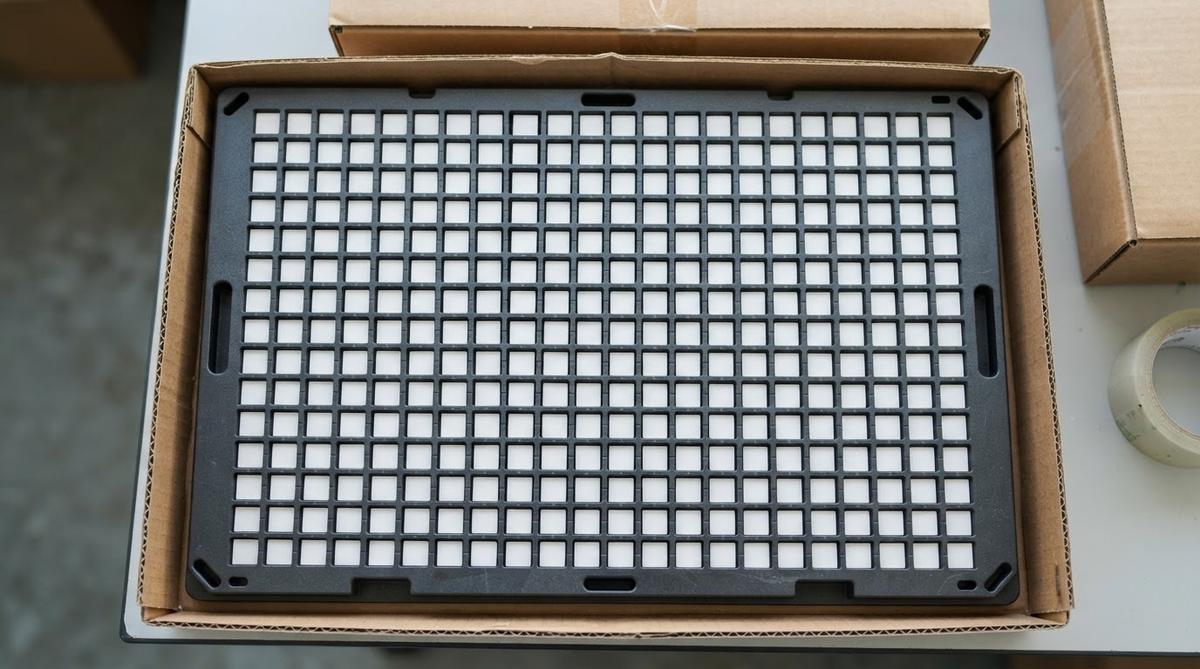
- Agree on packaging—AlN is brittle; waffle trays or interleaved foam are standard for shipping.
FAQ
Can AlN substrates be laser-cut to custom shapes?
Yes. CO₂ and UV lasers both cut AlN cleanly, though UV lasers produce less micro-cracking on edges. Laser cutting adds per-piece cost but avoids hard-tooling charges, making it practical for prototypes and mid-volume custom shapes.
Does AlN need a surface treatment before soldering?
Bare AlN does not wet to standard solders. You need a metallization layer—commonly Ti/Pt/Au sputtered thin film or DPC copper—before soldering. Some suppliers offer pre-metallized wholesale substrates; confirm this at the quoting stage.
What is the shelf life of bare AlN substrates?
Stored in sealed, desiccated packaging, bare AlN substrates remain usable for 12+ months. Exposure to ambient humidity over weeks can cause surface hydrolysis (a white powdery layer). If this occurs, a light re-fire or plasma clean can restore the surface for metallization.
How does AlN compare to BeO for thermal performance?
Beryllium oxide offers 250–300 W/mK, roughly 40–60% higher than AlN. However, BeO dust is a confirmed human carcinogen that causes chronic beryllium disease. Regulatory burden, handling restrictions, and disposal costs make BeO impractical for most new designs. Details are on the beryllium oxide safety page.
What is the typical lead time for wholesale AlN?
Standard-size bare substrates from stock ship in 1–2 weeks. Custom sizes or metallized substrates require 4–8 weeks due to sintering and processing schedules. Confirm lead time before committing to a production timeline.
Are there export restrictions on AlN substrates?
AlN itself is not restricted under most export-control regimes, but substrates metallized for specific military or aerospace end uses may fall under ITAR or EAR classifications. Check with your trade-compliance team if the end application is defense-related.