ENEPIG Definition and Overview
The ENEPIG definition in one sentence: ENEPIG (Electroless Nickel / Electroless Palladium / Immersion Gold) is a three-layer metallic surface finish applied to PCB pads to protect the underlying copper, ensure solderability, and support wire bonding. The palladium interlayer acts as a barrier that prevents nickel from migrating into the gold, eliminating the “black pad” defect associated with solder-mask-exposed ENIG finishes. Understanding the ENEPIG definition is essential for engineers specifying finishes on high-reliability or mixed-technology assemblies.
Layer Stack and Typical Thicknesses
| Layer | Material | Thickness Range | Primary Function |
|---|---|---|---|
| 1 (bottom) | Electroless Nickel (Ni) | 3–6 µm | Diffusion barrier, solder-joint strength |
| 2 (middle) | Electroless Palladium (Pd) | 0.05–0.3 µm | Prevents Ni–Au interdiffusion, reduces black-pad risk |
| 3 (top) | Immersion Gold (Au) | 0.03–0.1 µm | Oxidation protection, wire-bond surface |
Thicknesses per IPC-4556, “Specification for Electroless Nickel / Electroless Palladium / Immersion Gold (ENEPIG) Plating for Printed Boards.” Confirm against your plating supplier’s process data.
This layer stack is central to the ENEPIG definition: without the palladium barrier, the finish would simply be ENIG, and the black-pad risk would remain.
Why the ENEPIG Definition Matters: ENEPIG vs ENIG
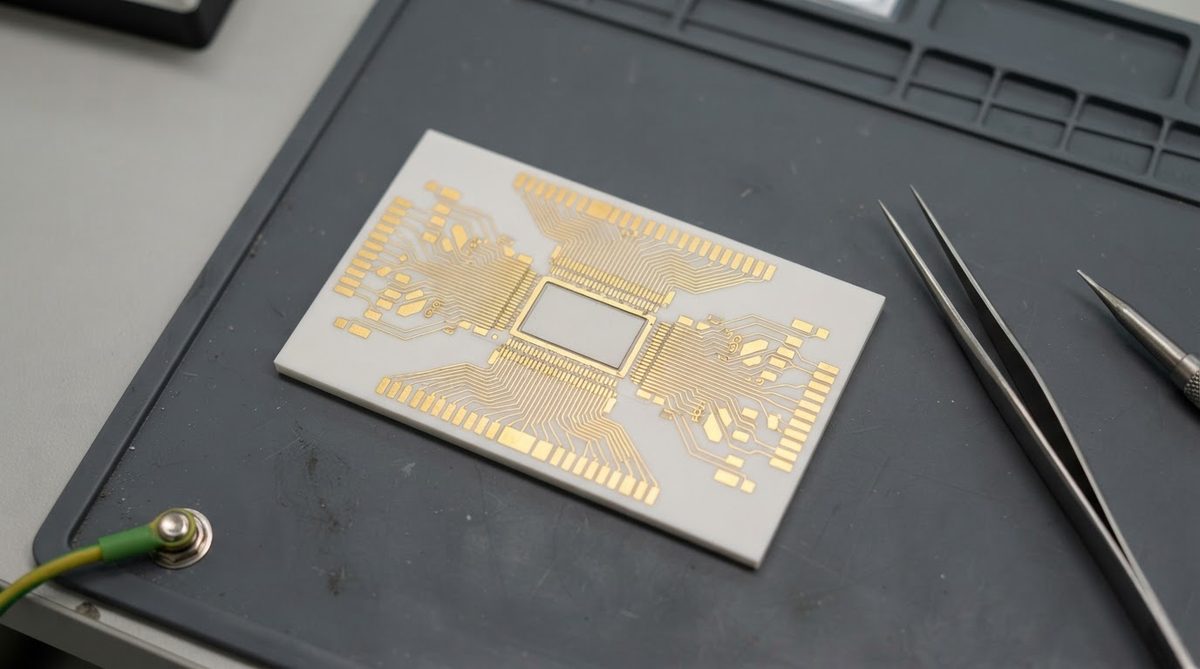
ENIG uses only two layers (Ni + Au). During immersion gold deposition, an aggressive galvanic reaction can corrode the nickel surface, leading to black pad. The palladium layer in ENEPIG interrupts this reaction. By definition, ENEPIG also supports both gold and aluminum wire bonding, making it the standard choice for chip-on-board (COB) assemblies, including those on ceramic substrates fired through HTCC or LTCC processes.
The trade-off is cost. ENEPIG adds a palladium plating step and the metal itself is expensive. Expect a 15–30% premium over ENIG for the finish alone, depending on pad area and batch size.
Common Applications
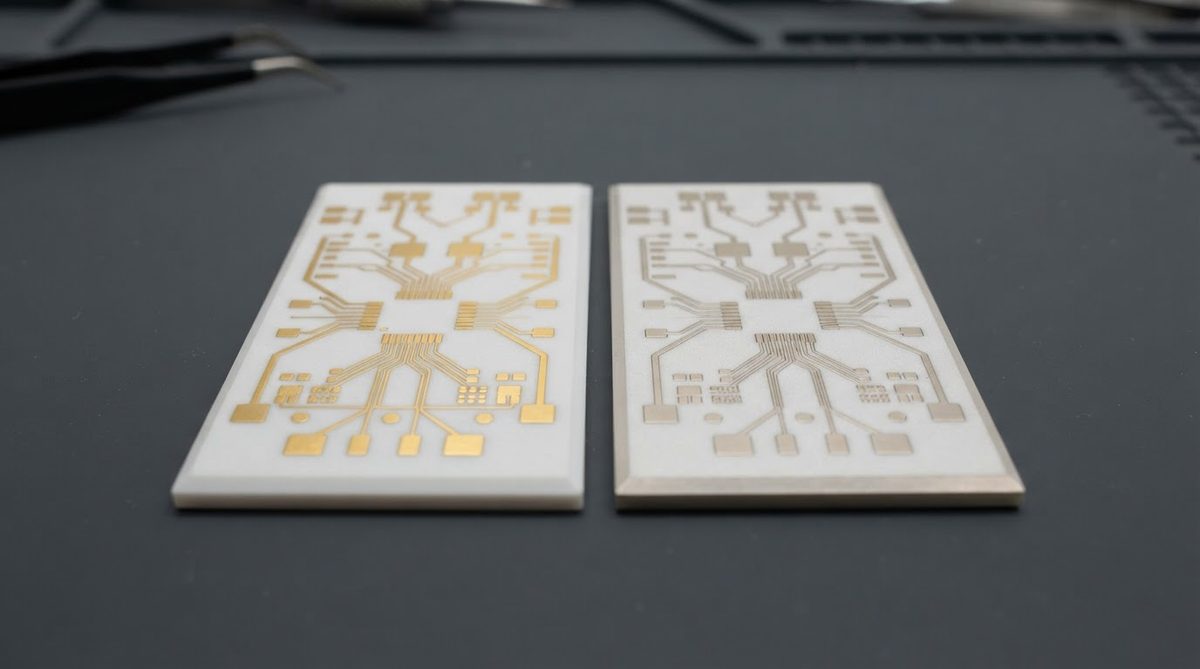
- High-reliability automotive and aerospace modules requiring both soldering and wire bonding on the same board.
- RF and power-density ceramic packages where long-term contact resistance must stay below 10 mΩ.
- Mixed-technology assemblies combining BGA, QFN, and gold-wire-bonded die on one substrate.
In each of these cases, the ENEPIG definition—specifically the palladium barrier function—is what distinguishes this finish from lower-cost alternatives.
When NOT to Use ENEPIG
If your assembly uses only reflow soldering with no wire bonding, standard ENIG or even HASL may be sufficient at lower cost. For press-fit connectors, hard electrolytic gold is a better match. ENEPIG’s palladium layer also adds slight complexity to rework; if your process requires frequent pad touch-up, consider whether the premium is justified.
FAQ
Is ENEPIG lead-free?
Yes. All three layers—nickel, palladium, and gold—are lead-free, making ENEPIG fully RoHS-compliant.
Can I wire-bond aluminum wire directly to ENEPIG?
Yes. ENEPIG supports both gold ball bonding and aluminum wedge bonding. The thin gold layer is consumed during bonding, and the palladium beneath provides a reliable bond interface, per IPC-4556 guidelines.
Does ENEPIG work on ceramic PCBs?
ENEPIG is routinely applied to metallized ceramic substrates, including alumina and aluminum nitride. The electroless process deposits uniformly regardless of substrate material, provided the seed metallization (typically sputtered or plated copper/nickel) is properly prepared. Surfaces processed through screen printing thick-film metallization also accept ENEPIG after proper activation.
What IPC specification covers ENEPIG?
IPC-4556 is the governing specification. It defines layer composition, thickness requirements, and acceptance criteria for ENEPIG finishes on printed boards. Any complete ENEPIG definition references this standard.