If you are asking what is beryllia BeO, the short answer is this: beryllium oxide (BeO), commonly called beryllia, is a white polycrystalline ceramic that combines high thermal conductivity (250–300 W/mK at 25 °C) with strong electrical insulation (volume resistivity >1014 Ω·cm). That combination makes it unique among oxide ceramics and explains its long history in high-power RF, military electronics, and nuclear applications. It is also a confirmed human carcinogen in dust form, which severely limits where and how it can be specified. Before considering BeO for any project, read the beryllium oxide safety and handling guide.
Key Takeaways
- BeO thermal conductivity is 250–300 W/mK at 25 °C — roughly 10× that of 96% alumina and comparable to aluminium metal (205 W/mK).
- Beryllium oxide dust is a confirmed human carcinogen (IARC Group 1) and causes chronic beryllium disease (CBD). OSHA’s permissible exposure limit is 0.2 µg/m³ TWA (updated 2017 standard, 29 CFR 1910.1024).
- BeO substrates are processed via direct-bond copper (DBC) or thin-film metallisation; LTCC and HTCC processes are not used with BeO.
- Aluminium nitride (AlN, 170–200 W/mK) and Si₃N₄ ceramic substrates now replace BeO in most new designs where the health risk is unacceptable.
- BeO remains in legacy military and aerospace systems where no drop-in replacement meets the combined thermal and dielectric requirements.
What Is Beryllia BeO — Material Basics
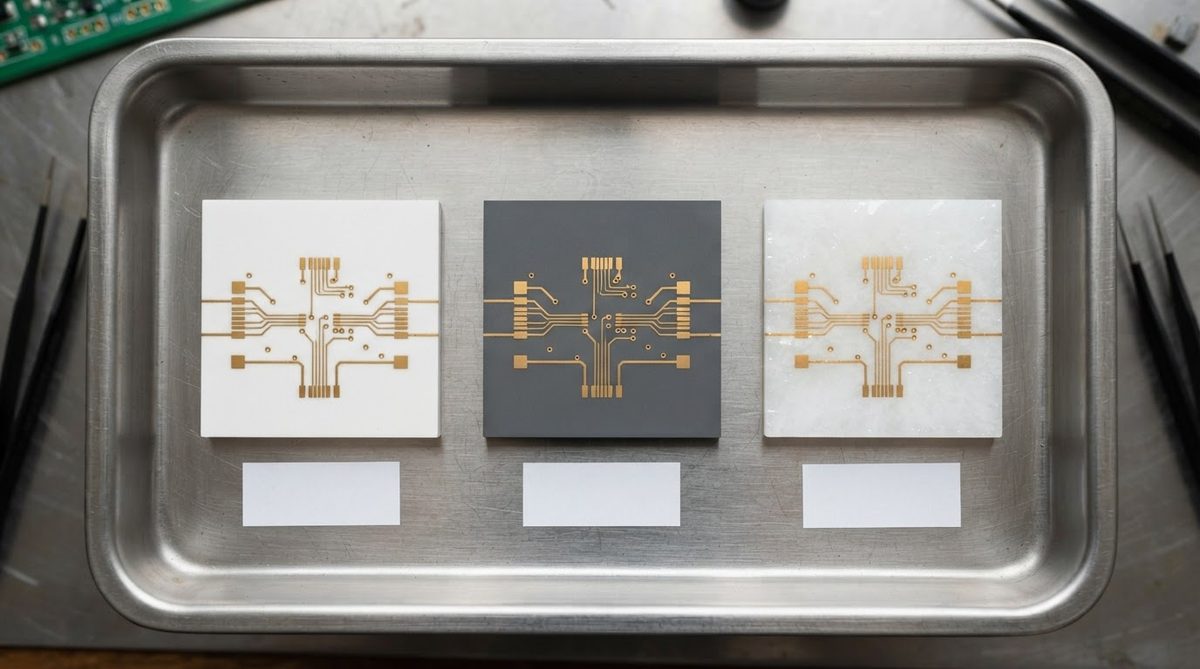
Beryllium oxide is a binary compound of beryllium and oxygen (chemical formula BeO). It crystallises in the wurtzite structure — the same crystal type as aluminium nitride — which gives it unusually high thermal conductivity for an oxide. Bulk BeO ceramic is produced by pressing and sintering beryllia powder at 1 500–1 700 °C, typically to >99% theoretical density. The resulting substrate is mechanically hard (Knoop hardness ~1 200 kg/mm²), chemically stable, and transparent to microwave frequencies.
The term beryllia is the industry shorthand. You will see both “BeO” and “beryllia” on datasheets and procurement documents. They refer to the same material. Understanding what is beryllia BeO at the crystal-structure level helps explain why its thermal performance so far exceeds other oxides: the light atomic mass of beryllium and the strong Be–O bond produce high phonon velocities, the primary heat-transfer mechanism in electrically insulating ceramics.
BeO Material Properties at a Glance
| Parameter | Value | Unit | Condition | Source |
|---|---|---|---|---|
| Thermal conductivity | 250–300 | W/mK | 25 °C, ≥99.5% purity | Materion Thermalox 995 datasheet |
| Dielectric constant (εr) | 6.5–6.8 | — | 1 MHz, 25 °C | Materion Thermalox 995 datasheet |
| Dielectric strength | 10–14 | kV/mm | 25 °C, ASTM D149 | Materion Thermalox 995 datasheet |
| Volume resistivity | >1014 | Ω·cm | 25 °C | Materion Thermalox 995 datasheet |
| Flexural strength | 230–250 | MPa | 4-pt bend, ASTM C1161 | Materion Thermalox 995 datasheet |
| CTE | 7.5–8.5 | ppm/°C | 25–300 °C | Materion Thermalox 995 datasheet |
| Max use temperature | ~1 800 | °C | Inert atmosphere | CoorsTek technical data |
| Density | 2.85–2.90 | g/cm³ | ≥99.5% BeO | Materion Thermalox 995 datasheet |
Typical values for commercially available material, for comparison only. Confirm against the datasheet for your specific grade.
For a deeper look at every electrical, mechanical, and thermal parameter, see the full BeO material properties and datasheet page.
Why Engineers Specify BeO — and Where It Is Still Used
Now that you know what is beryllia BeO at the material level, the engineering appeal is simple arithmetic. A 0.635 mm thick BeO substrate conducting 50 W across a 10 × 10 mm footprint produces a thermal resistance of roughly 0.23 °C/W (Rth = t / (k × A) = 0.000635 / (275 × 0.0001) ≈ 0.023 °C·m²/W → 0.23 °C/W over 1 cm²). The same geometry in 96% alumina (k ≈ 26 W/mK) yields about 2.44 °C/W — more than ten times higher. That difference matters in applications where junction temperature directly limits device life.
Enter your substrate dimensions and power dissipation below to see how beryllia compares to alumina and AlN for your own thermal resistance estimate.
Typical BeO applications
- High-power RF transistor packages. GaN and GaAs HEMT packages for radar and electronic warfare have used BeO carriers for decades because the substrate must conduct heat away from a small die while remaining electrically insulating at microwave frequencies.
- Travelling-wave tubes (TWTs). BeO spacers and supports are standard in satellite and shipboard TWTs where no alternative matches the thermal and dielectric performance in the required geometry.
- Nuclear instrumentation. BeO is a neutron moderator and reflector material. Its ceramic form also serves as a substrate for in-core detectors.
- Legacy military and aerospace modules. Many fielded systems contain BeO substrates specified decades ago. Replacement requires full requalification, so BeO persists even where alternatives now exist.
The Health Hazard: Why BeO Requires Special Handling
Beryllium oxide dust is a confirmed human carcinogen. The International Agency for Research on Cancer (IARC) classifies beryllium and beryllium compounds as Group 1 carcinogens. Inhalation of beryllium-containing particles can cause chronic beryllium disease (CBD), an incurable granulomatous lung condition, even at very low exposure levels. OSHA’s 2017 beryllium standard (29 CFR 1910.1024) sets the permissible exposure limit at 0.2 µg/m³ as an 8-hour TWA.
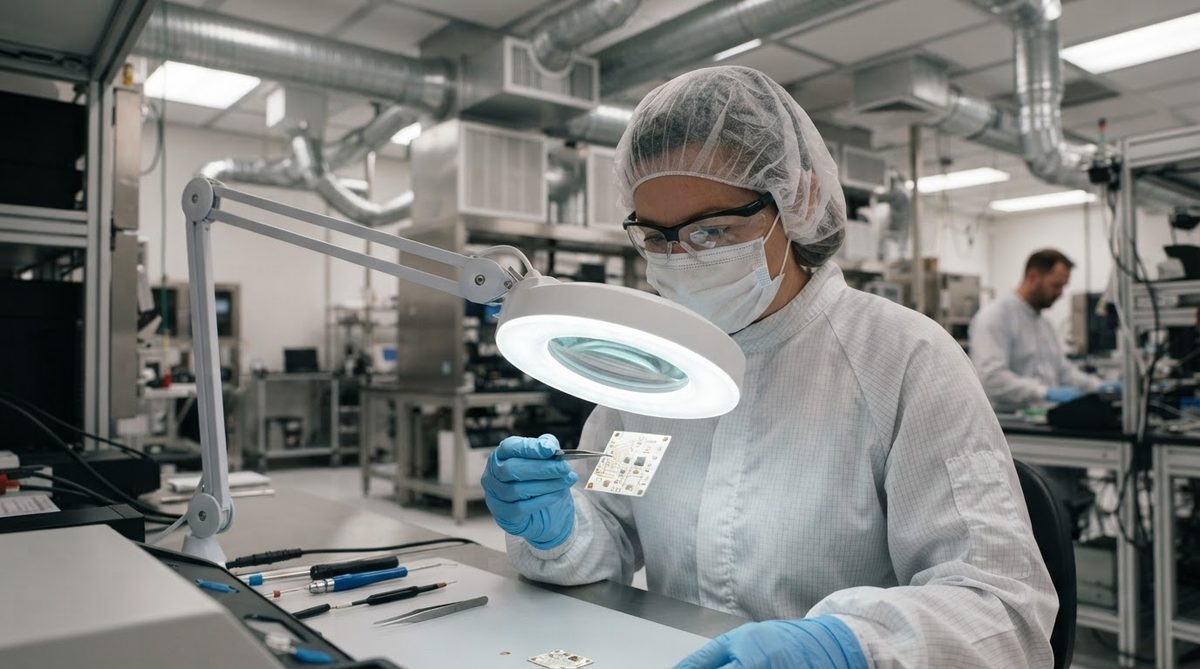
Intact, fully sintered BeO substrates do not shed dust under normal handling. The hazard arises during machining, grinding, laser cutting, breakage, soldering rework, and disposal. Any operation that generates particulate — including abrasive cleaning or sanding — requires engineering controls, personal protective equipment, and beryllium-specific waste disposal per OSHA and EPA regulations.
This is not a theoretical concern. Multiple electronics workers have developed CBD from reworking BeO-containing assemblies without adequate controls. Read the full BeO safety and handling guide before specifying this material.
BeO vs. Alumina vs. AlN: How They Compare
| Parameter | BeO (≥99.5%) | Al₂O₃ (96%) | AlN | Unit |
|---|---|---|---|---|
| Thermal conductivity (25 °C) | 250–300 | 24–28 | 170–200 | W/mK |
| Dielectric constant (1 MHz) | 6.5–6.8 | 9.0–9.5 | 8.5–9.0 | — |
| CTE (25–300 °C) | 7.5–8.5 | 7.2–8.0 | 4.3–4.7 | ppm/°C |
| Flexural strength | 230–250 | 330–380 | 300–350 | MPa |
| Health hazard (dust) | Carcinogen (IARC Group 1) | Nuisance dust | Nuisance dust | — |
| Relative substrate cost | 5–10× | 1× (baseline) | 3–5× | — |
Values from Materion, Kyocera, and CoorsTek datasheets. Confirm against your specific grade.
AlN now covers most high-thermal-conductivity applications that previously required beryllia. Its 170–200 W/mK conductivity is lower, but it carries no carcinogenic hazard, and its CTE (4.3–4.7 ppm/°C) is a closer match to silicon and SiC dies. For a broader comparison across all substrate ceramics, see the ceramic PCB materials overview.
When NOT to Use BeO
For most new designs, beryllia should not be your first choice. Choose a different substrate when:
- AlN meets your thermal budget. If 170–200 W/mK is sufficient, AlN eliminates the carcinogenic hazard, reduces regulatory burden, and simplifies end-of-life disposal.
- Your product will be field-serviced or reworked. Any operation that risks cracking or abrading a BeO substrate creates a dust hazard for technicians.
- Consumer or commercial products. RoHS and REACH do not ban BeO outright, but the regulatory paperwork, labelling requirements, and liability exposure make it impractical for high-volume consumer goods.
- Your supply chain cannot handle beryllium. Not all contract manufacturers have beryllium-rated ventilation, PPE, and waste streams. Verifying this adds cost and lead time.
- 96% alumina satisfies the thermal requirement. At 24–28 W/mK and roughly 1/5 to 1/10 the cost, 96% alumina substrates handle the vast majority of ceramic PCB applications.
Frequently Asked Questions
Is beryllia the same as beryllium?
No. Beryllium (Be) is a metallic element. Beryllia (BeO) is its oxide — a ceramic. They share the same health hazard because both release beryllium-containing particles when machined or broken, but their physical properties are completely different. Anyone researching what is beryllia BeO should note this distinction first.
Can I solder components directly to a BeO substrate?
Yes, after metallisation. BeO substrates are typically metallised with thin-film (sputtered Ti/Pt/Au or Cr/Ni/Au) or thick-film (screen-printed tungsten or molybdenum-manganese, then nickel and gold plated) processes. Standard solder alloys wet these metallisations normally. The caution is rework: grinding or abrasive cleaning of a BeO board can release hazardous dust.
Does BeO degrade in humid environments?
High-purity sintered BeO is chemically stable in normal humidity. However, prolonged exposure to liquid water above 100 °C or to strong acids can slowly attack the surface. For most electronics operating environments, moisture is not a concern.
Is there a drop-in replacement for BeO?
Not exactly. AlN is the closest thermal substitute at 170–200 W/mK, but its CTE differs (4.3–4.7 vs. 7.5–8.5 ppm/°C), which may require die-attach and solder-joint redesign. Some legacy RF packages have been requalified with AlN, but the transition is never a simple swap.
Where can I find BeO substrates?
Materion (formerly Brush Ceramics) and American Beryllia are the primary Western suppliers of BeO substrates. Lead times are long — often 12–20 weeks — because demand is low-volume and production requires specialised safety controls.
How do I dispose of BeO boards?
BeO waste is regulated as beryllium-containing material. In the US, disposal must follow EPA guidelines and any applicable state regulations. Most facilities contract with hazardous-waste handlers certified for beryllium. Never throw BeO substrates into general electronics recycling streams.
Next Step
If you are evaluating whether your thermal design truly requires beryllia BeO, start by comparing it against AlN and alumina using the full ceramic substrate material comparison. For projects where a non-BeO ceramic substrate meets your requirements, you can browse common ceramic PCB questions or request a quote directly.