Silicon nitride Si3N4 applications center on environments where a substrate must survive thousands of deep thermal cycles without cracking—primarily SiC/GaN power modules for electric vehicles, traction inverters, aerospace power converters, and high-reliability medical implants. The material’s fracture toughness of 6–7 MPa·√m (per ASTM C1421) is roughly three times that of alumina and aluminum nitride, making it the only ceramic substrate that reliably endures the mechanical stress of wide-bandgap semiconductor operation above 200 °C.
Key Takeaways
- Si3N4 substrates withstand >10,000 thermal cycles from −55 °C to +250 °C in AMB-bonded configurations, per Kyocera SN282 datasheet testing.
- Fracture toughness of 6–7 MPa·√m allows thinner substrates (0.32 mm typical) without risk of crack propagation during power cycling.
- Thermal conductivity is 80–90 W/mK for high-purity grades—lower than AlN (170–200 W/mK) but sufficient when paired with thick copper via Si3N4 AMB substrates.
- Primary silicon nitride Si3N4 applications include automotive traction inverters, railway converters, aerospace power, industrial motor drives, and implantable medical devices.
- Si3N4 is metallized exclusively through AMB (active metal brazing) or DPC (direct plated copper). It is not compatible with DBC, HTCC, or LTCC processes.
Why Si3N4 Exists as a Substrate Material
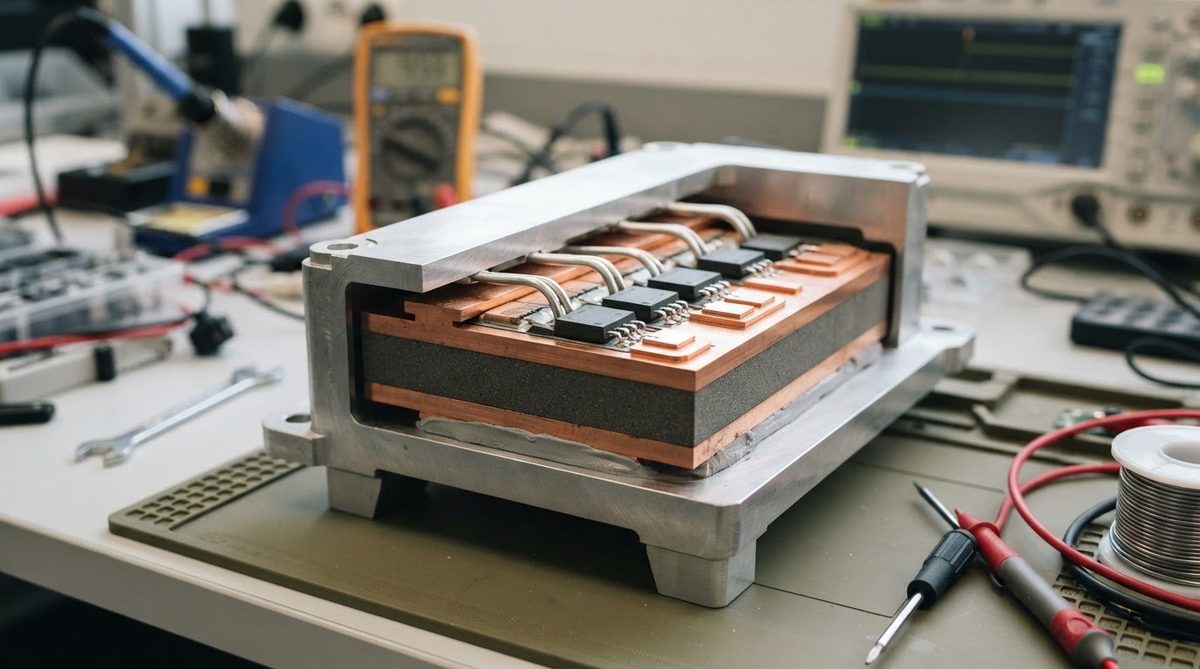
Alumina (Al2O3) and aluminum nitride (AlN) cover most ceramic PCB needs. Si3N4 fills the gap they cannot: high-stress, high-cycle-count environments. A standard AlN DBC substrate typically survives 2,000–3,000 thermal cycles from −40 °C to +250 °C before delamination. An Si3N4 AMB substrate survives 10,000+ cycles under the same profile. That difference determines whether a traction inverter lasts the warranty life of an electric vehicle.
The mechanical advantage comes from Si3N4’s interlocking needle-like grain structure. Unlike the equiaxed grains in alumina and AlN, these elongated β-Si3N4 grains deflect and bridge cracks, absorbing energy before failure. For a deeper look at the material itself, see the beginner’s guide to silicon nitride.
Silicon Nitride Si3N4 Applications: Property Comparison vs AlN and Al2O3
| Parameter | Si3N4 (SN282-grade) | AlN (high purity) | Al2O3 96% | Unit | Condition / Source |
|---|---|---|---|---|---|
| Thermal conductivity | 80–90 | 170–200 | 24–28 | W/mK | 20 °C; Kyocera SN282, CoorsTek AlN |
| Flexural strength | 650–800 | 300–400 | 300–380 | MPa | ASTM C1161, 3-point bend |
| Fracture toughness | 6–7 | 2.5–3.5 | 3.5–4.0 | MPa·√m | ASTM C1421 |
| CTE (20–400 °C) | 2.7–3.2 | 4.5–5.0 | 7.2–7.8 | ppm/K | ASTM E228 |
| Dielectric strength | 15–18 | 15–17 | 10–15 | kV/mm | IEC 60672 |
| Typical substrate thickness | 0.25–0.635 | 0.25–1.0 | 0.25–2.0 | mm | Manufacturer catalogs |
| Thermal cycle life (−55/+250 °C) | >10,000 | 2,000–3,000 | 1,000–2,000 | cycles | AMB vs DBC; Kyocera / Rogers curamik |
Typical values for commercially available material, for comparison only. Confirm against the datasheet for your specific grade.
Application 1: SiC and GaN Power Modules for Electric Vehicles
This is the largest and fastest-growing of all silicon nitride Si3N4 applications. SiC MOSFETs in EV traction inverters operate with junction temperatures up to 175–200 °C and switch at frequencies that create rapid thermal transients. The substrate underneath must absorb the CTE mismatch between the silicon carbide die (CTE ≈ 4.0 ppm/K) and the copper baseplate (CTE ≈ 17 ppm/K) without cracking over a 15-year vehicle life.
Si3N4 AMB substrates with 0.3 mm copper on each side have become the standard for Infineon, Wolfspeed, and other SiC module makers. Infineon’s HybridPACK Drive platform, for example, specifies Si3N4 AMB. The combination of high flexural strength and moderate thermal conductivity allows the substrate to be thinned to 0.32 mm, which partially compensates for the lower k-value relative to AlN by reducing thermal path length.
Worked Example: Thermal Resistance Through the Substrate
For a 10 mm × 10 mm die footprint on a 0.32 mm Si3N4 substrate (k = 85 W/mK):
Rth,substrate = t / (k × A) = 0.00032 / (85 × 0.0001) = 0.038 °C/W
The same geometry on 0.635 mm AlN (k = 180 W/mK):
Rth,substrate = 0.000635 / (180 × 0.0001) = 0.035 °C/W
The thermal resistance difference is only 0.003 °C/W—negligible in a total module Rth of 0.3–0.5 °C/W. The mechanical reliability gain, however, is enormous. For designs where AlN still wins on pure thermal grounds, see aluminum nitride substrate use cases.
Enter your substrate material, thickness, and dissipated power below to estimate junction-to-case temperature rise for your own module geometry.
Application 2: Railway and Industrial Traction Converters
Railway IGBT modules run at high power for decades. Thermal cycle counts in rail service routinely exceed 20,000 over a 30-year life. Si3N4 AMB substrates are specified in modules from Hitachi, Mitsubishi, and Fuji Electric for main traction converters. Industrial motor drives rated above 100 kW face similar cycling demands, especially in mining, oil and gas, and steel processing where ambient temperatures swing widely.
Application 3: Aerospace and Defense Power Electronics
Aerospace converters operate at extreme temperature ranges (−55 °C to +200 °C) with zero tolerance for field failure. Si3N4’s combination of thermal shock resistance and dielectric strength makes it the substrate of choice for satellite power conditioning units and more-electric aircraft (MEA) motor controllers. MIL-STD-883 and ECSS-Q-ST-60 qualification programs for these modules increasingly specify Si3N4 over AlN.
Application 4: Medical Implants and High-Reliability Electronics
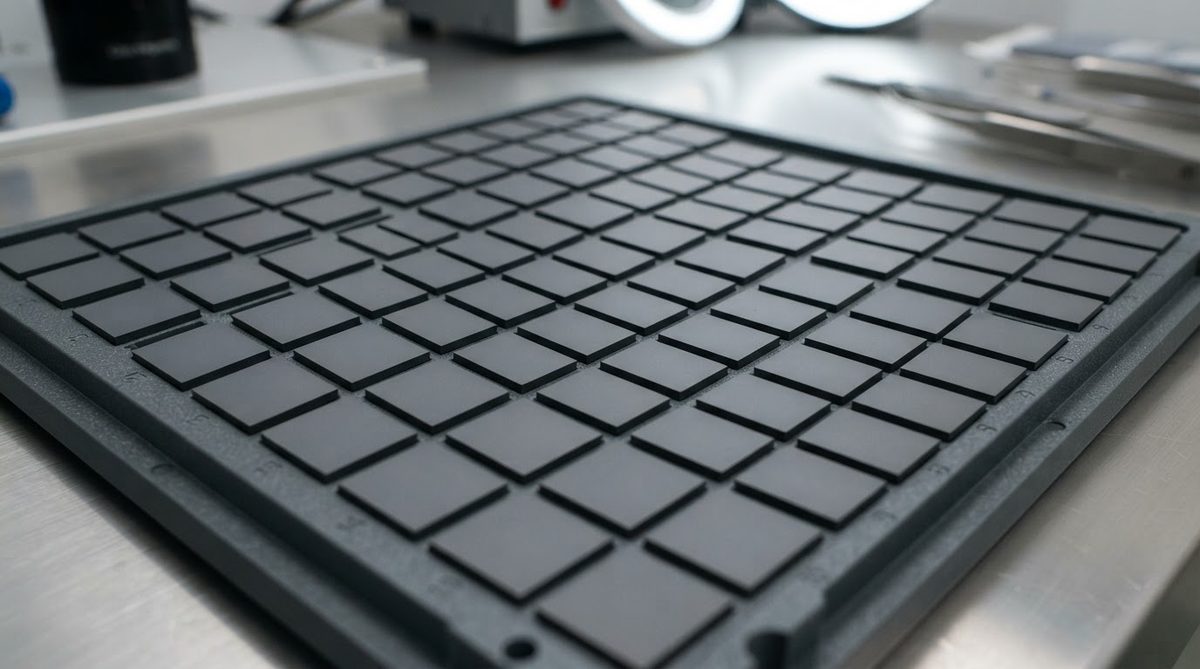
Si3N4 is biocompatible and is already used as a bulk material in spinal fusion cages and dental implants. As a substrate, it appears in implantable pulse generators and neurostimulators where the ceramic must survive sterilization cycles (autoclave at 134 °C) and decades of body-temperature operation without degradation. The material’s chemical inertness in physiological fluids is a significant advantage over alumina, which can undergo slow hydrothermal aging in certain grades.
Application 5: High-Power LED and UV-C Modules
High-power UV-C LEDs used in water purification and surface disinfection generate concentrated heat in small areas. Among silicon nitride Si3N4 applications, UV-C LED arrays benefit from the mechanical robustness needed for large-area multi-chip designs that undergo frequent on/off cycling. For UV LED designs specifically, ceramic PCBs for UV-C LEDs covers layout and thermal considerations in detail.
Application 6: Thermoelectric Modules and Solid-State Relays
Thermoelectric coolers (TECs) subject their substrates to constant thermal gradients across a thin cross-section. Si3N4’s fracture toughness prevents crack initiation at the hot-side edge. Similarly, solid-state relays switching high currents create thermal pulses that stress the substrate. Both of these silicon nitride Si3N4 applications benefit from thin Si3N4 substrates (0.25–0.32 mm) that minimize thermal resistance while maintaining mechanical integrity.
When NOT to Use Si3N4
Si3N4 substrates cost 3–8× more than AlN and 10–20× more than 96% alumina per unit area. That premium is only justified when thermal cycling reliability is the primary design driver. Here is when to choose something else:
- Steady-state thermal management with low cycle counts: AlN at 170–200 W/mK gives better thermal performance at lower cost. Use AlN DBC or AMB.
- Cost-sensitive, moderate-power designs: 96% alumina handles most LED, sensor, and low-power RF work. See alumina 96% Al2O3 applications for typical use cases.
- RF and microwave circuits: Si3N4’s dielectric constant (~8–9 at 1 MHz) and limited availability in thin-film metallization make it a poor fit for impedance-controlled RF lines. Use alumina or LTCC.
- Prototyping or low-volume projects with no cycling requirement: The long lead times and high MOQs of Si3N4 AMB substrates do not suit quick-turn development. Start with AlN and qualify Si3N4 for production.
For a detailed breakdown of Si3N4 pricing, see Si3N4 ceramic PCB cost factors.
Frequently Asked Questions
Can Si3N4 substrates be used with DBC (direct bond copper)?
No. DBC requires an oxide layer to bond copper, and Si3N4 does not form a suitable oxide at DBC process temperatures. Si3N4 substrates are metallized using AMB (active metal brazing) or DPC (direct plated copper). AMB is the dominant method for power module substrates.
What is the maximum continuous operating temperature for an Si3N4 substrate?
The ceramic itself is stable above 1,000 °C in inert atmospheres. The practical limit is set by the metallization: AMB joints using AgCuTi brazes are rated to about 300–350 °C continuous. For most power electronics, the limiting factor is the semiconductor junction, not the substrate.
Is Si3N4 suitable for high-frequency RF circuits?
Generally no. Si3N4 has a dielectric constant of 8–9 and a loss tangent around 10⁻³ at 1 GHz, which is acceptable but not competitive with alumina (εr ≈ 9.8, tan δ ≈ 10⁻⁴) or specialized RF ceramics. The limited availability of thin-film metallization on Si3N4 further restricts its use in precision RF transmission lines.
How does Si3N4 quality vary between suppliers?
Significant variation exists. Kyocera SN282 achieves 90 W/mK thermal conductivity; Toshiba’s grade reaches ~85 W/mK; lower-cost Chinese grades may be 60–70 W/mK. Always specify the grade, not just “Si3N4,” and request a datasheet with lot-specific thermal conductivity data.
Does Si3N4 require special handling during assembly?
Si3N4 is far more resistant to handling damage than AlN or alumina due to its high fracture toughness, but it is still a ceramic. Avoid point loading and use vacuum pick-and-place tooling. The material does not absorb moisture, so bake-out before soldering is not required.
Next Step
If your design involves SiC or GaN devices with a thermal cycling requirement above 3,000 cycles, Si3N4 AMB is likely your substrate. To discuss your specific module layout, copper thickness, and metallization requirements, contact an Si3N4 substrate supplier for a technical review and quote.