Silicon nitride Si3N4 price for ceramic PCBs typically falls between $15 and $60+ per piece in prototype-to-low-volume quantities, making these substrates 3–8× more expensive than equivalent 96% alumina boards and 1.5–3× more than aluminum nitride. The premium buys you the highest fracture toughness of any engineering ceramic substrate (6–8 MPa·√m per ASTM C1421) combined with useful thermal conductivity (60–90 W/mK), which is why Si3N4 dominates in power modules subjected to severe thermal cycling.
Why Silicon Nitride Si3N4 Price Exceeds Other Ceramic Substrates
Si3N4 is inherently expensive to produce. The powder itself costs more than alumina or even AlN powder, and the sintering process is more demanding. Silicon nitride requires hot-press or gas-pressure sintering at 1,700–1,900 °C in a nitrogen atmosphere, with carefully controlled sintering aids (Y2O3, MgO, or rare-earth oxides). Alumina, by contrast, sinters in air at lower temperatures with simpler equipment. This difference in processing complexity is the single largest reason for the silicon nitride Si3N4 price gap relative to other ceramics.
Beyond raw material and sintering costs, Si3N4 substrates are harder to machine after firing. Diamond tooling wears faster, laser cutting requires more passes, and yield rates on thin substrates (0.32 mm is common for power modules) are lower than for alumina. Every one of these factors adds cost per piece.
Six Cost Drivers for Si3N4 Ceramic PCBs
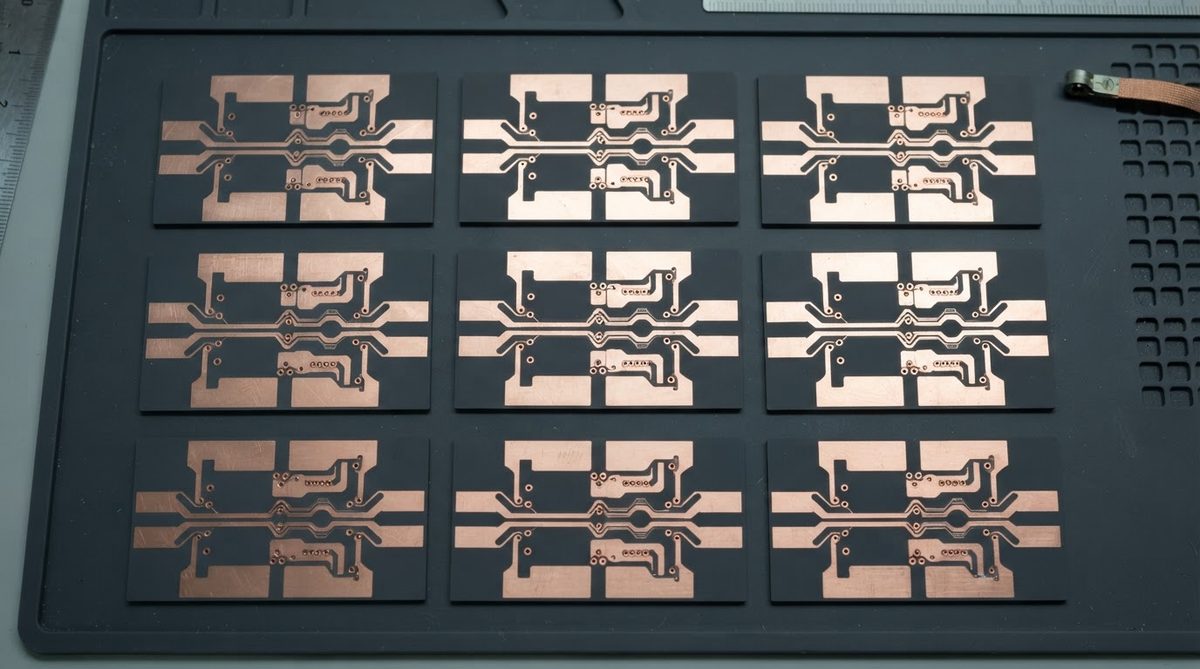
Understanding these drivers lets you optimize your design for cost without sacrificing the properties you actually need.
- Substrate thickness. Thinner substrates (0.25–0.32 mm) are standard for AMB power modules but have lower yield. Moving to 0.635 mm reduces breakage and per-piece cost, if your thermal stack allows it.
- Copper bonding method. Si3N4 is almost always paired with Active Metal Brazing (AMB), not DBC. AMB uses a Ti-containing braze alloy at ~850 °C, which adds material and process cost compared to the direct copper-bonding used on alumina and AlN.
- Copper thickness. Power modules often require 0.3–0.8 mm copper. Thicker copper means more material, longer etching, and higher stress management requirements during brazing.
- Panel size and utilization. Si3N4 substrates are typically available in smaller panel sizes than alumina (commonly 114 × 114 mm or 138 × 190 mm). Poor panel utilization on odd-shaped designs wastes expensive material.
- Circuit complexity. Fine-line etching, vias, and multi-layer metallization all increase cost. Si3N4 boards for power electronics tend to have simpler layouts than RF boards, which helps offset some of the substrate premium.
- Volume. Setup costs for AMB brazing and pattern etching are high. Per-piece silicon nitride Si3N4 price drops significantly above 500 pieces and again above 5,000 pieces.
For a deeper look at what drives ceramic board pricing across all materials, see the complete ceramic PCB cost breakdown.
Si3N4 Price Compared to AlN and Alumina
The table below gives representative per-piece price ranges for a 25 × 25 mm single-sided metallized substrate at prototype quantities (10–50 pieces). Actual pricing varies by supplier, metallization method, and copper thickness.
| Parameter | 96% Al2O3 | AlN | Si3N4 |
|---|---|---|---|
| Substrate cost (per piece, 25×25 mm) | $2–$8 | $8–$25 | $15–$60+ |
| Typical bonding method | DBC / DPC | DBC / AMB | AMB |
| Thermal conductivity (W/mK, 20 °C) | 24–28 | 170–200 | 60–90 |
| Flexural strength (MPa, ASTM C1161) | 300–380 | 300–350 | 600–900 |
| Fracture toughness (MPa·√m, ASTM C1421) | 3.5–4.0 | 2.5–3.5 | 6–8 |
| CTE (ppm/K, 20–400 °C) | 7.0–8.0 | 4.5–5.0 | 2.5–3.5 |
Typical values for commercially available material, for comparison only. Confirm against the datasheet for your specific grade. Sources: CoorsTek Advanced Ceramics datasheet, Kyocera SN series datasheet.
Si3N4’s thermal conductivity sits between alumina and AlN. If pure heat spreading is your goal and thermal cycling is mild, aluminum nitride substrate pricing may make more sense. Si3N4 wins when the board must survive thousands of deep thermal cycles—its high fracture toughness resists crack propagation at the ceramic-copper interface far better than AlN.
Worked Example: Cost Per Thermal Cycle
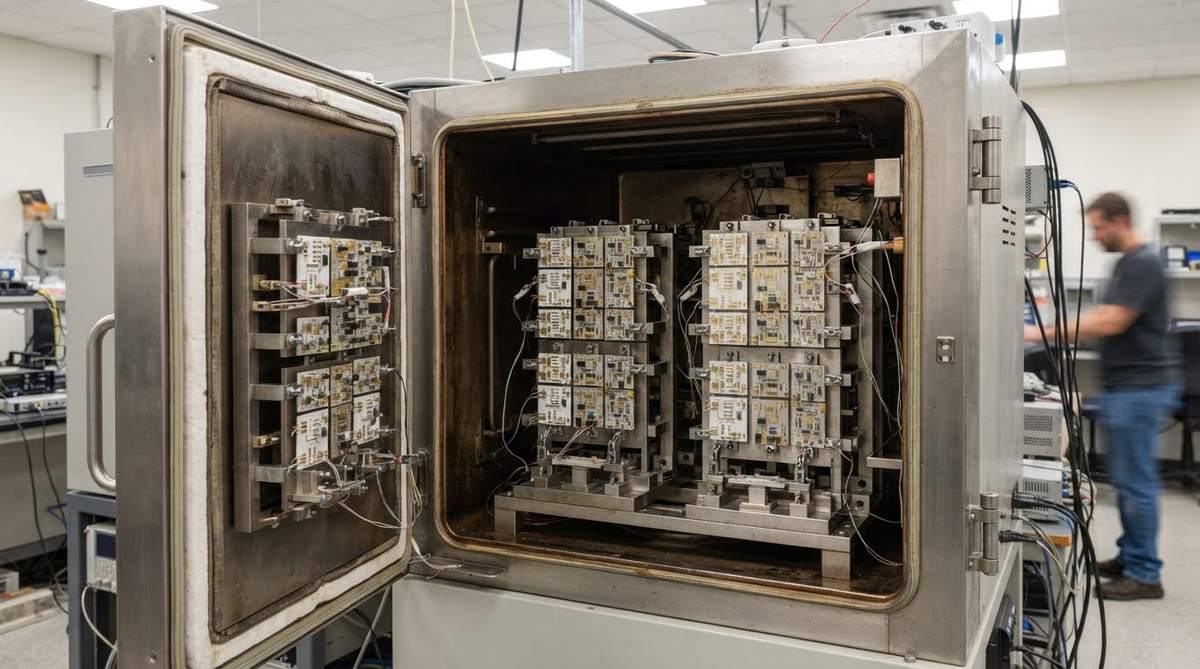
Consider a 40 × 40 mm power module substrate rated for –40 °C to +150 °C cycling. An AlN-DBC substrate costs roughly $18 per piece and survives ~2,000 cycles before delamination in accelerated testing (per Infineon AN2019-10 application note data). A Si3N4-AMB substrate costs roughly $45 per piece but survives ~10,000+ cycles under the same conditions.
- AlN cost per cycle: $18 / 2,000 = $0.009
- Si3N4 cost per cycle: $45 / 10,000 = $0.0045
The silicon nitride Si3N4 price is 2.5× higher up front but costs half as much per thermal cycle. For automotive traction inverters, railway converters, and wind-turbine power modules where field replacement is expensive, this math justifies the premium every time.
How to Estimate Your Si3N4 PCB Cost
Enter your substrate dimensions, copper thickness, and expected quantity below to get a ballpark cost range. This estimate covers substrate and metallization; it does not include component assembly or testing.
[pcb_calc type=”pcb-quote”]
For a more detailed quote with your specific Gerber files, use the ceramic PCB price list and ranges page or submit directly for review.
When NOT to Choose Si3N4
Budget-constrained designs with mild thermal cycling. If your operating range is 0 °C to +85 °C and you expect fewer than 1,000 power cycles over the product lifetime, 96% alumina with DBC gives adequate reliability at a fraction of the silicon nitride Si3N4 price. See alumina 96% substrate options for comparison.
Maximum thermal conductivity is the priority. Si3N4 tops out around 90 W/mK. If you need to spread heat from a 200+ W die and cycling is not severe, AlN at 170–200 W/mK is the better substrate, and it costs less.
RF and microwave applications. Si3N4’s dielectric constant (~8–9 at 1 MHz) and loss tangent are not optimized for high-frequency signal integrity. Alumina or specialized low-loss ceramics are standard for RF.
Large-area boards. If your design exceeds 100 × 100 mm, Si3N4 panel availability and cost escalate sharply. Consider alumina or even metal-core PCBs for large-format, lower-power-density applications.
Frequently Asked Questions
Is Si3N4 always paired with AMB?
Almost always for power electronics, yes. DBC bonding uses a copper-oxide eutectic that requires an oxidizing atmosphere, which can degrade Si3N4 surface chemistry. AMB uses a reactive Ti-Ag-Cu braze in vacuum, producing a stronger and more reliable bond to silicon nitride. Some thin-film metallization (sputtered Ti/Cu) is used for lower-power circuits, but AMB dominates in high-current designs.
Can I get Si3N4 substrates thinner than 0.3 mm?
Yes, 0.25 mm Si3N4 substrates are commercially available from suppliers like Kyocera and Toshiba Materials. Thinner substrates reduce thermal resistance but increase handling breakage and cost. Below 0.25 mm, yields drop significantly and the silicon nitride Si3N4 price rises steeply.
How much does volume reduce Si3N4 PCB price?
Expect a 30–50% reduction in per-piece cost when moving from 50 pieces to 5,000 pieces, depending on design complexity. The fixed costs of AMB tooling, pattern masks, and furnace runs are amortized over more units. Above 10,000 pieces, further reductions are smaller because material cost dominates.
Does Si3N4 make sense for LED applications?
Rarely. Most LED thermal loads are well within what alumina or AlN can handle, and the thermal cycling demands of LED modules are far less severe than power electronics. The Si3N4 price premium is hard to justify unless the LED module is in an extreme environment. For UV LED cost considerations specifically, see UV LED ceramic PCB cost factors.
What is the typical lead time for Si3N4 AMB substrates?
Prototype lead times run 4–8 weeks, depending on substrate availability and AMB furnace scheduling. Production orders with established tooling typically ship in 6–10 weeks. Si3N4 substrates themselves may have separate lead times from the raw material supplier, so plan ahead.
Next Step
If your design involves severe thermal cycling, high mechanical stress, or automotive-grade reliability requirements, the silicon nitride Si3N4 price is likely worth the premium. Start by defining your substrate size, copper thickness, and expected cycle count, then request a quote to see where your specific design falls in the pricing range. For strategies to bring costs down across any ceramic substrate, review how to reduce ceramic PCB cost.