Silicon nitride (Si3N4) is the highest-fracture-toughness ceramic substrate commercially available for power electronics, with KIC values of 6–7 MPa·√m compared to 3–4 MPa·√m for alumina and 2.5–3.5 MPa·√m for aluminum nitride. Choosing the right silicon nitride Si3N4 supplier is critical because substrate grade, metallization quality, and qualification data vary widely between vendors. That mechanical advantage makes Si3N4 the default choice for applications subject to aggressive thermal cycling—EV traction inverters, railway power modules, and wind-turbine converters—where substrate cracking is a primary failure mode.
Key Takeaways
- Si3N4 substrates offer fracture toughness of 6–7 MPa·√m (per ASTM C1421), roughly 2× that of AlN and 1.5–2× that of 96% Al₂O₃.
- Thermal conductivity of commercial Si3N4 ranges from 70–90 W/mK, lower than AlN (170–200 W/mK) but adequate for most power-module designs when paired with thinner substrates (0.32 mm typical).
- Si3N4 is almost exclusively metallized via the Active Metal Brazing (AMB) process; DBC is possible but less common due to process compatibility.
- Substrate cost is 3–8× that of Al₂O₃ and 1.5–3× that of AlN, depending on grade and volume.
- Primary sourcing grades include Kyocera SN282, Toshiba TSN-90, and CoorsTek FlexSi3N4—each with different conductivity and strength trade-offs.
What Makes Si3N4 Different From Other Ceramic Substrates
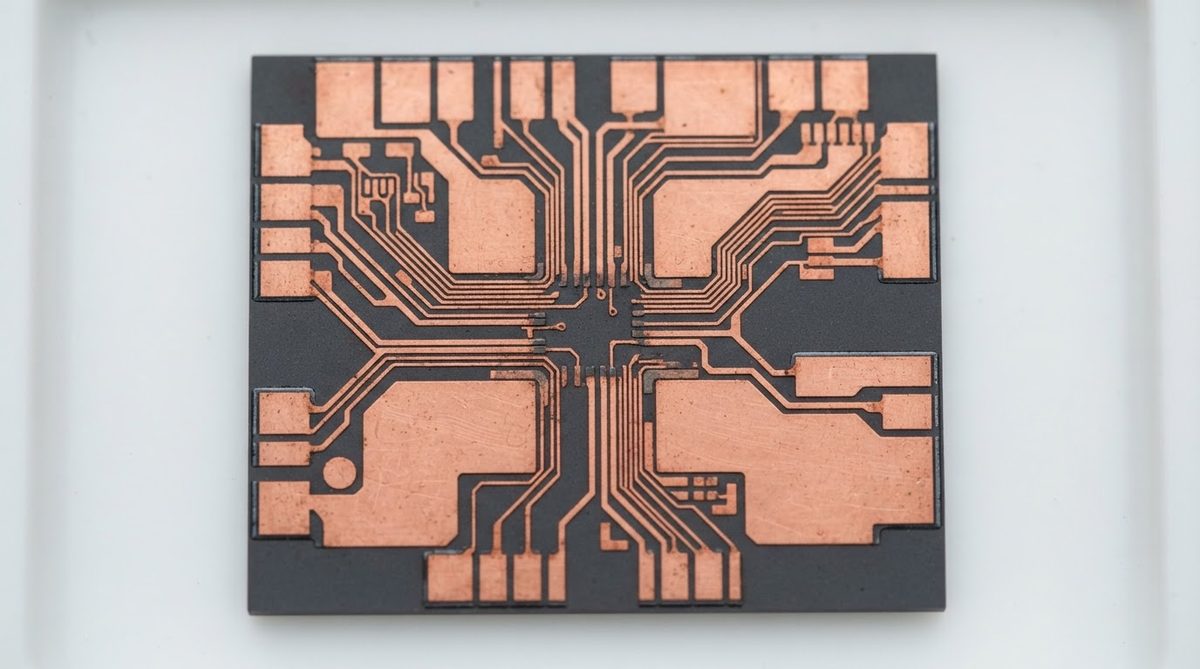
The defining property of silicon nitride is its combination of high flexural strength (600–800 MPa per ASTM C1161) and high fracture toughness. Alumina substrates are cheaper and easier to process, but they crack under repeated thermal stress. AlN offers superior thermal conductivity, but its lower toughness limits cycle life in demanding applications. Si3N4 fills the gap where mechanical reliability over millions of thermal cycles matters more than raw thermal performance.
Because Si3N4 tolerates the stress of thick copper bonding (0.3–0.8 mm Cu), it enables higher current-carrying capacity without substrate failure. This is why Infineon, Semikron (now Semikron Danfoss), and other power-module makers have shifted to Si3N4 AMB substrates for next-generation SiC and GaN inverter platforms. Infineon’s application note AN2019-16 discusses this transition in the context of HybridPACK modules.
Si3N4 Property Comparison Table
| Parameter | Si3N4 | AlN | Al₂O₃ 96% | Unit | Condition / Source |
|---|---|---|---|---|---|
| Thermal conductivity | 70–90 | 170–200 | 24–28 | W/mK | 20 °C; Kyocera SN282 / CoorsTek datasheets |
| Flexural strength | 600–800 | 300–400 | 300–380 | MPa | ASTM C1161, 3-pt bend |
| Fracture toughness (KIC) | 6–7 | 2.5–3.5 | 3–4 | MPa·√m | ASTM C1421 |
| CTE (25–400 °C) | 2.7–3.2 | 4.5–5.0 | 7.0–7.5 | ppm/K | Maruwa / CeramTec datasheets |
| Dielectric strength | 15–18 | 15–17 | 10–15 | kV/mm | IEC 60243-1 |
| Typical substrate thickness | 0.25–0.64 | 0.38–1.0 | 0.25–2.0 | mm | Standard commercial range |
Typical values for commercially available material, for comparison only. Confirm against the datasheet for your specific grade.
What to Specify When Choosing a Silicon Nitride Si3N4 Supplier
A purchase order for Si3N4 substrates should lock down six parameters. Leaving any of them open invites substitution or delays.
- Thermal conductivity grade. Standard Si3N4 is 70 W/mK; high-conductivity grades reach 90 W/mK. The price difference is significant—confirm which your thermal model actually requires.
- Substrate thickness. 0.32 mm is the most common for power modules. Thinner substrates (0.25 mm) improve thermal resistance but reduce dielectric margin.
- Copper thickness and bonding method. AMB supports 0.3–0.8 mm Cu. DBC on Si3N4 exists but is less widely qualified. Specify the method, not just the copper weight.
- Surface finish on copper. Ni/Au, Ni/Ag, and bare Cu are common. Sintered-silver die attach requires specific surface prep—state your die-attach method.
- Dimensional tolerance. ±0.1 mm is typical for laser-cut substrates; tighter tolerances add cost.
- Incoming inspection requirements. Call out whether you need C-SAM (acoustic microscopy) of the braze layer, peel-strength coupons, or thermal-cycle qualification data.
For volume orders, the Si3N4 wholesale sourcing page covers MOQ tiers and packaging options in detail.
Worked Example: Thermal Resistance Through a Si3N4 Substrate
Consider a 20 mm × 20 mm Si3N4 substrate, 0.32 mm thick, with a thermal conductivity of 90 W/mK.
One-dimensional thermal resistance through the ceramic:
Rth = t / (k × A) = 0.00032 m / (90 W/mK × 0.0004 m²) = 0.0089 K/W
For comparison, the same geometry in AlN (180 W/mK) gives 0.0044 K/W—roughly half. But in a full module stack (die → solder → substrate → baseplate → heatsink), the ceramic layer often contributes less than 10% of total Rth. The real advantage of Si3N4 is not thermal; it is that the substrate survives the thermal cycling that would crack AlN after 3,000–5,000 power cycles (per Semikron technical literature on ΔTj = 100 K cycling).
Enter your substrate dimensions, thickness, and dissipated power below to estimate junction temperature rise for your own design.
How Si3N4 AMB Substrates Are Made
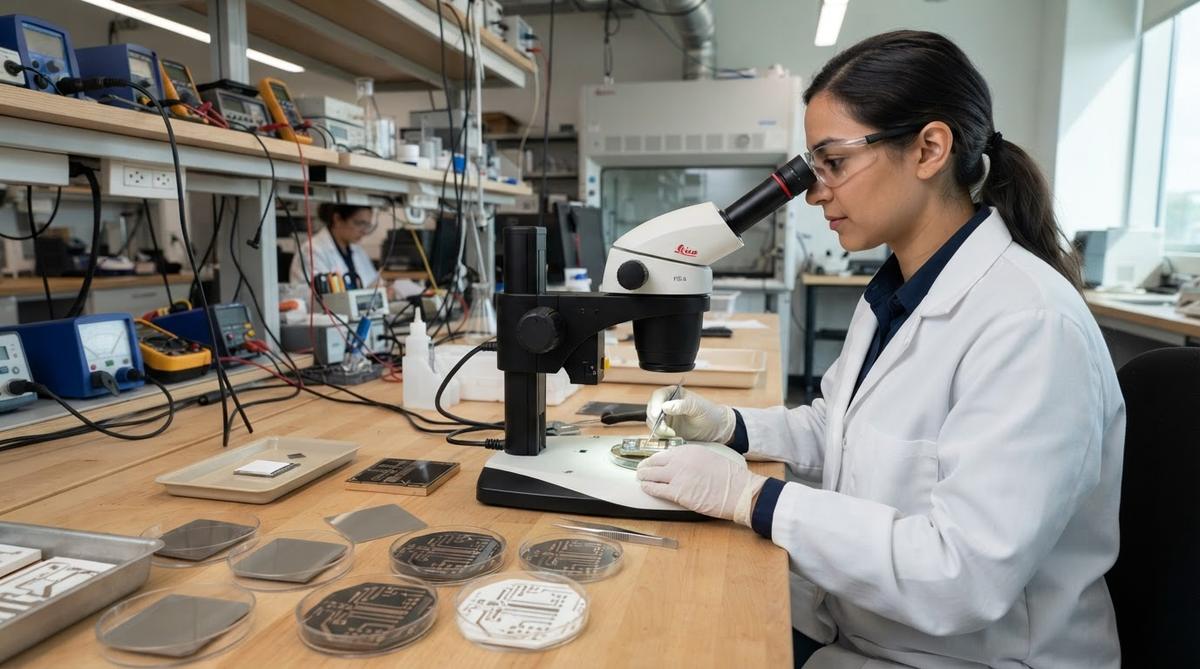
Silicon nitride substrates used in power electronics are metallized almost exclusively by Active Metal Brazing. In AMB, a thin foil of Ag-Cu-Ti alloy is placed between the ceramic and a copper sheet, then heated to 780–900 °C in vacuum. The titanium reacts with the Si3N4 surface, forming a TiN bond layer. This produces a peel strength of 8–15 N/mm, well above the 5 N/mm minimum typical in automotive qualification per AQG 324.
DBC (Direct Bond Copper) can also be applied to Si3N4, but the process window is narrower because Si3N4 does not form a native oxide layer as readily as Al₂O₃. Most tier-1 module makers have standardized on AMB for Si3N4 for this reason. For a broader look at manufacturing methods, the Si3N4 ceramic PCB manufacturing page covers process details and qualification steps.
When NOT to Use Si3N4
Si3N4 is overkill—and overpriced—for many applications. Choose something else when:
- Thermal cycling is mild (ΔT < 60 K, < 10,000 cycles). Al₂O₃ DBC or AlN thermal-management substrates handle this reliably at lower cost.
- Thermal conductivity is the bottleneck. If your thermal model shows the ceramic layer dominating Rth, AlN at 170–200 W/mK is the better material.
- Budget is fixed and volume is low. Si3N4 substrates cost 3–8× more than alumina. For prototypes or low-volume industrial equipment, the cost rarely pencils out.
- You need LTCC or HTCC multilayer integration. Si3N4 is not processed via LTCC or HTCC. If you need embedded passives or multilayer routing, alumina or glass-ceramic systems are the path.
Silicon Nitride Si3N4 Supplier Evaluation Checklist
When comparing any silicon nitride Si3N4 supplier, ask these questions before requesting a quote:
- Which raw substrate brand and grade do they use? (Kyocera, Toshiba Materials, CoorsTek, or equivalent.) A supplier who cannot name the grade is likely a broker.
- Is AMB performed in-house or subcontracted? In-house brazing gives better lot-to-lot consistency.
- What thermal-cycle qualification data can they share? Look for ΔT = 175 K, > 3,000 cycles minimum, with C-SAM before and after.
- Do they hold automotive (IATF 16949) or aerospace (AS9100) certification if your end market requires it?
For Si3N4 IGBT and SiC module substrates, the qualification bar is especially high—thermal-cycle and power-cycle data should be part of any credible silicon nitride Si3N4 supplier’s standard documentation. Review ceramic PCB quality-control procedures for more on incoming inspection and lot acceptance.
FAQ
Can Si3N4 substrates handle lead-free solder reflow?
Yes. Si3N4 withstands peak reflow temperatures of 260 °C and above without degradation. Its low CTE (2.7–3.2 ppm/K) also reduces solder-joint fatigue compared to higher-CTE substrates.
Is Si3N4 compatible with sintered-silver die attach?
Si3N4 AMB substrates with Ni/Ag or bare Ag surface finish are widely used with sintered-silver die attach at 250–300 °C, 10–30 MPa. This combination is standard in automotive SiC power modules.
What is the maximum continuous operating temperature for Si3N4?
Bare Si3N4 ceramic is stable beyond 1,000 °C in air. The practical limit for a metallized substrate is set by the braze alloy and copper oxidation, typically 400–500 °C for AMB. Most power-module designs operate well below this, with junction temperatures under 200 °C.
How do Si3N4 grades differ between suppliers?
Thermal conductivity is the main differentiator. Kyocera SN282 is rated at 90 W/mK; Toshiba TSN-90 is similar. Standard grades from other manufacturers may be 70 W/mK. Always compare datasheets at the same measurement temperature (typically 20–25 °C). A reliable silicon nitride Si3N4 supplier will provide grade-specific data sheets on request.
Does Si3N4 require special handling during assembly?
Si3N4 is far more resistant to handling damage than AlN or alumina, thanks to its high fracture toughness. Standard ESD and cleanroom precautions apply, but you are unlikely to crack a Si3N4 substrate during pick-and-place or wire bonding.
Next Step
If your design calls for Si3N4 substrates—whether bare, AMB-metallized, or fully patterned—send your specifications for a technical review and quotation via the instant quote page. Include your substrate grade preference, copper thickness, and target cycle-life requirement to get an accurate response.