Why Source from a Silicon Nitride Si3N4 China Manufacturer?
Silicon nitride (Si3N4) ceramic PCBs offer the highest fracture toughness of any engineering ceramic substrate—typically 6–8 MPa·√m per ASTM C1421—making them the default choice for power modules that face aggressive thermal cycling. Choosing a reliable silicon nitride Si3N4 China manufacturer matters because China now hosts the largest concentration of Si3N4 substrate fabricators and metallization houses, which means shorter lead times and lower unit costs than sourcing from Japan or Europe for equivalent grades. The trade-off is that supplier quality varies widely, so knowing what to verify matters more than finding the lowest quote.
If your application needs a substrate that survives 10,000+ thermal cycles between −40 °C and +250 °C without cracking, Si3N4 is the material. The question is which Si3N4 manufacturer and supplier can consistently deliver the grade and metallization you need.
Si3N4 Material Properties That Matter When Evaluating a Silicon Nitride Si3N4 China Manufacturer
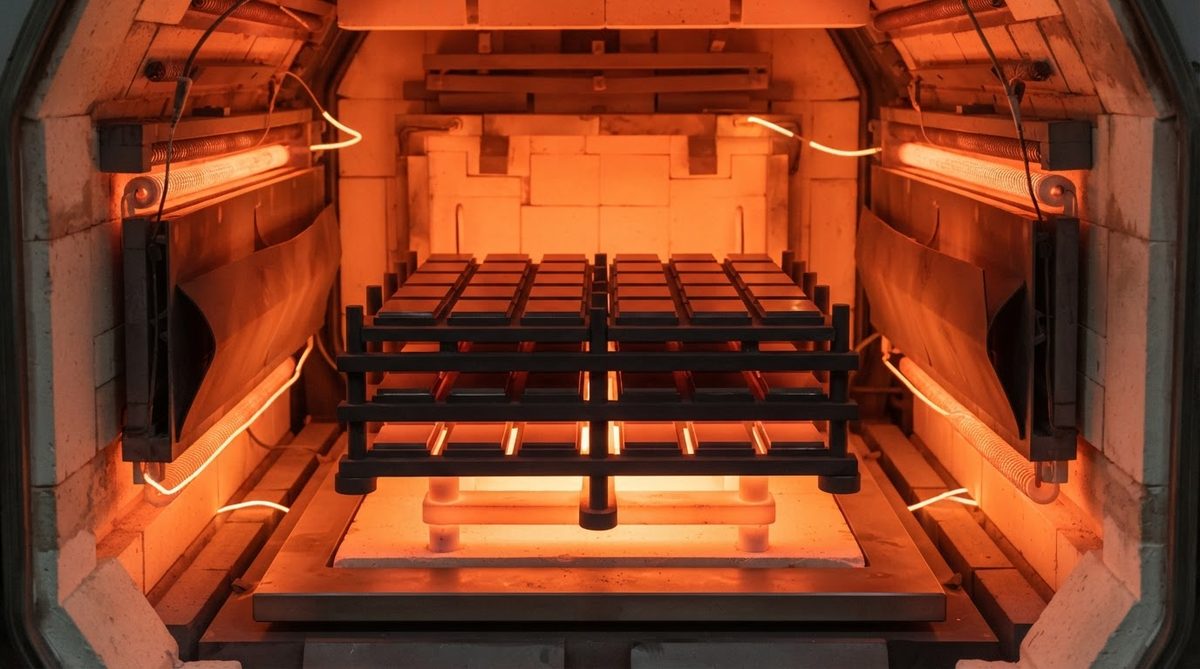
Not all Si3N4 is the same. Commercial grades range from ~60 W/mK to ~90 W/mK in thermal conductivity, depending on sintering conditions and yttria/magnesia additive ratios. Higher-conductivity grades (≥80 W/mK) cost more and have longer lead times because fewer suppliers produce them reliably. A credible silicon nitride Si3N4 China manufacturer will clearly state which grade tier they supply and provide lot-level test data. The table below compares the two main commercial tiers.
| Parameter | Standard Grade | High-K Grade | Unit | Condition | Source |
|---|---|---|---|---|---|
| Thermal conductivity | 60–70 | 80–90 | W/mK | 20 °C, laser flash (ASTM E1461) | Kyocera SN series datasheet |
| Flexural strength | 700–800 | 600–700 | MPa | 3-point bend, ASTM C1161 | CoorsTek technical data |
| Fracture toughness | 6–7 | 6–8 | MPa·√m | ASTM C1421 | CoorsTek / Kyocera |
| Dielectric strength | 15–20 | 15–20 | kV/mm | IEC 60243 | Maruwa SN datasheet |
| CTE | 2.7–3.2 | 2.7–3.2 | ppm/°C | 25–400 °C | Kyocera SN series |
| Typical substrate thickness | 0.25–0.64 | 0.32–0.64 | mm | — | Industry standard |
Typical values for commercially available material, for comparison only. Confirm against the datasheet for your specific grade.
The CTE of 2.7–3.2 ppm/°C is a close match to silicon (2.6 ppm/°C) and SiC (4.0 ppm/°C), which is why Si3N4 dominates in IGBT and SiC MOSFET power modules. If your die is GaN-on-Si, the same CTE advantage applies.
Metallization Processes: AMB vs. DBC on Si3N4
Two copper-bonding processes are used on Si3N4 substrates: Active Metal Brazing (AMB) and Direct Bonded Copper (DBC). AMB is the dominant method for Si3N4 because the brazing alloy (typically AgCuTi) chemically wets the nitride surface, producing bond strengths above 30 MPa. DBC can also be applied to Si3N4, though it requires tighter process control than DBC on alumina or AlN.
For high-reliability power modules, Si3N4 AMB substrates are the industry standard. Infineon, for example, specifies AMB-on-Si3N4 in its HybridPACK Drive modules (per Infineon AN2019-03). If your copper thickness requirement exceeds 0.3 mm, AMB is effectively the only option—DBC bond quality degrades at thicker copper layers on Si3N4.
For cost-sensitive applications that still need Si3N4 toughness but use thinner copper (≤0.3 mm), Si3N4 DBC substrates can reduce per-unit cost by 15–25% compared to AMB.
What to Verify Before Choosing a Silicon Nitride Si3N4 China Manufacturer
Requesting a quote is easy. Confirming that the supplier can actually hold spec is the hard part. Any silicon nitride Si3N4 China manufacturer you evaluate should be able to answer every item on this checklist with documentation, not just verbal assurances:
- Substrate origin. Ask whether the supplier sinters their own Si3N4 blanks or buys them from a third party (e.g., Toshiba Materials, Rogers/Curamik, or a domestic Chinese producer). This affects both cost and traceability.
- Thermal conductivity certification. Require a laser-flash test report (ASTM E1461) per lot, not just a datasheet claim. Some suppliers quote 90 W/mK but ship 65 W/mK material.
- Copper peel strength. For AMB, demand peel-test data per IPC-TM-650 2.4.8. Acceptable values are ≥5 N/mm for 0.3 mm copper.
- Thermal cycling data. Ask for internal qualification results: how many cycles (ΔT, dwell time, ramp rate) before delamination. A credible supplier will have data for at least 3,000 cycles at −40/+250 °C.
- Dimensional tolerances. Confirm substrate length/width tolerance (±0.1 mm is typical), copper registration (±0.05 mm), and surface roughness (Ra ≤ 0.5 µm for die-attach areas).
If you need custom Si3N4 fabrication with non-standard shapes or routing patterns, confirm that the manufacturer has laser scribing capability in-house rather than outsourcing it, as this adds lead time and a failure point.
Worked Example: Thermal Resistance of a Si3N4 AMB Substrate
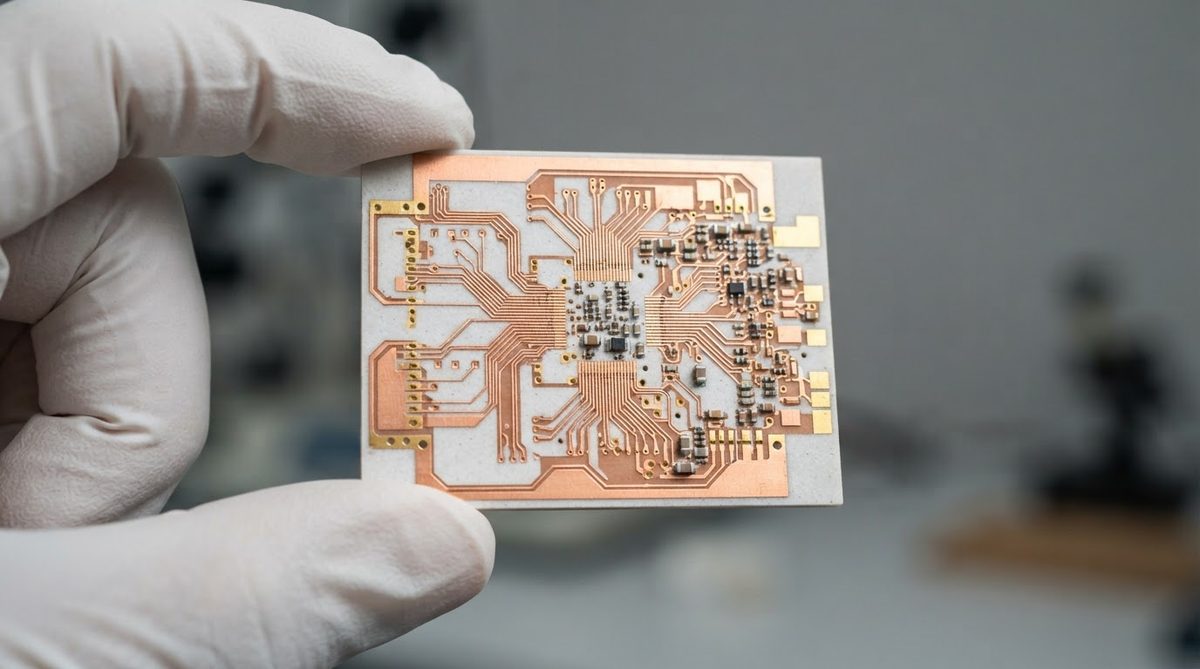
Suppose you have a 20 mm × 20 mm Si3N4 substrate, 0.32 mm thick, with 80 W/mK thermal conductivity. The one-dimensional thermal resistance through the ceramic alone is:
Rth = t / (k × A) = 0.00032 m / (80 W/mK × 0.0004 m²) = 0.01 °C/W
For a 200 W IGBT die mounted on this substrate, the temperature drop across the ceramic is only 2 °C. The real thermal bottleneck is almost always the solder layer and the heat-sink interface, not the Si3N4 itself. This is why substrate flatness and solder-void percentage matter more in practice than squeezing an extra 10 W/mK out of the ceramic grade.
Enter your own substrate dimensions, thickness, and dissipated power below to estimate the temperature rise through the ceramic layer.
When Si3N4 Is Not the Right Choice
Si3N4 substrates cost 3–5× more per unit area than 96% alumina and 1.5–2.5× more than aluminum nitride (AlN). If your application does not require extreme thermal cycling reliability, you are paying for toughness you do not need.
- Low-cycle or steady-state thermal loads: AlN (170–200 W/mK) gives better raw thermal conductivity at lower cost. Use it for LED arrays or RF power amplifiers that do not see rapid cycling.
- Cost-driven consumer products: Metal-core PCBs (MCPCBs) or standard FR-4 with thermal vias will handle most designs under 5 W/cm².
- Prototyping and iteration: Alumina 96% substrates are cheaper and faster to source for early-stage thermal validation.
Si3N4 earns its cost in automotive traction inverters, railway converters, and industrial drives where field failures are unacceptable and thermal cycles number in the tens of thousands.
Import Considerations for China-Sourced Si3N4 PCBs
Ceramic PCB substrates imported from China are typically classified under HS code 8534.00 (printed circuits) or 6914.90 (other ceramic articles), depending on whether copper metallization is present. The applicable tariff rate varies by country and trade agreement. U.S. buyers should review Section 301 tariff lists carefully. For a detailed breakdown, see the ceramic PCB tariff and country-of-origin guide.
Request a Certificate of Origin and material traceability documents with every shipment. If your end product requires IATF 16949 or AEC-Q qualification, confirm that the silicon nitride Si3N4 China manufacturer’s quality system covers the specific process (AMB, DBC, or bare substrate) you are ordering.
Frequently Asked Questions
Can Si3N4 substrates handle temperatures above 800 °C?
Bare Si3N4 ceramic is stable to approximately 1,000 °C in oxidizing atmospheres. However, the practical limit for a metallized Si3N4 PCB is set by the copper-braze interface, which degrades above ~600 °C for AgCuTi brazes. Your maximum continuous operating temperature is typically 300–400 °C for a copper-metallized assembly.
Is Si3N4 better than AlN for power modules?
Si3N4 has roughly one-third the thermal conductivity of AlN (60–90 vs. 170–200 W/mK) but 3–4× higher fracture toughness. For applications with severe thermal cycling—automotive inverters, for example—Si3N4 lasts significantly longer. For steady-state high heat flux with minimal cycling, AlN is often the better and cheaper choice.
What is the minimum order quantity for Si3N4 substrates from China?
MOQs vary by supplier and whether you are ordering bare substrates or metallized assemblies. Bare substrate MOQs can be as low as 25–50 pieces for standard sizes. AMB-metallized substrates typically start at 50–100 pieces because of the batch brazing process. For Si3N4 wholesale volumes, pricing drops significantly above 500 units.
How do I verify the thermal conductivity of incoming Si3N4 substrates?
Request laser-flash diffusivity test reports per ASTM E1461 from the supplier for each production lot. If you need independent verification, third-party labs such as NETZSCH or TA Instruments offer laser-flash testing services. Spot-checking 2–3 substrates per lot is standard practice for incoming quality control.
Does Si3N4 require special handling during assembly?
Si3N4 is far more resistant to mechanical shock than alumina or AlN, but it is still a ceramic. Use vacuum pickup tools for placement, store substrates in anti-static trays, and avoid stacking bare substrates without interleaving paper. Soldering processes (reflow or vapor phase) are the same as for other ceramic substrates.