Silicon nitride (Si3N4) is the toughest structural ceramic used in PCB substrates, with fracture toughness of 6–7 MPa·√m compared to roughly 3–4 MPa·√m for alumina and aluminium nitride. That mechanical advantage makes it the default choice for power modules subject to aggressive thermal cycling. When sourcing silicon nitride Si3N4 wholesale, expect pricing three to eight times higher than 96% alumina—so the material only pays for itself in applications where reliability under thermal stress justifies the premium.
Key Takeaways
- Si3N4 substrates reach thermal conductivities of 70–90 W/mK depending on grade, measured per ASTM E1461 at 25 °C.
- Fracture toughness of 6–7 MPa·√m (per ASTM C1421) allows thinner substrates—down to 0.32 mm—without cracking during thermal cycling.
- The dominant metallisation routes for Si3N4 are AMB (active metal brazing) and DBC (direct bond copper); HTCC and LTCC are not compatible with Si3N4.
- Silicon nitride Si3N4 wholesale unit cost drops significantly above 500-piece orders, but raw powder and sintering energy keep the floor price well above alumina or AlN.
- Primary wholesale applications: EV traction inverters, railway IGBT modules, wind-turbine converters, and aerospace power stages.
What Makes Si3N4 Different from Other Ceramic Substrates
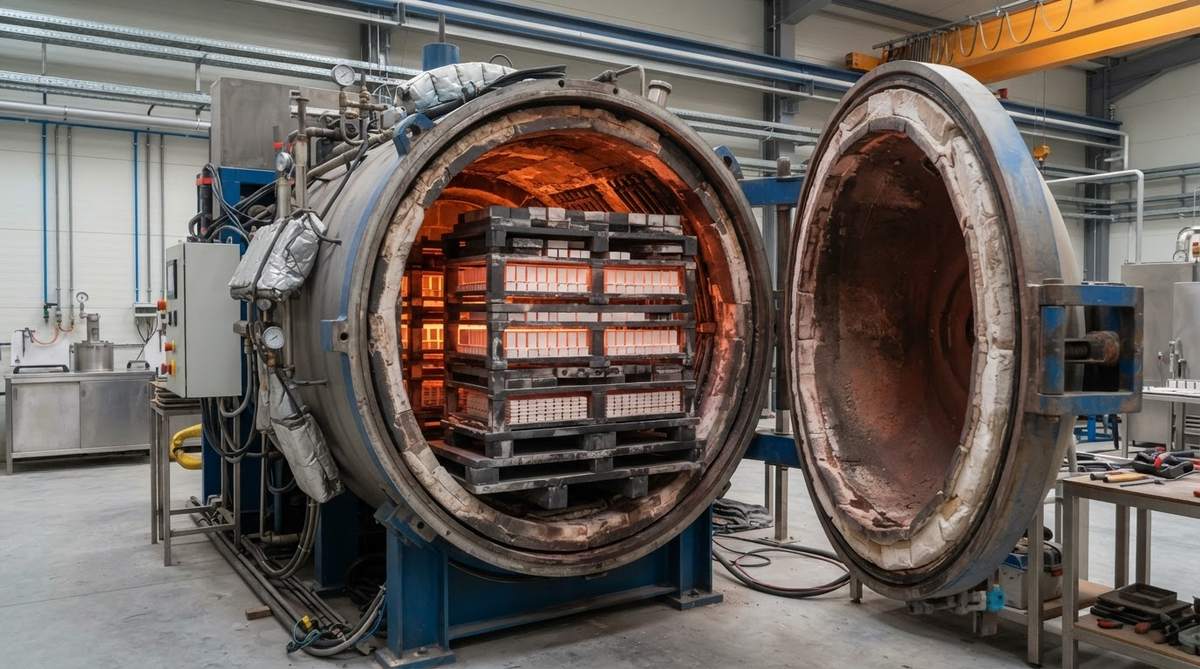
Si3N4’s interlocking grain microstructure gives it a unique combination of flexural strength (600–900 MPa per ASTM C1161) and thermal shock resistance. Alumina cracks under rapid temperature swings above a few hundred degrees; AlN is better but still brittle at 3–4 MPa·√m. Si3N4 survives thousands of –40 °C to +250 °C cycles with minimal crack propagation, which is why Infineon, Wolfspeed, and other SiC module makers specify it for next-generation power electronics.
Thermal conductivity sits between alumina (24–28 W/mK) and AlN (170–200 W/mK). High-purity grades from manufacturers like Toshiba Materials (SN-HTC) and Kyocera push toward 90 W/mK. For a deeper comparison of all common substrate ceramics, see the guide to ceramic PCB material properties.
Silicon Nitride Si3N4 Wholesale Grades and Specifications
| Parameter | Standard Grade | High-TC Grade | Unit | Condition | Source |
|---|---|---|---|---|---|
| Thermal conductivity | 70 | 85–90 | W/mK | 25 °C, ASTM E1461 | Toshiba Materials / Kyocera datasheets |
| Flexural strength | 650–700 | 600–700 | MPa | 3-pt bend, ASTM C1161 | Kyocera SN series |
| Fracture toughness | 6.5 | 6.0–7.0 | MPa·√m | ASTM C1421 | Toshiba Materials |
| Dielectric strength | 15–18 | 15–17 | kV/mm | IEC 60672 | CoorsTek |
| CTE (25–400 °C) | 2.5–3.2 | 2.5–3.2 | ppm/°C | ASTM E228 | Kyocera |
| Available thickness | 0.32, 0.635, 1.0 | 0.32, 0.635 | mm | — | Multiple suppliers |
Typical values for commercially available material, for comparison only. Confirm against the datasheet for your specific grade.
High-TC grades achieve their conductivity through reduced oxygen content in the grain boundaries and longer sintering profiles. That extra processing time is a direct cost driver at the silicon nitride Si3N4 wholesale level. If your junction-to-case thermal budget can tolerate 70 W/mK, standard-grade Si3N4 saves 15–25% on substrate cost. You can compare exact conductivity numbers across all ceramics on the thermal conductivity reference table.
Wholesale Cost Drivers for Si3N4 Substrates
Four factors dominate unit cost when purchasing silicon nitride Si3N4 wholesale:
- Raw powder purity. High-TC grades require α-Si3N4 powder with oxygen content below 1.5 wt%, which costs roughly twice as much as standard powder.
- Sintering cycle. Gas-pressure sintering at 1,750–1,900 °C for 4–10 hours consumes significant furnace time. Shorter cycles yield standard-grade conductivity; longer cycles yield high-TC but fewer batches per week.
- Substrate size and thickness. Thinner substrates (0.32 mm) require tighter process control and have higher scrap rates. Larger panels reduce per-piece handling cost but increase the risk of warpage.
- Metallisation. AMB (active metal brazing) adds a silver-copper-titanium braze layer and a second high-temperature firing. DBC bonds copper directly but is limited to thinner copper (≤0.3 mm on Si3N4). AMB supports copper up to 0.8 mm, which matters for high-current paths.
At 500+ pieces, expect wholesale substrate-only pricing (before metallisation) in the range of $8–$25 per 50 × 50 mm piece, depending on grade and thickness. Metallised and patterned substrates add $15–$40 per piece for AMB processing. These are rough market benchmarks; request a project-specific quote for accurate numbers.
Enter your substrate dimensions, grade, and target quantity below to estimate per-piece pricing for your silicon nitride Si3N4 wholesale order.
Worked Example: Thermal Resistance Comparison
Consider a 30 × 30 mm substrate, 0.32 mm thick, conducting 150 W from a SiC die to a cold plate.
Si3N4 (90 W/mK): Rth = t / (k × A) = 0.00032 / (90 × 0.0009) = 0.0040 °C/W → ΔT = 0.59 °C
96% Al2O3 (26 W/mK): Rth = 0.00032 / (26 × 0.0009) = 0.0137 °C/W → ΔT = 2.05 °C
The 1.5 °C difference across the substrate alone is small, but Si3N4’s real advantage shows over 3,000+ thermal cycles: the alumina substrate cracks while the Si3N4 substrate survives. Reliability, not steady-state conductivity, is why you pay the premium.
Compatible Metallisation and Assembly Processes
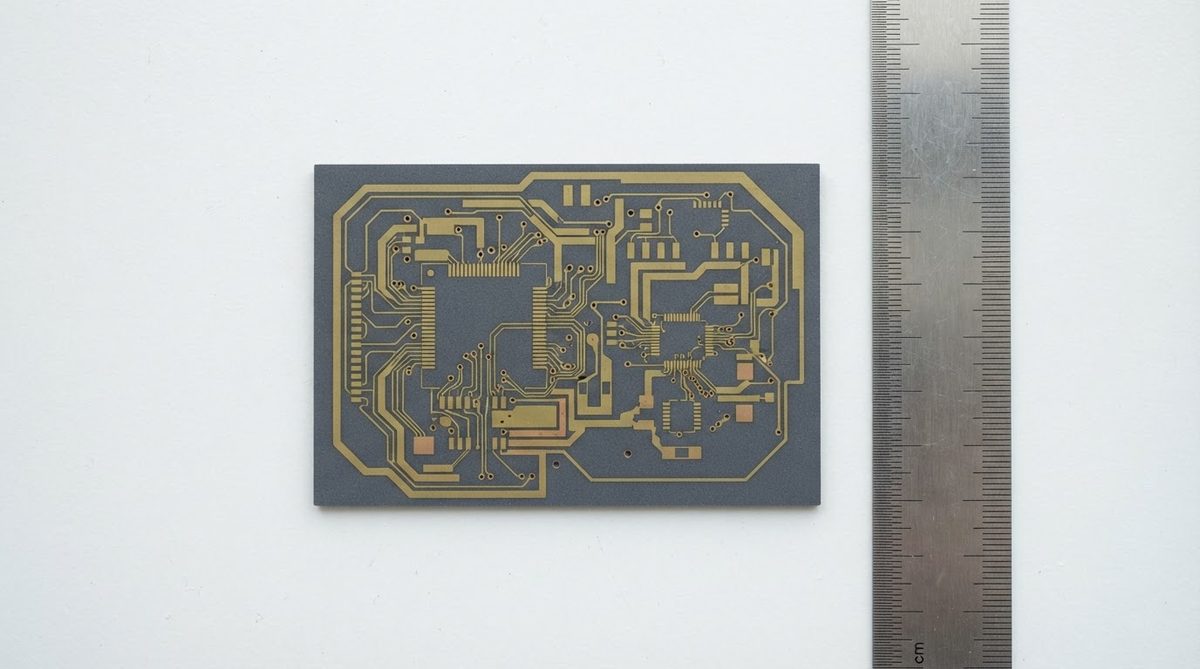
Si3N4 is processed with AMB or DBC. It is not compatible with HTCC or LTCC co-firing because those processes require green-tape ceramics sintered at different temperature profiles. Thick-film screen printing is possible for resistors and conductors but uncommon on Si3N4 due to adhesion challenges. For information on singulation after metallisation, the ceramic singulation methods guide covers laser and scribe-and-break approaches relevant to Si3N4 panels.
When NOT to Use Si3N4
Si3N4 is overkill—and overpriced—for many applications. Choose a different substrate when:
- Thermal cycling is mild (ΔT < 100 °C, < 1,000 cycles). AlN or even 96% alumina will survive and cost far less.
- You need thermal conductivity above 150 W/mK. AlN (170–200 W/mK) is the better conductor. Si3N4 tops out around 90 W/mK.
- Your budget is under $5 per substrate. Al2O3 96% at wholesale runs $0.50–$3 per piece in similar sizes.
- You need LTCC or HTCC multilayer integration. Si3N4 cannot be co-fired. Consider alumina-based LTCC or multilayer ceramic PCB builds instead.
- The operating environment is purely cryogenic with no thermal cycling. Alumina performs adequately at cryogenic temperatures without the cost premium.
Frequently Asked Questions
What is the minimum order quantity for silicon nitride Si3N4 wholesale?
Most ceramic substrate suppliers set wholesale pricing tiers starting at 100–500 pieces. Below 100 pieces, you are typically buying at prototype rates. Volume breaks at 1,000 and 5,000 pieces yield the steepest discounts. For ready-to-order Si3N4 blanks, check the Si3N4 substrate purchasing page.
Can Si3N4 substrates be laser-cut after metallisation?
Yes. CO2 and Nd:YAG lasers both cut Si3N4, though the material’s hardness slows the process compared to alumina. Laser cutting is preferred over mechanical scribing for Si3N4 because the high fracture toughness resists crack propagation along scribe lines, making clean mechanical breaks difficult.
Does Si3N4 outperform AlN in every application?
No. AlN conducts heat roughly twice as well as Si3N4 (170–200 W/mK versus 70–90 W/mK). In steady-state thermal management with mild cycling, AlN is the better and cheaper choice. Si3N4 wins specifically where thermal cycling reliability is the primary failure mode.
What surface finishes work on Si3N4 AMB substrates?
Standard options include bare copper, electroless nickel/immersion gold (ENIG), and electroless nickel/electroless palladium/immersion gold (ENEPIG). Bare copper is common in power modules where the die is sintered or soldered directly. ENIG or ENEPIG is used when wire bonding or long shelf life is required.
Is Si3N4 suitable for RF or microwave circuits?
Si3N4 has a dielectric constant of approximately 7–8 at 1 MHz, which is workable but higher than alumina (9.5–10) or AlN (~8.5). Loss tangent is low (0.001–0.003). It is not a first choice for RF; alumina or specialty low-Dk ceramics are more common and cost-effective for high-frequency designs.
Next Step
If your project involves power modules with aggressive thermal cycling—EV inverters, railway traction, or industrial drives—Si3N4 is likely the right substrate. Start by defining your grade requirement (standard vs. high-TC), substrate dimensions, and annual volume. Then request a silicon nitride Si3N4 wholesale quote with those specifics to get accurate per-piece pricing and lead times.