A ceramic PCB for a SiC power module typically costs $8–$60 per unit at production volumes (500+ pcs), depending on substrate material, metallization process, and board complexity. That range is wide because the choices you make at the design stage—AlN vs. Si₃N₄, DBC vs. AMB, copper thickness—each shift the price by 30–200%. Understanding where the money goes lets you spec the right substrate without over-engineering or under-budgeting.
What Drives SiC Power Module PCB Cost?
SiC devices switch faster and run hotter than silicon IGBTs—junction temperatures of 175–200 °C are common, and some SiC MOSFETs are rated to 250 °C. The ceramic substrate must handle that thermal load, match the CTE of the die, and survive aggressive thermal cycling. Each requirement adds cost.
Five factors account for roughly 85% of the unit price:
- Substrate material – Raw ceramic cost varies by an order of magnitude between 96% Al₂O₃ and Si₃N₄.
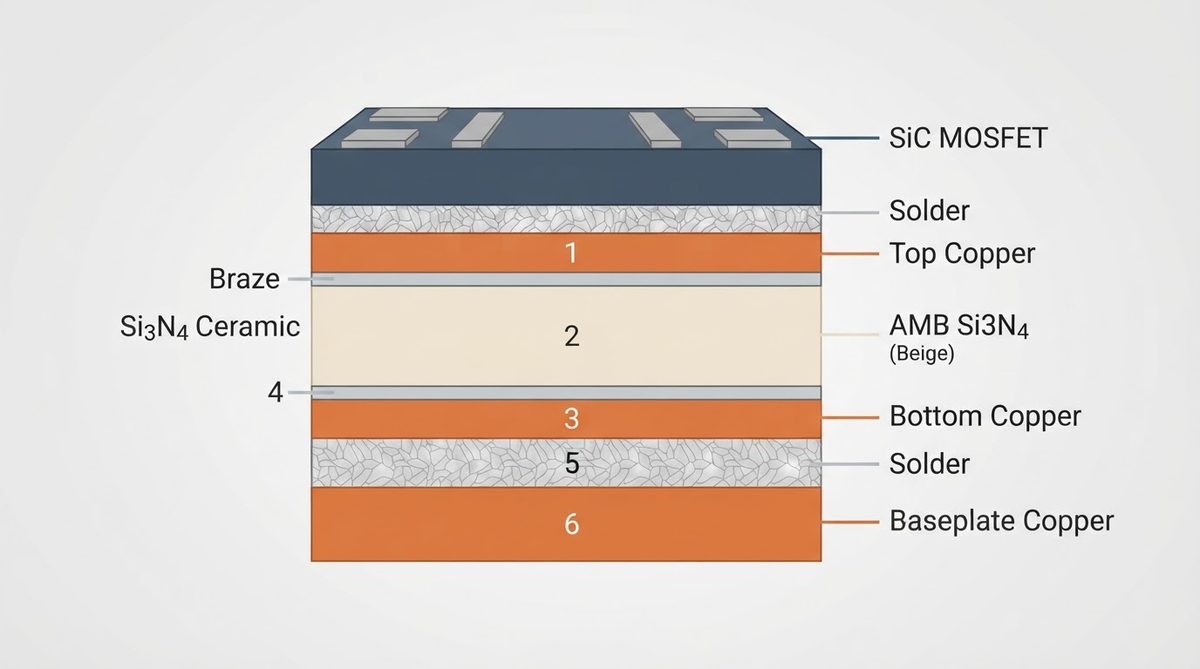
- Copper bonding method – DBC (direct bond copper) is cheaper than AMB (active metal brazing), but AMB handles thicker copper and higher reliability.
- Copper thickness – 0.3 mm Cu is standard; 0.8 mm or 1.0 mm Cu increases material and etching cost by 40–80%.
- Panel utilization – Odd-shaped substrates waste expensive ceramic. A 50 × 30 mm design nests differently on a 140 × 190 mm panel than a 40 × 40 mm square.
- Volume – Setup charges for screen printing, brazing, and etching amortize quickly. A 50-piece prototype run can cost 5–8× per unit vs. a 5,000-piece production order.
Substrate Material Price Comparison
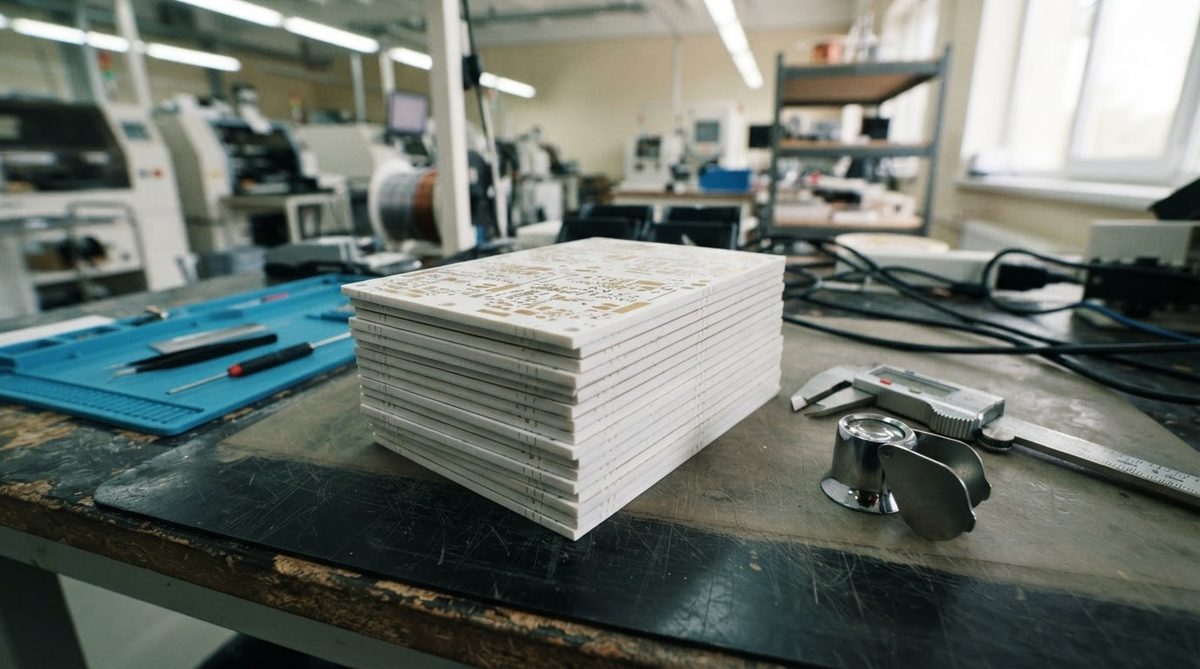
| Material | Thermal conductivity (W/mK) | Flexural strength (MPa) | Relative substrate cost | Typical SiC use case |
|---|---|---|---|---|
| Al₂O₃ 96% | 24–28 | 300–380 | 1× | Low-power SiC diodes, ≤150 °C |
| AlN | 170–200 | 300–350 | 4–6× | High-power SiC modules, EV inverters |
| Si₃N₄ | 80–90 | 650–800 | 6–10× | Traction modules, extreme thermal cycling |
Typical values for commercially available material, for comparison only. Confirm against the datasheet for your specific grade. Thermal conductivity at 20 °C per CoorsTek and Kyocera published datasheets.
AlN gives the best thermal performance per dollar for most SiC designs. Si₃N₄ costs more but survives 10–50× more thermal cycles (per Kyocera SN-90 data), which matters in automotive traction inverters where 15-year reliability is non-negotiable. For a deeper look at Si₃N₄ pricing, see the Si₃N₄ PCB cost analysis.
DBC vs. AMB: How the Copper Method Affects Price
DBC bonds copper to ceramic at ~1,065 °C using a Cu–O eutectic. AMB uses a titanium-containing braze alloy at ~850 °C, which creates a stronger chemical bond and allows thicker copper (up to 1.0 mm or more). For SiC modules that cycle between –40 °C and 200 °C, AMB on Si₃N₄ is the highest-reliability option—and the most expensive.
| Parameter | DBC | AMB | Unit / Condition |
|---|---|---|---|
| Max Cu thickness (standard) | 0.3 | 0.8–1.0 | mm |
| Bond strength | 8–12 | 15–25 | N/mm (peel test, per CeramTec) |
| Compatible substrates | Al₂O₃, AlN | Al₂O₃, AlN, Si₃N₄ | — |
| Relative process cost | 1× | 1.5–2.5× | same substrate, same Cu area |
| Thermal cycle life (ΔT = 200 K) | ~3,000 | >10,000 | cycles to delamination |
Values based on published data from CeramTec curamik and Rogers curamik product lines.
If your SiC module runs at ≤175 °C junction temperature and sees moderate cycling, DBC on AlN is often the sweet spot. For automotive-grade 200 °C+ cycling, AMB on Si₃N₄ pays for itself in warranty avoidance. The AlN PCB guide for SiC power modules covers material-specific design rules in more detail.
Worked Example: Pricing a 50 × 36 mm SiC Half-Bridge Module
Assume a half-bridge SiC MOSFET module on a 50 × 36 mm substrate, 0.32 mm AlN, 0.3 mm DBC copper both sides, Ni/Au surface finish, quantity 1,000 pcs.
- Raw AlN substrate – ~$3.50–$5.00 per unit (based on panel yield of ~12 pcs from a 140 × 190 mm panel at $50–$65 per panel).
- DBC copper bonding + etching – ~$3.00–$4.50 per unit at this volume.
- Ni/Au plating – ~$1.00–$2.00 per unit, depending on Au thickness (typically 0.5–3.0 µm).
- Electrical test + visual inspection – ~$0.50–$1.00 per unit.
- Total estimated unit cost – $8.00–$12.50 at 1,000 pcs.
Switch the same design to AMB on Si₃N₄ with 0.8 mm copper, and the unit cost rises to roughly $22–$40, driven mainly by the Si₃N₄ panel cost ($120–$180) and the AMB process premium. For a broader view of how ceramic board pricing works across applications, the ceramic PCB design guide for SiC modules pairs well with this cost discussion.
Enter your substrate dimensions, material, copper method, and quantity to get a ballpark cost estimate for your SiC power module board.
[pcb_calc type=”pcb-quote”]
How Volume Affects SiC Power Module PCB Cost
Setup charges—screen preparation, braze jig fabrication, etch tooling—are largely fixed. At 50 pieces, those charges can add $5–$15 per unit. At 5,000 pieces, they drop below $0.50 per unit. The crossover where ceramic substrates start to feel “affordable” is typically around 500–1,000 units for DBC and 1,000–2,000 units for AMB, depending on substrate size.
Negotiating annual blanket orders with scheduled releases is the most common way SiC module makers manage this. Panel-level shipping (unsingulated) also saves 5–10% vs. singulated delivery, if your assembly line can handle it.
When a Ceramic Substrate Is Not Worth the Cost
Ceramic is not always the right call for SiC. Consider alternatives when:
- Junction temperature stays below 125 °C – An insulated metal substrate (IMS/MCPCB) at $1–$3 per unit may suffice. Common for low-power SiC Schottky diodes in PFC stages.
- Thermal cycling is mild (ΔT < 80 K, < 1,000 cycles) – DBC on Al₂O₃ or even thick-film on alumina can work at half the cost of AlN. See thick-film ceramic pricing for that option.
- Prototype budget is tight – For bench validation, an off-the-shelf evaluation board from the SiC vendor (Wolfspeed, Infineon) costs less than custom ceramic and ships faster.
- Board area exceeds ~120 × 80 mm – Large ceramic panels are fragile and expensive. A hybrid approach—ceramic substrate for the power stage, FR-4 or polyimide for gate drive and control—often makes more sense.
FAQ
How much does a ceramic PCB for a SiC module cost per unit?
At 1,000-piece volumes, expect $8–$15 for DBC on AlN and $22–$40 for AMB on Si₃N₄, for a typical 50 × 36 mm substrate. Prototypes (50 pcs) can run 3–5× higher per unit due to setup amortization.
Is AlN always more cost-effective than Si₃N₄ for SiC?
AlN costs less upfront—roughly 4–6× the price of alumina vs. 6–10× for Si₃N₄. However, Si₃N₄ survives far more thermal cycles, so total cost of ownership is lower in applications with aggressive cycling, such as EV traction inverters with 15-year life requirements.
Can I use alumina instead of AlN to save money?
Yes, for SiC devices dissipating under ~30 W on a single die. Al₂O₃ 96% at 24–28 W/mK will bottleneck thermal performance above that level, forcing larger substrate area or active cooling that erases the material savings.
Does copper thickness significantly change the price?
Going from 0.3 mm to 0.8 mm copper adds 40–80% to the metallization cost because of higher raw copper use and slower etching. It also narrows your process options: 0.8 mm Cu generally requires AMB rather than DBC, which itself carries a 1.5–2.5× process premium.
What is the minimum order quantity for SiC ceramic substrates?
Most ceramic PCB manufacturers accept orders as low as 5–25 pieces for prototyping, though per-unit cost will be high. Production MOQs typically start at 100–500 pieces, depending on the factory. Panel-level orders (unsingulated) sometimes have lower effective MOQs because they reduce handling.
Next Step
If you have a SiC module layout ready—or even a rough substrate size and power budget—upload your files for a Si₃N₄ substrate price quote or request a general ceramic PCB estimate. Comparing DBC-on-AlN against AMB-on-Si₃N₄ quotes side by side is the fastest way to make a material decision grounded in real numbers.