The alumina 99.6% Al2O3 properties that matter most for ceramic PCB design are 28–35 W/m·K thermal conductivity at 25 °C, dielectric strength above 15 kV/mm, flexural strength of 380–450 MPa, and a CTE of 7.1–7.4 ppm/°C. These represent a meaningful step up from 96% alumina across every axis relevant to power electronics, RF circuits, and sensor substrates. This page collects the alumina 99.6% Al2O3 properties you need for material selection, backed by datasheet sources and measurement conditions.
Key Takeaways
- Thermal conductivity of 99.6% Al2O3 is 28–35 W/m·K at 25 °C, roughly 20–30% higher than 96% alumina (24–28 W/m·K).
- Dielectric strength exceeds 15 kV/mm (AC, 60 Hz, 1 mm thick), making it suitable for high-voltage isolation in power modules.
- CTE is 7.1–7.4 ppm/°C (25–400 °C per ASTM E228), close enough to GaAs (5.7 ppm/°C) and SiC (4.0 ppm/°C) for many die-attach designs with compliant solder.
- Flexural strength of 380–450 MPa (ASTM C1161, 3-point bend) permits thinner substrates than 96% alumina for equivalent mechanical reliability.
- Cost is typically 1.3–1.8× that of 96% alumina, but well below AlN (3–5× the price of 96% Al2O3).
What Is 99.6% Alumina?
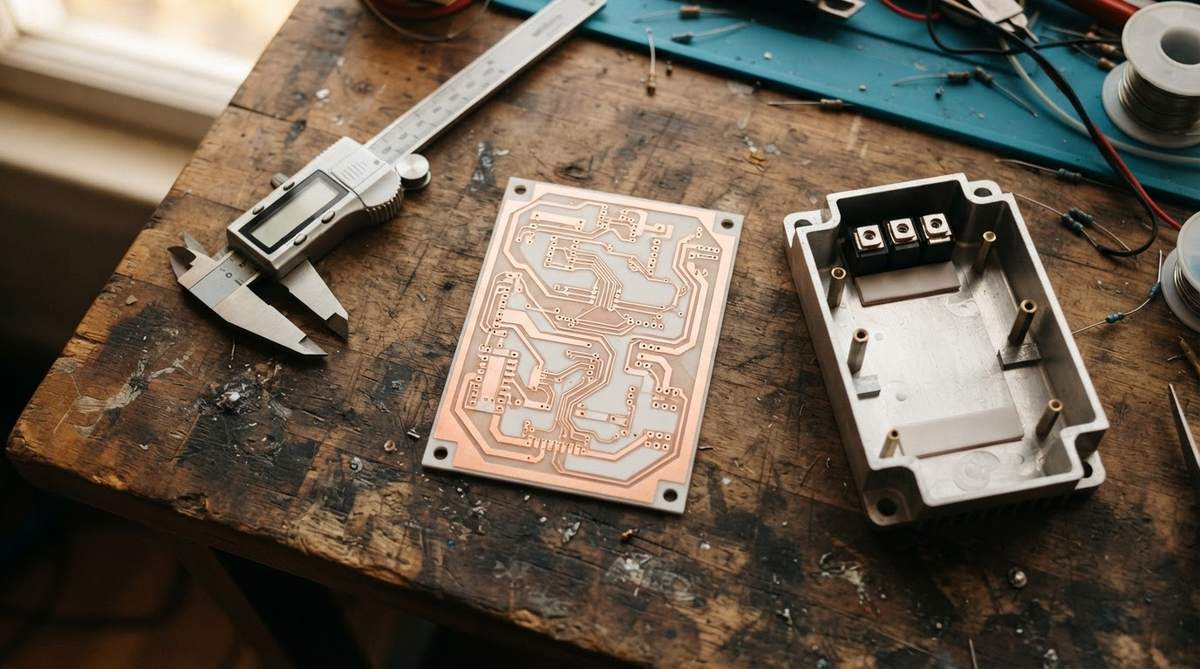
99.6% alumina is a high-purity polycrystalline ceramic with ≤ 0.4% sintering aids by weight (typically MgO, SiO2, or CaO). The near-elimination of glassy grain-boundary phases gives it higher thermal conductivity, better high-temperature strength retention, and lower dielectric loss compared to 96% purity alumina substrates. It is produced by pressing and sintering at 1600–1700 °C, then lapping or polishing to final thickness.
The material sits in a practical middle ground: it costs far less than aluminum nitride (AlN), yet closes much of the thermal and electrical performance gap that 96% alumina leaves open. For designs that need better-than-96% performance but cannot justify the price or lead time of AlN, 99.6% alumina is often the right call.
Full Alumina 99.6% Al2O3 Properties Table
| Parameter | Value | Unit | Condition | Source |
|---|---|---|---|---|
| Purity | ≥ 99.6 | % | Weight basis | CoorsTek ADS-996 |
| Density | 3.89–3.96 | g/cm³ | ASTM C373 | CoorsTek / Kyocera A-493 |
| Thermal conductivity | 28–35 | W/m·K | 25 °C, ASTM E1461 | CoorsTek ADS-996 / Kyocera A-493 |
| CTE | 7.1–7.4 | ppm/°C | 25–400 °C, ASTM E228 | CoorsTek ADS-996 |
| Specific heat | 880 | J/kg·K | 25 °C | Kyocera A-493 |
| Flexural strength | 380–450 | MPa | 25 °C, ASTM C1161 (3-pt bend) | CoorsTek / CeramTec |
| Vickers hardness | 15–16 | GPa | 1 kg load | CoorsTek ADS-996 |
| Young’s modulus | 370–380 | GPa | 25 °C | Kyocera A-493 |
| Fracture toughness (KIC) | 3.5–4.0 | MPa·m½ | ASTM C1421 | CeramTec |
| Dielectric strength | 15–20 | kV/mm | AC, 60 Hz, 1 mm thick | CoorsTek ADS-996 |
| Dielectric constant (εr) | 9.7–9.9 | — | 1 MHz, 25 °C | Kyocera A-493 |
| Loss tangent (tan δ) | 0.0001–0.0002 | — | 1 MHz, 25 °C | Kyocera A-493 |
| Volume resistivity | > 1014 | Ω·cm | 25 °C | CoorsTek ADS-996 |
| Max. use temperature | 1700 | °C | Inert atmosphere | CoorsTek |
| Water absorption | 0.0 | % | ASTM C373 | CoorsTek ADS-996 |
| Surface roughness (as-fired) | 0.4–0.8 | µm Ra | — | Kyocera A-493 |
| Surface roughness (lapped) | 0.05–0.15 | µm Ra | — | CoorsTek |
Typical values for commercially available material, for comparison only. Confirm against the datasheet for your specific grade.
Enter your substrate dimensions, material grade, and power dissipation below to see how these alumina 99.6% Al2O3 properties translate into junction temperature rise for your specific layout.
99.6% vs 96% Alumina — Side-by-Side Comparison
The table below isolates the properties that actually shift your design decisions. Differences under 5% are noted but rarely matter in practice.
| Parameter | 96% Al2O3 | 99.6% Al2O3 | Unit | Condition |
|---|---|---|---|---|
| Thermal conductivity | 24–28 | 28–35 | W/m·K | 25 °C |
| CTE | 7.4–8.2 | 7.1–7.4 | ppm/°C | 25–400 °C |
| Flexural strength | 300–380 | 380–450 | MPa | ASTM C1161 |
| Dielectric constant | 9.4–9.7 | 9.7–9.9 | — | 1 MHz |
| Loss tangent | 0.0002–0.0010 | 0.0001–0.0002 | — | 1 MHz |
| Dielectric strength | 10–15 | 15–20 | kV/mm | AC, 60 Hz, 1 mm |
| Relative cost | 1× | 1.3–1.8× | — | Same geometry |
Typical values for commercially available material, for comparison only. Confirm against the datasheet for your specific grade.
The headline difference is thermal conductivity: 99.6% alumina’s 28–35 W/m·K versus 24–28 W/m·K for 96%. That 20–30% gain matters in power substrates where every degree of junction temperature counts. Loss tangent drops by roughly 5×, which is significant for millimetre-wave RF substrates above 10 GHz. The CTE tightens slightly, improving die-attach reliability in thermal cycling.
Worked Example: Thermal Resistance Reduction
Consider a 10 mm × 10 mm substrate, 0.635 mm thick, conducting 5 W uniformly through its thickness. This example shows how the alumina 99.6% Al2O3 properties directly affect substrate-level temperature drop.
96% alumina (k = 26 W/m·K):
Rth = t / (k × A) = 0.000635 / (26 × 0.0001) = 0.244 °C/W
ΔT = 5 × 0.244 = 1.22 °C
99.6% alumina (k = 32 W/m·K):
Rth = 0.000635 / (32 × 0.0001) = 0.198 °C/W
ΔT = 5 × 0.198 = 0.99 °C
The 99.6% grade shaves 0.23 °C off the substrate-level temperature drop. That sounds small in isolation. In a multi-layer stack with solder interfaces and heat spreaders, the substrate contribution is only one term. But at 50 W dissipation, the same ratio gives a 2.3 °C saving — enough to shift a design from marginal to compliant under JEDEC JESD51 thermal testing.
Where 99.6% Alumina Fits Best
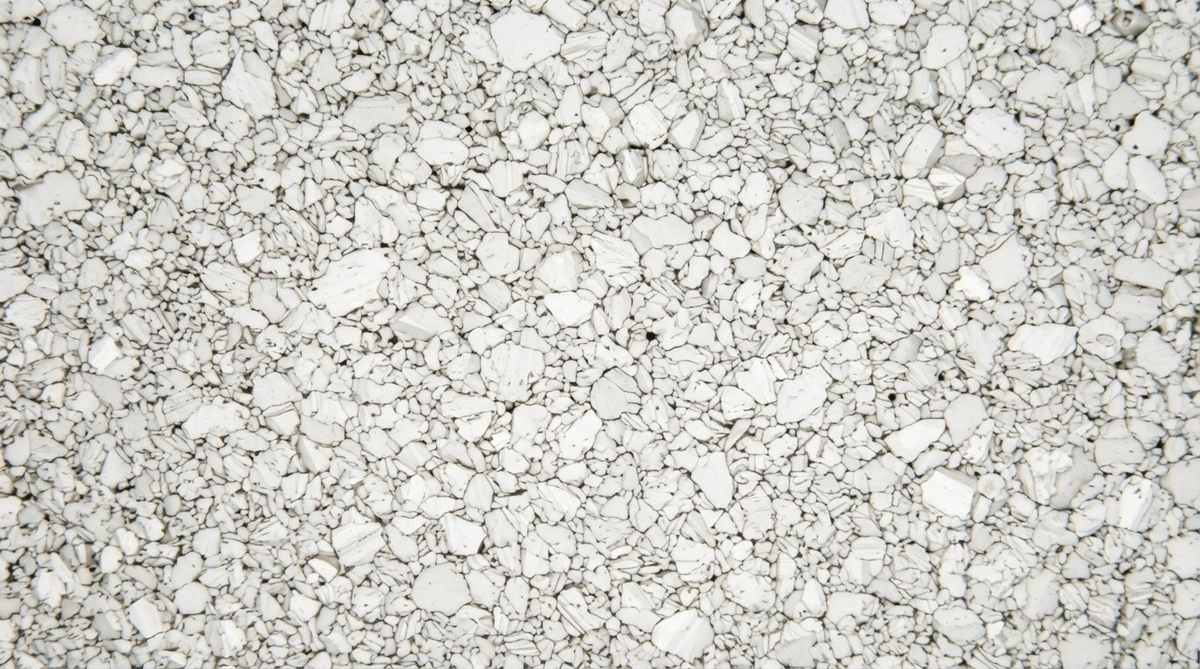
Power electronics substrates. DBC (direct bond copper) and DPC (direct plated copper) processes both work well on 99.6% alumina. The higher dielectric strength (15–20 kV/mm vs. 10–15 kV/mm for 96%) provides additional creepage margin in high-voltage IGBT and SiC MOSFET modules rated above 1200 V.
RF and microwave circuits. The lower loss tangent (0.0001–0.0002 at 1 MHz) translates to reduced insertion loss in stripline and microstrip structures. At 10 GHz and above, this difference becomes measurable in filter and coupler performance.
Sensor and medical devices. Zero water absorption and chemical inertness make 99.6% alumina a good fit for implantable sensors, flow cells, and analytical instruments exposed to aggressive fluids.
Thin substrates for miniaturisation. The higher flexural strength (380–450 MPa) lets you use 99.6% alumina thin substrates down to 0.25 mm or thinner with acceptable handling and assembly yields, where 96% alumina at the same thickness would crack more frequently during pick-and-place.
When NOT to Use 99.6% Alumina
Your thermal budget is comfortable with 96%. If the 1D thermal calculation above shows the substrate contributes less than 10% of your total thermal resistance, the 1.3–1.8× cost premium of 99.6% is wasted money. Stick with 96% alumina.
You need thermal conductivity above 40 W/m·K. The alumina 99.6% Al2O3 properties top out around 35 W/m·K. For high-power GaN or SiC die requiring 150+ W/m·K, you need aluminum nitride substrates (170–200 W/m·K at 25 °C).
You need extreme fracture toughness. At 3.5–4.0 MPa·m½, 99.6% alumina is brittle by structural-ceramic standards. If your board faces mechanical shock or vibration and cannot be potted or supported, silicon nitride (Si3N4) with KIC of 6–7 MPa·m½ is a better choice.
Your design is cost-driven and high-volume consumer electronics. FR-4 or metal-core PCBs will always be cheaper. Ceramic substrates earn their cost in performance-limited designs, not commodity applications.
CTE Matching Considerations
99.6% alumina’s CTE of 7.1–7.4 ppm/°C (25–400 °C) sits between silicon (2.6 ppm/°C) and copper (17 ppm/°C). The mismatch with silicon die is roughly 4.5–4.8 ppm/°C. For small die (< 5 mm edge), standard eutectic or SAC305 solder joints absorb this mismatch through plastic deformation over thousands of thermal cycles. For large die (> 10 mm), consider AuSn solder or sintered silver, and run a Coffin-Manson fatigue estimate before committing.
Compared to AlN (AlN CTE: 4.5–4.7 ppm/°C), 99.6% alumina is a worse CTE match to silicon but a better match to GaAs (5.7 ppm/°C) and copper lead frames. Material selection here is always a system-level trade-off, not a single-parameter decision.
Frequently Asked Questions
Is 99.6% alumina the same as 99.5% alumina?
They are close but not interchangeable. Different manufacturers define purity thresholds slightly differently, and the remaining 0.4–0.5% of sintering aids affects grain-boundary chemistry. Always compare datasheets by property values, not purity labels alone. CoorsTek ADS-996 and Kyocera A-493 are both marketed as 99.6% but show minor differences in listed thermal conductivity.
Can I use 99.6% alumina for DBC (direct bond copper)?
Yes. DBC bonds well to 99.6% alumina because the process relies on a CuO–Cu eutectic wetting the Al2O3 surface, and higher-purity alumina provides a cleaner, more uniform bonding interface. Copper thicknesses of 0.3 mm (300 µm) are standard on 99.6% substrates for power modules.
What surface finishes work on 99.6% alumina substrates?
All standard ceramic PCB finishes apply: ENIG, ENEPIG, immersion silver, OSP, and bare copper with protective coating. Thin-film metallisation (sputtered Ti/Cu or TiW/Cu) adheres well to lapped 99.6% alumina surfaces with Ra below 0.15 µm. Thick-film tungsten or moly-manganese metallisation is also compatible.
Does 99.6% alumina outperform AlN for RF applications?
Not in thermal performance. AlN’s thermal conductivity (170–200 W/m·K) dwarfs the alumina 99.6% Al2O3 properties in that category (28–35 W/m·K). However, 99.6% alumina’s dielectric constant (9.7–9.9) is well-characterised and stable, and its loss tangent is low enough for many microwave circuits below 40 GHz. Where thermal dissipation is moderate and cost matters, 99.6% alumina is often preferred over AlN for RF substrates.
How does 99.6% alumina compare to zirconia-toughened alumina (ZTA)?
Zirconia-toughened alumina (ZTA) adds 10–20% ZrO2 to boost fracture toughness to 5–8 MPa·m½, but thermal conductivity drops to 20–26 W/m·K. Choose ZTA when mechanical robustness dominates your requirements; choose 99.6% alumina when thermal and electrical performance take priority.
Next Step
If the alumina 99.6% Al2O3 properties match your thermal and electrical requirements, request substrate samples or a fabricated PCB quote. For a direct comparison with lower-purity grades, review the 96% alumina properties page. Ready to move forward? Submit your design files for a quick-turn quote.