Alumina at 99.6% purity (Al2O3) delivers 28–35 W/m·K thermal conductivity, a dielectric strength above 15 kV/mm, and flexural strength of 350–400 MPa—measurably better than 96% alumina in every thermal and mechanical category. This page collects the key properties you need for substrate selection, with sourced values, measurement conditions, and a direct comparison to neighboring grades.
Key Takeaways
- 99.6% alumina achieves 28–35 W/m·K thermal conductivity at 25 °C, roughly 20–30% higher than 96% alumina (24–28 W/m·K), per CoorsTek ADS-996 data.
- Dielectric strength exceeds 15 kV/mm (AC, 60 Hz, ASTM D149), making it suitable for high-voltage isolation in power modules.
- Flexural strength of 350–400 MPa (ASTM C1161, 4-point bend) allows thinner substrates without cracking under thermal cycling.
- CTE of 7.9–8.2 × 10⁻⁶/°C (25–400 °C) closely matches silicon (≈4.1 × 10⁻⁶/°C) better than most metals but still requires careful solder joint design.
- Cost premium over 96% alumina is typically 1.5–2.5× per substrate, driven by tighter raw-material control and higher sintering temperatures.
Alumina 99.6% Al2O3 Datasheet – Full Property Table
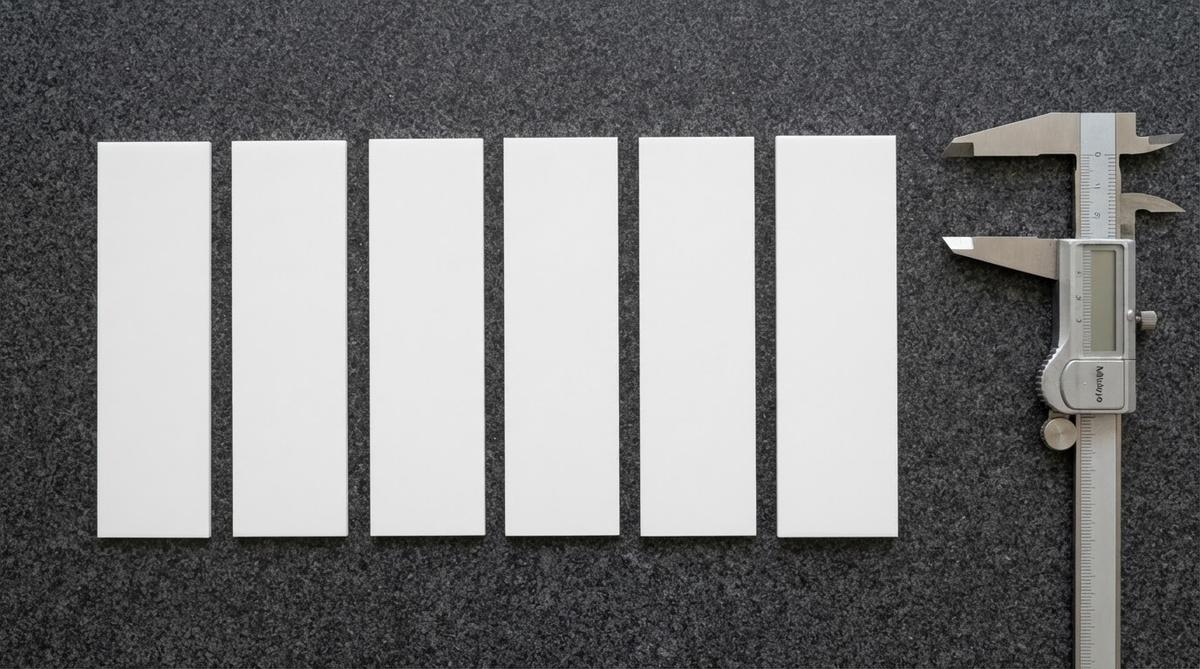
| Parameter | Value | Unit | Condition | Source |
|---|---|---|---|---|
| Al2O3 Content | ≥ 99.6 | % | — | CoorsTek ADS-996 |
| Density | 3.89–3.96 | g/cm³ | ASTM C373 | CoorsTek ADS-996 |
| Flexural Strength | 350–400 | MPa | 4-pt bend, ASTM C1161 | CoorsTek ADS-996 / Kyocera A-493 |
| Elastic Modulus (Young’s) | 370–380 | GPa | ASTM C1259 | CoorsTek ADS-996 |
| Hardness (Vickers) | 15–16 | GPa | 1 kg load | CeramTec Rubalit 710 |
| Thermal Conductivity | 28–35 | W/m·K | 25 °C, ASTM E1461 | CoorsTek ADS-996 / Kyocera A-493 |
| CTE | 7.9–8.2 | ×10⁻⁶/°C | 25–400 °C, ASTM E228 | CoorsTek ADS-996 |
| Specific Heat | 880 | J/kg·K | 25 °C | Kyocera A-493 |
| Max Use Temperature | 1700 | °C | Inert atmosphere | CoorsTek ADS-996 |
| Dielectric Constant (εr) | 9.7–9.9 | — | 1 MHz, 25 °C | CoorsTek ADS-996 |
| Dielectric Strength | 15–20 | kV/mm | AC, 60 Hz, ASTM D149 | CoorsTek ADS-996 |
| Volume Resistivity | > 10¹⁴ | Ω·cm | 25 °C | CeramTec Rubalit 710 |
| Loss Tangent (tan δ) | 0.0001–0.0002 | — | 1 MHz, 25 °C | Kyocera A-493 |
| Surface Roughness (as-fired) | 0.3–0.8 | µm Ra | — | Typical production |
Typical values for commercially available material, for comparison only. Confirm against the datasheet for your specific grade.
How 99.6% Alumina Compares to 96% and AlN
Purity drives performance in alumina substrates. The 3.6% difference between 96% and 99.6% grades eliminates most of the glassy silicate phase that limits thermal conductivity and lowers mechanical strength. For a deeper look at how purity affects ceramic substrate performance, see our dedicated guide.
| Parameter | 96% Al2O3 | 99.6% Al2O3 | AlN | Condition |
|---|---|---|---|---|
| Thermal Conductivity (W/m·K) | 24–28 | 28–35 | 170–200 | 25 °C |
| Flexural Strength (MPa) | 300–350 | 350–400 | 300–350 | 4-pt bend |
| CTE (×10⁻⁶/°C) | 7.5–8.0 | 7.9–8.2 | 4.5–4.7 | 25–400 °C |
| Dielectric Constant (1 MHz) | 9.4–9.6 | 9.7–9.9 | 8.6–8.9 | 25 °C |
| Relative Cost | 1× | 1.5–2.5× | 5–8× | Same geometry |
Typical values for commercially available material, for comparison only. Confirm against the datasheet for your specific grade.
If your thermal budget demands more than 35 W/m·K, 99.6% alumina will not close the gap. Review the aluminum nitride AlN datasheet instead. If your design tolerates 24–28 W/m·K and cost matters, the 96% alumina substrate datasheet is the right starting point.
Where 99.6% Alumina Fits in Practice
The sweet spot for 99.6% alumina is applications that need better thermal and mechanical performance than 96% but cannot justify AlN pricing. Common use cases include:
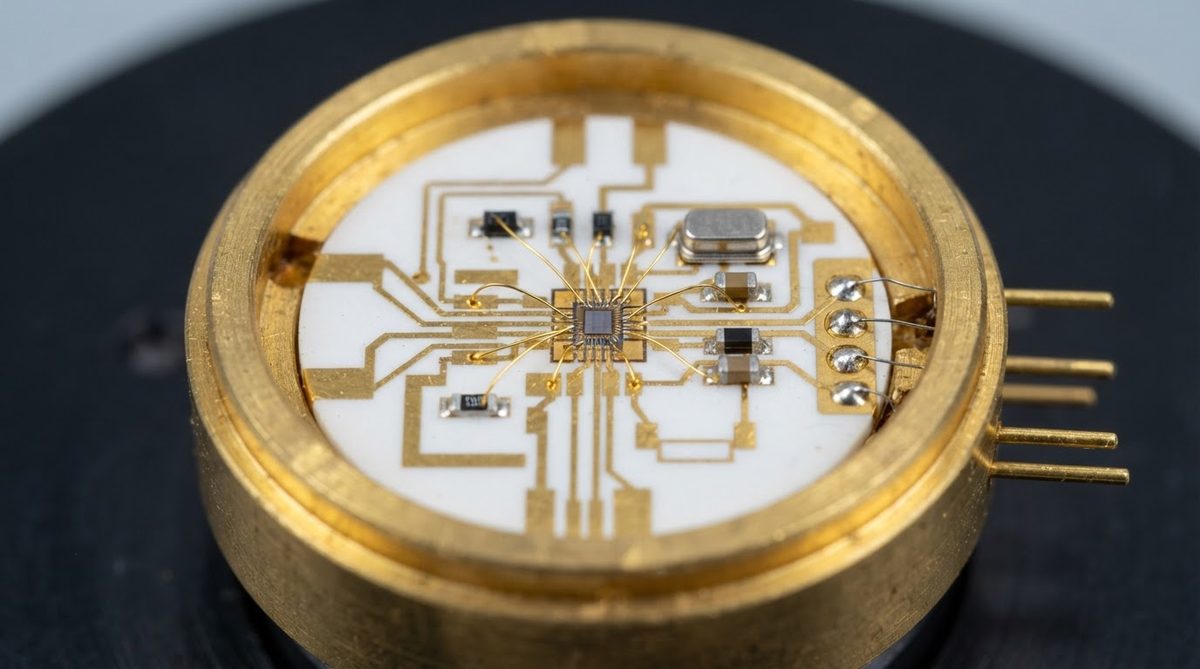
- Thick-film and thin-film hybrid circuits — the tighter grain structure yields lower surface roughness (0.3–0.5 µm Ra after lapping), improving line definition for traces below 50 µm. See available polished and lapped 99.6% alumina substrates.
- High-voltage isolation — dielectric strength above 15 kV/mm at 0.635 mm thickness gives a breakdown margin exceeding 9.5 kV per substrate.
- Sensor substrates — volume resistivity above 10¹⁴ Ω·cm at 25 °C reduces leakage current in precision measurement circuits.
- Power LED and UV LED carriers — thermal conductivity of 28–35 W/m·K keeps junction temperatures lower than 96% alumina for the same die footprint.
Worked Example: Thermal Resistance Through a 99.6% Alumina Substrate
For a 10 × 10 mm substrate, 0.635 mm thick, dissipating 5 W uniformly:
Rth = t / (k × A) = 0.000635 m / (30 W/m·K × 0.0001 m²) = 0.212 °C/W
Temperature rise across the substrate: ΔT = 5 W × 0.212 °C/W = 1.06 °C
The same geometry in 96% alumina (k = 26 W/m·K): Rth = 0.244 °C/W, ΔT = 1.22 °C. The difference is modest for a single die, but it compounds across multi-die arrays and high-power-density layouts.
When Not to Use 99.6% Alumina
Cost-sensitive, high-volume consumer electronics. If 96% alumina meets your thermal and voltage requirements, the 1.5–2.5× cost premium of 99.6% is hard to justify at scale.
Thermal loads above ~10 W/cm². At this density, even 35 W/m·K is insufficient. AlN (170–200 W/m·K) or Si3N4 with DBC copper is the correct path.
Extreme mechanical shock. Alumina of any purity is brittle. If your board faces repeated drop or vibration loads, consider Si3N4 (fracture toughness 6–7 MPa·√m vs. alumina’s 3.5–4 MPa·√m).
RF above 10 GHz. A dielectric constant of 9.7–9.9 creates significant signal delay and coupling. Lower-εr options such as quartz (εr ≈ 3.8) or Rogers laminates may perform better at millimeter-wave frequencies.
FAQ
Can I get 99.6% alumina thinner than 0.25 mm?
Yes. Substrates are available down to 0.1 mm (100 µm) in 99.6% purity, though handling becomes critical below 0.25 mm. Thin substrates require vacuum chucks or tape frames during metallization and assembly.
Does 99.6% alumina need special soldering?
No special process is needed once the substrate is metallized. Standard reflow (SAC305, peak 245 °C) or Au-Sn eutectic (280 °C) both work. The substrate itself withstands over 1,600 °C, so soldering temperatures are not a concern for the ceramic.
What surface finish is typical on 99.6% alumina substrates?
As-fired surface roughness is 0.3–0.8 µm Ra. Lapping brings this to 0.1–0.25 µm Ra, and polishing can reach below 0.05 µm Ra for thin-film deposition applications.
Is 99.6% alumina RoHS-compliant?
Yes. High-purity alumina contains no lead, mercury, cadmium, hexavalent chromium, PBB, or PBDE. It is inherently RoHS-compliant without exemptions.
How does 99.6% alumina compare to zirconia-toughened alumina (ZTA)?
ZTA adds 10–20% ZrO2 to improve fracture toughness (5–6 MPa·√m vs. 3.5–4 MPa·√m for pure alumina) but lowers thermal conductivity to 20–25 W/m·K. Choose ZTA when mechanical reliability under thermal shock is the primary concern, not steady-state heat spreading.
Next Step
If 99.6% alumina fits your thermal and electrical requirements, request substrates in your exact dimensions. For help choosing between purity grades, ceramic types, or surface finishes, review our guide on how to choose the right ceramic substrate.