Alumina 96% Al2O3 wholesale pricing typically falls 30–60 % below equivalent 99.6% alumina parts, making 96% purity the default ceramic substrate for high-volume thermal, power, and sensor applications. With thermal conductivity of 24–28 W/m·K at 25 °C and dielectric strength above 10 kV/mm, alumina 96% Al2O3 wholesale substrates cover the performance envelope of most LED arrays, thick-film hybrids, and power-module designs without the premium of higher-purity ceramics.
Key Takeaways
- 96% alumina substrates offer thermal conductivity of 24–28 W/m·K at 25 °C, adequate for most LED, power-module, and sensor designs.
- Wholesale unit costs drop significantly above 500-piece orders, with further breaks at 2 000 and 10 000 pieces.
- Standard substrate thicknesses range from 0.25 mm to 2.0 mm; common stock sizes include 114 × 114 mm and 139 × 190 mm panels.
- The 4 % non-alumina phase (typically silica and calcia) limits peak continuous use to roughly 1 500–1 600 °C versus 1 700 °C+ for 99.6% grades.
- If your thermal budget demands more than 28 W/m·K, consider aluminum nitride substrates in wholesale quantities instead.
Alumina 96% Al2O3 Wholesale Material Properties
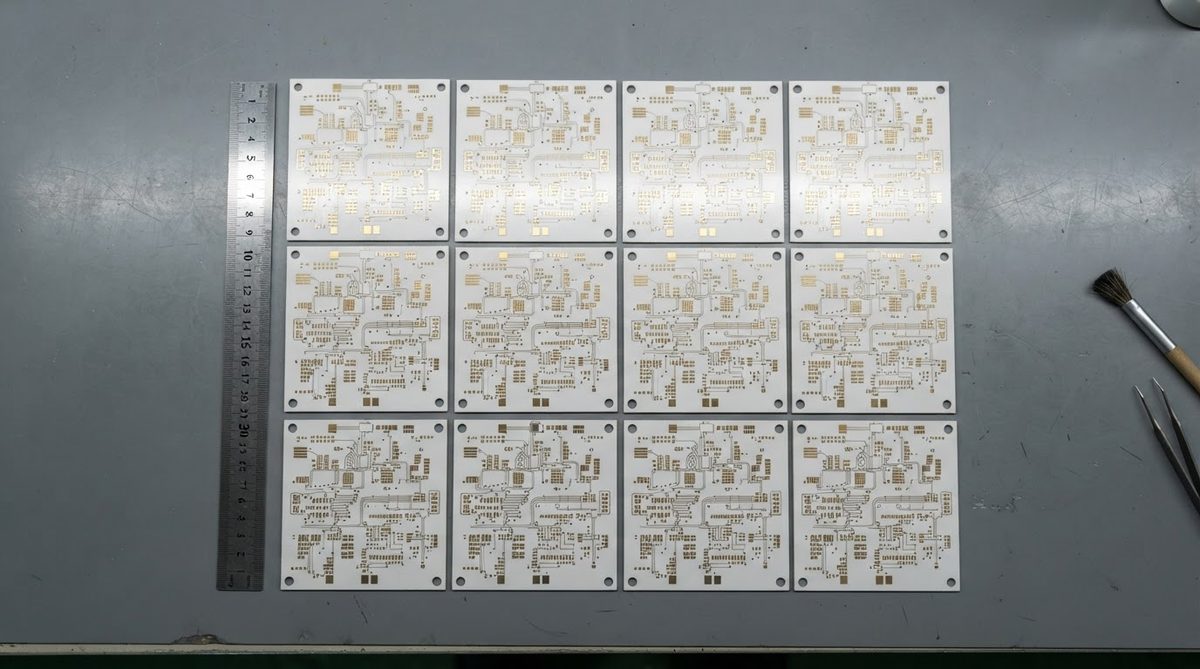
The table below lists typical values for commercially available 96% Al2O3 substrates. These figures come from published datasheets by CoorsTek (ADS-96R) and Kyocera (A-476). Confirm against the datasheet for your specific grade before finalising a design.
| Parameter | Value | Unit | Condition | Source |
|---|---|---|---|---|
| Al2O3 purity | 96 | % | — | CoorsTek ADS-96R |
| Thermal conductivity | 24–28 | W/m·K | 25 °C | CoorsTek ADS-96R |
| Dielectric strength | 10–15 | kV/mm | AC, 60 Hz, ASTM D149 | Kyocera A-476 |
| Dielectric constant (εr) | 9.0–9.5 | — | 1 MHz, 25 °C | Kyocera A-476 |
| Flexural strength | 330–380 | MPa | ASTM C1161, 4-pt bend | CoorsTek ADS-96R |
| CTE | 7.2–8.0 | ppm/°C | 25–300 °C | CoorsTek ADS-96R |
| Max continuous use temperature | 1 500–1 600 | °C | In air, unloaded | CoorsTek |
| Volume resistivity | >10¹⁴ | Ω·cm | 25 °C | Kyocera A-476 |
| Density | 3.72–3.78 | g/cm³ | — | CoorsTek ADS-96R |
Typical values for commercially available material, for comparison only. Confirm against the datasheet for your specific grade.
The CTE of 7.2–8.0 ppm/°C sits close to silicon (2.6 ppm/°C) and GaN-on-SiC (4.5 ppm/°C) when compared with FR-4 at 14–17 ppm/°C. This makes 96% alumina a practical choice for direct die-attach without the full expense of CTE-matched ceramic designs.
Wholesale Pricing Structure for 96% Al2O3
Alumina 96% Al2O3 wholesale pricing depends on three variables: substrate dimensions, thickness, and surface finish. As-fired substrates cost less than ground or polished ones because no secondary machining is needed.
A rough pricing model for a 50.8 × 50.8 × 0.635 mm as-fired 96% alumina substrate:
- 100 pcs: reference unit price (1×).
- 500 pcs: roughly 0.70–0.80× the 100-piece price.
- 2 000 pcs: roughly 0.50–0.60× the 100-piece price.
- 10 000+ pcs: roughly 0.35–0.50× the 100-piece price.
Grinding both sides to Ra ≤ 0.4 µm adds 15–30 % to the substrate cost. Polishing to Ra ≤ 0.1 µm can add 40–60 %. If your metallisation process (thick film, DPC, or thin film) tolerates as-fired surface roughness of Ra 0.5–1.0 µm, skip the extra finishing and save the money.
Enter your substrate dimensions, thickness, finish, and quantity below to see an estimated price range for your alumina 96% Al2O3 wholesale order.
Standard Sizes and Thicknesses
Most wholesale suppliers stock 96% alumina in the following panel formats:
| Panel size (mm) | Common thicknesses (mm) | Typical use |
|---|---|---|
| 114.3 × 114.3 | 0.25, 0.38, 0.635, 1.0 | Thick-film hybrid circuits |
| 139.7 × 190.5 | 0.635, 1.0 | Multi-up panelisation |
| 101.6 × 101.6 | 0.38, 0.50, 0.635 | LED and sensor boards |
| Custom | 0.25–2.0 | Application-specific |
Ordering a stock panel size and laser-scribing it into individual units is almost always cheaper than ordering custom-cut blanks. The scribing kerf is typically 50–100 µm, so factor that into your layout.
96% vs. 99.6% Alumina: When to Upgrade
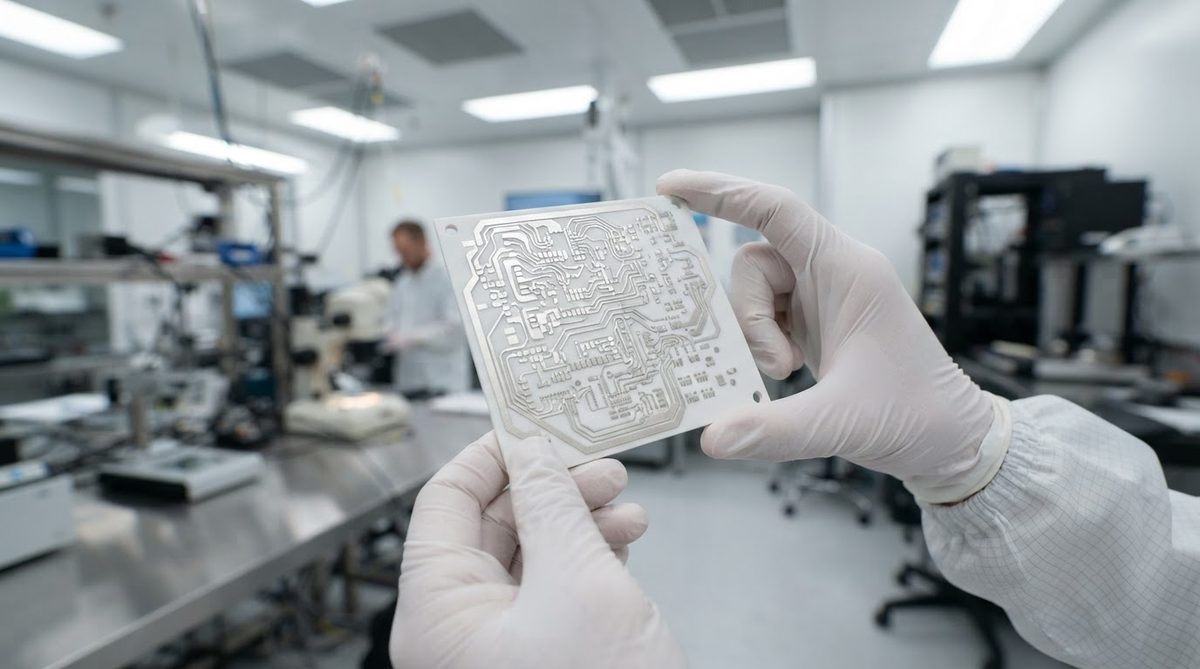
The 4 % glassy phase in 96% alumina lowers thermal conductivity and slightly degrades high-frequency dielectric loss. For most power and sensor work below 1 GHz, 96% is fine. Step up to 99.6% alumina when:
- Thermal conductivity above 28 W/m·K is required (99.6% delivers 28–35 W/m·K at 25 °C).
- Operating frequencies exceed 5 GHz and you need tan δ below 0.0002 at 10 GHz.
- Surface finish must be Ra ≤ 0.05 µm for thin-film metallisation with sub-25 µm traces.
See the full property comparison on the 99.6% alumina material properties page. If your thermal dissipation exceeds what either alumina grade can handle, silicon nitride wholesale substrates offer superior mechanical toughness for demanding power-cycling environments.
When Not to Use 96% Alumina
96% alumina is not the right substrate in every situation. Choose something else when:
- Thermal conductivity above 35 W/m·K is needed. AlN (170–200 W/m·K) or direct-bonded copper on AlN handles high-flux power modules far better.
- The board needs plated through-holes and complex routing. FR-4 or metal-core PCBs are cheaper and easier to drill and plate at scale.
- Mechanical shock or vibration is severe. Si3N4 (fracture toughness 6–7 MPa·√m vs. 3.5–4.0 for 96% alumina) survives thermal cycling and vibration better in automotive inverter modules.
- Cost is the only priority and thermal performance is not critical. Standard 1.6 mm FR-4 costs roughly 1/10th per cm² compared with 96% alumina.
Frequently Asked Questions
What is the minimum order quantity for wholesale 96% alumina substrates?
Most suppliers define wholesale as 500 pieces or more for standard sizes. Below 500 pieces, you typically pay prototype or small-batch pricing, which can be 30–50 % higher per unit.
Can I get metallised alumina 96% Al2O3 wholesale?
Yes. Thick-film (screen-printed) metallisation with silver, gold, or palladium-silver conductors is the most common wholesale option. DPC (direct plated copper) and thin-film metallisation are also available but carry higher per-unit costs and longer lead times.
How does 96% alumina perform at high frequencies?
At 1 MHz, 96% alumina has a dielectric constant of 9.0–9.5 and a loss tangent of 0.0005–0.0010. Above 10 GHz, the glassy phase increases dielectric loss noticeably. For millimetre-wave designs, 99.6% alumina or AlN is a better fit.
What surface finishes are available on wholesale 96% alumina?
As-fired (Ra 0.5–1.0 µm), ground (Ra 0.2–0.4 µm), and polished/lapped (Ra ≤ 0.1 µm) are the standard options. As-fired is cheapest and works well for thick-film circuits. Polished is required for thin-film deposition with tight line resolution.
Is 96% alumina RoHS compliant?
96% alumina substrates themselves contain no restricted substances under RoHS 2 (Directive 2011/65/EU). Compliance of the finished assembly depends on the metallisation and soldering materials used, not the ceramic body.
Next Step
If 96% alumina fits your thermal and electrical requirements, request a quote with your panel size, thickness, surface finish, and annual volume. For projects that need tighter tolerances or higher purity, review the 99.6% alumina wholesale options before finalising your spec.