The five ceramic substrate types used in most electronic applications are alumina (Al₂O₃), aluminum nitride (AlN), silicon nitride (Si₃N₄), zirconia-toughened alumina (ZTA), and borosilicate glass. Each occupies a distinct performance-and-cost niche: alumina covers roughly 80 % of ceramic PCB volume because it is cheap and adequate; AlN handles high heat flux; Si₃N₄ survives extreme thermal cycling; ZTA resists mechanical shock; and glass serves low-loss RF and optical work. Choosing the wrong substrate wastes money or causes field failures, so the comparison below is built around the numbers that actually matter.
Key Takeaways
- 96 % alumina (Al₂O₃) offers 24–28 W/m·K thermal conductivity at 25 °C and is the lowest-cost ceramic substrate, typically 1× baseline price per unit area.
- Aluminum nitride (AlN) reaches 170–230 W/m·K but costs 3–5× more than 96 % alumina and is sensitive to moisture without passivation.
- Silicon nitride (Si₃N₄) has the highest fracture toughness of any common ceramic substrate—6–8 MPa·√m per ASTM C1421—making it the preferred choice for power-module thermal cycling beyond 3 000 cycles (−40 °C to +150 °C).
- ZTA combines alumina’s moderate cost with improved toughness (4–6 MPa·√m), filling the gap between pure alumina and Si₃N₄ in mechanically demanding environments.
- Borosilicate glass substrates offer a dielectric constant of ~4.6 at 1 MHz and loss tangent below 0.005, useful for RF and sensor packaging where low permittivity matters more than thermal conductivity.
Alumina (Al₂O₃)—The Default Ceramic Substrate
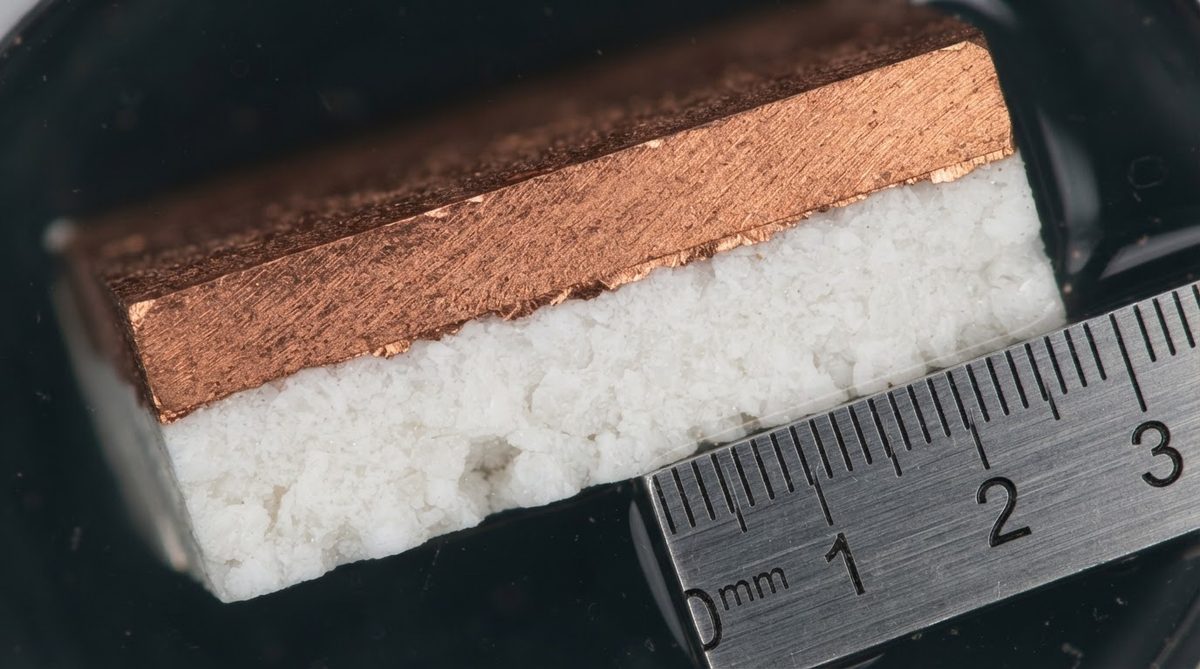
Alumina is the workhorse. It is available in purities from 92 % to 99.6 %, and the purity grade shifts every important property. A 96 % alumina substrate conducts heat at 24–28 W/m·K (per CoorsTek ADS-996 datasheet, 25 °C), while 99.6 % alumina reaches 28–35 W/m·K under the same conditions. The higher purity also raises volume resistivity from ~10¹⁴ Ω·cm to >10¹⁴ Ω·cm at 25 °C, which matters for high-voltage isolation.
Mechanically, 96 % alumina has a flexural strength of 350–380 MPa (ASTM C1161, 4-point bend). That is strong enough for most PCB handling and assembly but brittle under point loads or rapid thermal shock. The CTE sits around 7.0–7.2 ppm/°C (20–300 °C), a reasonable match to copper lead frames but a poor match to silicon (2.6 ppm/°C), which limits bare-die attach reliability without a compliant interlayer.
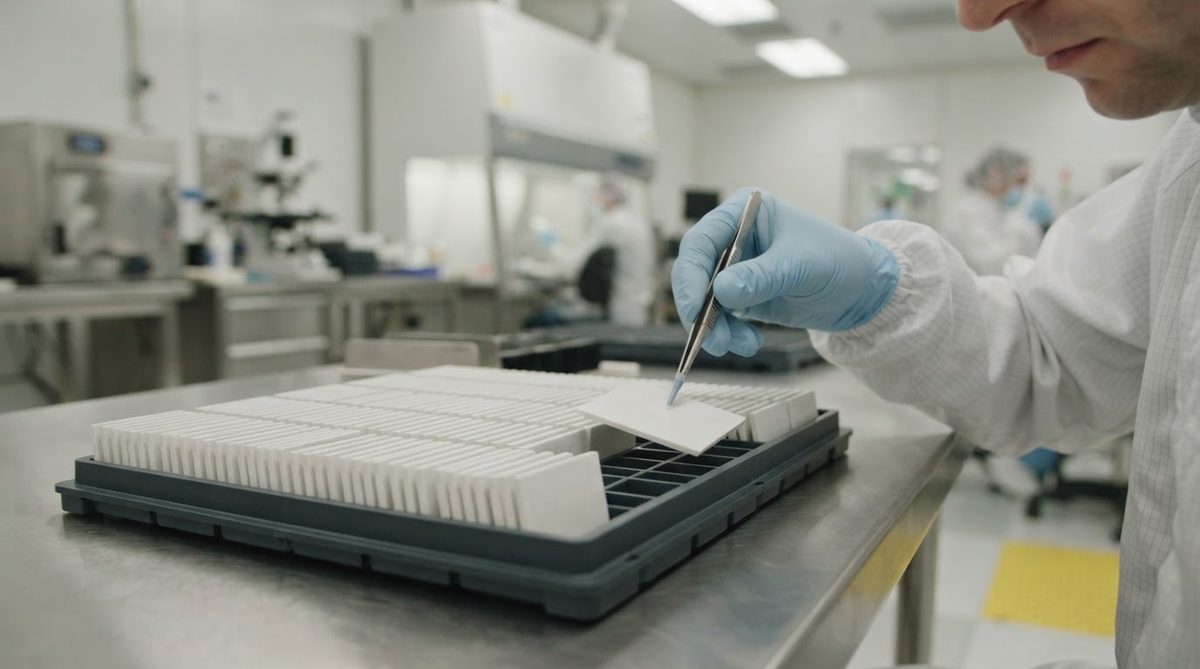
Cost is alumina’s main advantage. Substrates in standard ceramic substrate sizes such as 2″ × 2″ or 4.5″ × 4.5″ are stocked by most suppliers. Lead times for blank as-fired alumina substrates are often under two weeks. If your thermal load is under ~10 W/cm² and operating temperature stays below 300 °C, 96 % alumina is usually the right call.
Aluminum Nitride (AlN)—High Thermal Conductivity
AlN’s thermal conductivity of 170–230 W/m·K (Kyocera SH-30 datasheet, 25 °C) is 6–8× higher than 96 % alumina. Its CTE of 4.5–4.7 ppm/°C is much closer to silicon and SiC die, which reduces solder-joint stress in direct die-attach designs. These two properties make AlN the standard substrate for high-power LED arrays, IGBT modules, and GaN HEMT carriers.
The trade-offs are real. AlN is hydrolytically unstable: unprotected surfaces degrade in humid air over months, forming aluminum hydroxide that raises thermal resistance. Most AlN substrates ship with a thin oxide or oxynitride passivation layer, but designers must verify this with the supplier. AlN is also harder to metallize than alumina; thin-film sputtering (Ti/Pt/Au or Ti/Cu/Ni) gives good adhesion, but thick-film silver pastes that work on alumina often fail on AlN without a proprietary glaze.
Price runs 3–5× that of 96 % alumina for equivalent area and thickness. For a worked example: a 25.4 × 25.4 × 0.635 mm 96 % alumina blank might cost $1.50–$2.50 each at 500-piece volume; the same dimensions in AlN typically run $6–$12 each. That multiplier shrinks at high volume but never disappears.
Silicon Nitride (Si₃N₄)—Toughness and Thermal-Cycle Life
Silicon nitride’s defining property is fracture toughness: 6–8 MPa·√m (ASTM C1421), roughly double that of alumina. Combined with a flexural strength of 600–800 MPa (Kyocera SN-282, 4-point bend), Si₃N₄ substrates survive thermal-cycling regimes that crack alumina and even AlN. Power-module qualification tests per AQG 324 often require >3 000 cycles between −40 °C and +150 °C; Si₃N₄ AMB (active metal brazed) substrates routinely pass >5 000 cycles.
Thermal conductivity is moderate: 70–90 W/m·K for high-thermal grades (Maruwa SN-HT, 25 °C). That is well below AlN but far above alumina, and the longer cycle life often offsets the thermal gap in automotive and traction inverter designs where a cracked substrate means a vehicle recall. Si₃N₄ substrates can be produced as thin as 0.32 mm, which further reduces thermal resistance through the substrate. For more on thin-format options, see Si₃N₄ thin substrates.
Cost is the highest of the common ceramics—5–10× alumina at equivalent area. Si₃N₄ is justified only when reliability requirements demand it, which is why it dominates EV traction inverters and railway power modules but rarely appears in consumer electronics. Detailed property sheets are available on the Si₃N₄ substrate datasheet page.
Zirconia-Toughened Alumina (ZTA)
ZTA blends alumina with 10–20 wt % zirconia (ZrO₂) to exploit transformation toughening. The result is a fracture toughness of 4–6 MPa·√m—midway between pure alumina (~3.5 MPa·√m) and Si₃N₄—at a cost only 1.5–2.5× that of 96 % alumina. Thermal conductivity drops slightly compared to pure alumina, typically to 20–24 W/m·K at 25 °C (CeramTec datasheet), because the zirconia phase scatters phonons.
ZTA is a good fit for sensor substrates, thick-film hybrid circuits exposed to vibration, and packages that see repeated mechanical stress during assembly. It is not a replacement for AlN or Si₃N₄ in high-heat or high-cycle applications. For a deeper look at ZTA properties and sourcing, see zirconia-toughened alumina PCB.
Borosilicate Glass
Borosilicate glass substrates (e.g., Schott Borofloat 33) are not ceramics in the strict sense, but they appear in the same sourcing conversations. Their dielectric constant is ~4.6 at 1 MHz with a loss tangent below 0.005 (per Schott datasheet), making them attractive for RF interposers, MEMS packaging, and optical sensor carriers. Thermal conductivity is low—about 1.1 W/m·K—so they are unsuitable for any meaningful power dissipation. CTE is ~3.25 ppm/°C (20–300 °C), a close match to silicon die. More detail is on the borosilicate glass substrate page.
Side-by-Side Property Comparison
| Parameter | Al₂O₃ 96 % | Al₂O₃ 99.6 % | AlN | Si₃N₄ | ZTA | Borosilicate Glass |
|---|---|---|---|---|---|---|
| Thermal conductivity (W/m·K, 25 °C) | 24–28 | 28–35 | 170–230 | 70–90 | 20–24 | ~1.1 |
| CTE (ppm/°C, 20–300 °C) | 7.0–7.2 | 7.2–7.4 | 4.5–4.7 | 2.7–3.2 | 7.5–8.5 | 3.25 |
| Flexural strength (MPa, ASTM C1161) | 350–380 | 380–450 | 300–350 | 600–800 | 400–500 | ~70 |
| Fracture toughness (MPa·√m, ASTM C1421) | 3.3–3.8 | 3.5–4.0 | 2.5–3.0 | 6–8 | 4–6 | ~0.7 |
| Dielectric constant (1 MHz) | 9.0–9.5 | 9.7–10.0 | 8.5–9.0 | 8.0–8.5 | 9.5–10.5 | 4.6 |
| Volume resistivity (Ω·cm, 25 °C) | >10¹⁴ | >10¹⁴ | >10¹⁴ | >10¹³ | >10¹⁴ | >10¹² |
| Max continuous use temp (°C) | ~1 600 | ~1 700 | ~1 000 (in N₂); oxidizes in air above ~700 | ~1 200 | ~1 500 | ~500 |
| Relative cost (per unit area, 1× = 96 % Al₂O₃) | 1× | 1.5–2× | 3–5× | 5–10× | 1.5–2.5× | 0.5–1× |
Typical values for commercially available material, for comparison only. Confirm against the datasheet for your specific grade. Sources: CoorsTek ADS-996 / ADS-9965, Kyocera SH-30 / SN-282, CeramTec Rubalit 710, Maruwa SN-HT, Schott Borofloat 33.
Worked Example: Choosing a Substrate for a 50 W Power Module
Suppose you need to dissipate 50 W through a 25 × 25 mm substrate, 0.635 mm thick. The steady-state thermal resistance through the substrate alone (Rth = t / (k × A)) gives a useful first comparison:
- 96 % Al₂O₃ (k = 26 W/m·K): Rth = 0.000635 / (26 × 0.000625) = 0.039 °C/W → ΔT ≈ 2.0 °C
- AlN (k = 200 W/m·K): Rth = 0.000635 / (200 × 0.000625) = 0.0051 °C/W → ΔT ≈ 0.25 °C
- Si₃N₄ (k = 80 W/m·K): Rth = 0.000635 / (80 × 0.000625) = 0.0127 °C/W → ΔT ≈ 0.64 °C
All three temperature drops are small in absolute terms, but in a real stack the substrate is only one layer. When you add die-attach solder (Rth ≈ 0.05–0.15 °C/W) and a baseplate TIM (Rth ≈ 0.1–0.3 °C/W), the substrate’s share of total resistance matters more at higher power densities. At 50 W over 625 mm², alumina is usually fine. At 200 W over the same area, the 8× thermal advantage of AlN becomes the difference between meeting and missing Tj,max.
Metallization Compatibility
Not every substrate works with every metallization process. The table below summarizes common pairings.
| Substrate | DBC (direct bond copper) | AMB (active metal braze) | Thick film (Ag, Au) | Thin film (sputtered Ti/Cu) |
|---|---|---|---|---|
| Al₂O₃ 96 % | Yes | Yes | Yes | Yes |
| Al₂O₃ 99.6 % | Yes | Yes | Yes | Yes |
| AlN | Yes | Yes | Limited (needs glaze) | Yes |
| Si₃N₄ | No (bonding unreliable) | Yes (primary method) | No | Yes |
| ZTA | Yes | Yes | Yes | Yes |
| Borosilicate glass | No | No | Limited | Yes (primary method) |
Si₃N₄ is almost exclusively paired with AMB copper in power-module applications. DBC bonding to Si₃N₄ has been demonstrated in labs but is not a standard production process. For substrates with copper or precious-metal layers already applied, see metallized ceramic substrates.
When NOT to Use a Ceramic Substrate
Ceramic substrates are not always the right answer. Consider these cases:
- Total power under ~3 W with no high-temperature or high-frequency requirement. Standard FR-4 (0.3 W/m·K) or metal-core PCB (1–3 W/m·K) will work at a fraction of the cost.
- Large board area (>150 × 150 mm) with complex routing. Ceramic substrates are limited in panel size and layer count. A multilayer FR-4 or polyimide flex is more practical.
- High mechanical shock without encapsulation. Ceramic is brittle. A board that may be dropped, flexed, or clamped unevenly needs either a metal-backed ceramic assembly or a non-ceramic substrate.
- Budget-constrained consumer products. The 3–10× cost premium of ceramic over FR-4 is hard to justify when the device sells for $20.
If you are still weighing options, the guide on selecting the right ceramic substrate walks through the decision tree in more detail.
Frequently Asked Questions
Can I use alumina instead of AlN to save money?
Yes, if your heat flux is below roughly 10 W/cm² and you can tolerate the higher CTE mismatch to silicon die. Many LED and sensor designs run on 96 % alumina without issue. Run the thermal-resistance stack for your specific layout before committing.
Is Si₃N₄ always better than AlN for power modules?
Not always. Si₃N₄ wins on thermal-cycle life and mechanical toughness, but AlN has 2–3× higher thermal conductivity. For applications with moderate cycling (<1 000 cycles) and very high steady-state heat loads, AlN on DBC may outperform Si₃N₄ on AMB thermally while costing less.
Does ZTA work with standard thick-film pastes?
Yes. ZTA is compatible with standard silver and gold thick-film pastes designed for alumina. No special glaze or surface treatment is required, which keeps processing costs close to those of pure alumina.
What is the thinnest ceramic substrate available?
Si₃N₄ substrates are commercially available down to 0.25 mm (250 µm) because the material’s high toughness prevents breakage at that thickness. Alumina can be lapped to ~0.25 mm as well, but handling yield drops significantly. AlN is commonly supplied at 0.32 mm minimum.
Are ceramic substrates compatible with lead-free solder?
Yes. All five substrate types discussed here can be soldered with SAC305 and other lead-free alloys, provided the metallization and surface finish are appropriate. Common finishes include ENIG, ENEPIG, and bare gold on thin-film metallization.
How do I get custom shapes cut from ceramic substrates?
Laser scribing and laser cutting are the most common methods for custom outlines and through-holes. CO₂ lasers work well for alumina; Nd:YAG or UV lasers are preferred for AlN and Si₃N₄ to avoid micro-cracking. Details on tolerances and design rules are covered in the laser-cut ceramic substrates guide.