Aluminum nitride AlN grades are defined by the weight-percent purity of AlN in the sintered body, and they typically range from about 94% to 99.6%+. Thermal conductivity scales with purity: standard aluminum nitride AlN grades near 96% deliver 170–180 W/mK at 25 °C, while premium 99%+ grades reach 200–230 W/mK. Higher purity means fewer oxygen and secondary-phase impurities at grain boundaries, which directly improves phonon transport. The trade-off is cost—a 99.6% AlN substrate can cost 30–50% more than a 94–96% grade for the same geometry.
Key Takeaways
- Standard commercial aluminum nitride AlN grades cluster around 94–96%, 98%, and 99%+ purity, with thermal conductivities of roughly 170, 180–190, and 200–230 W/mK respectively (at 25 °C).
- Grain-boundary oxygen content is the primary factor limiting thermal conductivity in lower-purity AlN; reducing it from ~3 wt% to <1 wt% can raise conductivity by 30% or more.
- All common AlN grades share a dielectric strength above 15 kV/mm and a CTE of 4.4–4.7 ppm/°C (20–300 °C), making grade selection primarily a thermal and cost decision.
- For most power-electronics substrates, 96–98% AlN at 170–190 W/mK is sufficient; 99%+ grades are justified mainly in high-flux laser diode mounts, RF packages, and aerospace thermal spreaders.
What Determines Aluminum Nitride AlN Grades?
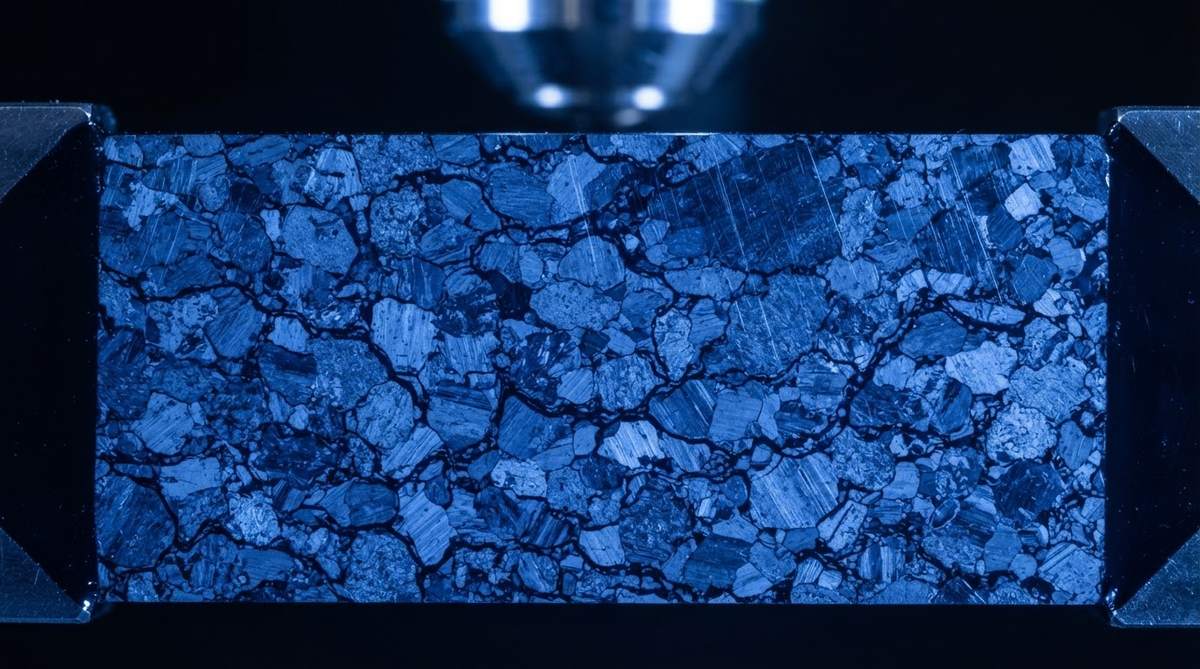
AlN grade designations reflect the weight percentage of aluminum nitride in the sintered body. The remainder is sintering aids (typically yttria, Y₂O₃, at 3–5 wt%) and residual oxygen dissolved in the lattice or segregated at grain boundaries. Oxygen substitutes for nitrogen in the AlN crystal and introduces point defects that scatter phonons. Even a 1 wt% increase in oxygen content can reduce thermal conductivity by 20–40 W/mK, per data published by Tokuyama and Maruwa.
Sintering aids are necessary to achieve full density at practical temperatures (1750–1900 °C in N₂ atmosphere). Yttria reacts with surface alumina on AlN powder to form yttrium aluminate phases (YAG, YAP, YAM), which migrate to grain boundaries during sintering and pull oxygen out of the lattice. Higher-purity grades use finer, lower-oxygen starting powders and tighter atmosphere control during sintering, which drives up raw material and processing cost. For a deeper look at how purity affects ceramic substrate performance, see our dedicated guide.
Common Aluminum Nitride AlN Grades Compared
The table below summarizes properties for three representative commercial aluminum nitride AlN grades. Values are drawn from published datasheets by Kyocera (SH-30, AN-230), Maruwa, and Tokuyama (SH series).
| Parameter | AlN ~96% | AlN ~98% | AlN 99%+ | Unit | Condition |
|---|---|---|---|---|---|
| AlN content | 94–96 | 97–98 | 99–99.6 | wt% | — |
| Thermal conductivity | 170–180 | 180–200 | 200–230 | W/mK | 25 °C, laser flash per ASTM E1461 |
| Flexural strength | 350–400 | 320–380 | 300–350 | MPa | 3-pt bend, ASTM C1161 |
| Dielectric strength | >15 | >15 | >17 | kV/mm | DC, 0.635 mm thick |
| Dielectric constant (εr) | 8.5–9.0 | 8.6–8.9 | 8.7–8.9 | — | 1 MHz, 25 °C |
| CTE | 4.4–4.7 | 4.5–4.7 | 4.5–4.6 | ppm/°C | 20–300 °C |
| Density | 3.25–3.30 | 3.28–3.32 | 3.26–3.30 | g/cm³ | Archimedes method |
| Relative cost index | 1.0× | 1.2–1.4× | 1.5–2.0× | — | Same geometry, 2024 pricing |
Typical values for commercially available material, for comparison only. Confirm against the datasheet for your specific grade.
Notice the inverse relationship between thermal conductivity and flexural strength across these aluminum nitride AlN grades. Higher-purity AlN has larger average grain size (10–15 µm vs. 5–8 µm for standard grades) because fewer secondary phases pin grain boundaries during sintering. Larger grains improve phonon mean free path but reduce fracture resistance. If mechanical reliability under thermal cycling is critical for your application, review the AlN flexural strength and reliability data before specifying a high-purity grade.
Enter your substrate dimensions, AlN purity level, and power dissipation below to see how temperature rise changes across grades.
Worked Example: Does the Grade Upgrade Pay Off?
Suppose you have a GaN HEMT dissipating 50 W through a 10 mm × 10 mm AlN substrate, 0.635 mm thick. The one-dimensional thermal resistance through the substrate is:
Rth = t / (k × A)
For a 96% grade (k = 170 W/mK):
Rth = 0.000635 / (170 × 0.0001) = 0.0374 °C/W → ΔT = 50 × 0.0374 = 1.87 °C
For a 99%+ grade (k = 220 W/mK):
Rth = 0.000635 / (220 × 0.0001) = 0.0289 °C/W → ΔT = 50 × 0.0289 = 1.44 °C
The upgrade saves 0.43 °C across the substrate. In many power-electronics designs, the solder layer and heat-sink interface contribute 5–15 °C to the total stack. Spending 50–100% more on the substrate to save less than half a degree is hard to justify unless you are already at the thermal limit and every fraction of a degree counts, as in high-power laser diode submounts or satellite payloads. For the full AlN material properties and datasheet, see our reference page.
How to Choose the Right Aluminum Nitride AlN Grade
Start with your thermal budget
Calculate the total thermal resistance from junction to ambient. If the substrate accounts for less than 10% of the total stack, a standard 96% AlN grade is almost certainly sufficient. Upgrading the thermal interface material or heat-sink design will yield a larger improvement per dollar.
Consider the metallization process
DBC (direct bond copper) and AMB (active metal brazing) processes work with all aluminum nitride AlN grades, but the brazing temperature (780–900 °C for AMB) and atmosphere can interact differently with grain-boundary phases in lower-purity material. Some AMB suppliers specify a minimum AlN purity of 96% to ensure consistent bond strength. Thin-film metallization (sputtered Ti/Pt/Au or Ti/Ni/Au) is less sensitive to grade but benefits from the smoother surface finish achievable with finer-grained standard AlN. If you are working with substrates under 0.38 mm, our guide to AlN thin substrates covers additional considerations.
Factor in volume and lead time
Standard 96% AlN substrates are stocked by multiple suppliers (Kyocera, Maruwa, CoorsTek) in common sizes (114.3 mm × 114.3 mm, 139.7 mm × 190.5 mm). High-purity 99%+ grades are often made to order with 8–14 week lead times and higher minimum order quantities. For prototyping, using a stocked standard grade can save weeks.
When NOT to Use a High-Purity AlN Grade
Choose 96% AlN or a different substrate entirely in these situations:
- Substrate thermal resistance is a small fraction of your total stack. If solder joints, TIM layers, or heat-sink convection dominate, the grade upgrade is wasted money.
- Mechanical shock or vibration is severe. Higher-purity AlN is more brittle. A silicon nitride (Si₃N₄) substrate with 600–800 MPa flexural strength may be a better fit, even though its thermal conductivity (70–90 W/mK) is lower.
- Your application needs εr < 7 at high frequency. All aluminum nitride AlN grades have εr around 8.5–9.0. For lower-permittivity RF substrates, consider 96% alumina (εr ≈ 9.4) or quartz.
- Budget is the binding constraint. If 96% alumina (24–28 W/mK) meets your thermal needs, it costs roughly one-fifth as much as any AlN grade. See our ceramic substrate types comparison for a broader view.
Frequently Asked Questions
Is 96% AlN the same as 96% alumina (Al₂O₃)?
No. 96% AlN is aluminum nitride with ~4% sintering aids (typically yttria), offering 170–180 W/mK thermal conductivity. 96% alumina is aluminum oxide with ~4% glass-phase additives, offering only 24–28 W/mK. They are completely different materials with different crystal structures, CTEs, and costs.
Can I get AlN substrates above 230 W/mK?
Single-crystal AlN can reach 285–320 W/mK, but single-crystal substrates are research-grade items with extreme cost and limited size (typically under 50 mm diameter). For polycrystalline substrates, 220–230 W/mK is the practical commercial ceiling as of 2025.
Does AlN grade affect solderability?
AlN grade has minimal direct effect on solderability because solder wets the metallization layer (Cu, Ni/Au, etc.), not the bare ceramic. However, lower-purity grades with more grain-boundary glass phase can show slightly different adhesion strength after metallization. Always qualify the specific substrate-plus-metallization combination with peel-strength testing per IPC-TM-650, method 2.4.8.
How do I verify the grade I received?
Request a certificate of analysis (CoA) from your substrate supplier. Key items to check: AlN content (wt%), oxygen content (wt%), thermal conductivity (laser flash method, ASTM E1461), and density. Incoming inspection can verify density with the Archimedes method and thermal conductivity with a laser flash apparatus if you have one on site.
Are there AlN grades specifically for LTCC or HTCC co-firing?
AlN is not processed via LTCC. HTCC AlN tape-cast systems exist (e.g., from Tokuyama), but they require sintering in nitrogen at 1750–1850 °C, which limits them to specialty HTCC furnaces. Most AlN substrates used in electronics are pre-sintered blanks that are metallized afterward via DBC, AMB, or thin-film deposition.
Next Step
If you have identified which aluminum nitride AlN grade fits your thermal budget, the next step is to confirm substrate dimensions, metallization, and surface finish. Upload your design files or substrate drawing for a quote at AluminaPCB.com and specify the AlN purity grade you need. Our engineering team will confirm material availability and lead time for your geometry.