What Is Co-Fired Ceramic? A Clear Definition
The co-fired ceramic definition is straightforward: it is a process in which unfired (“green”) ceramic tape layers and printed conductor patterns are stacked, laminated, and sintered together in a single furnace cycle. Because the metal and ceramic densify at the same time, the result is a monolithic, hermetic multilayer substrate with embedded vias and internal routing. Understanding this co-fired ceramic definition is essential when evaluating multilayer ceramic packaging for high-reliability electronics.
The technique divides into two families based on sintering temperature: High-Temperature Co-Fired Ceramic (HTCC) and Low-Temperature Co-Fired Ceramic (LTCC). The choice between them determines which conductor metals, dielectric properties, and embedded features are available.
Co-Fired Ceramic Process Steps
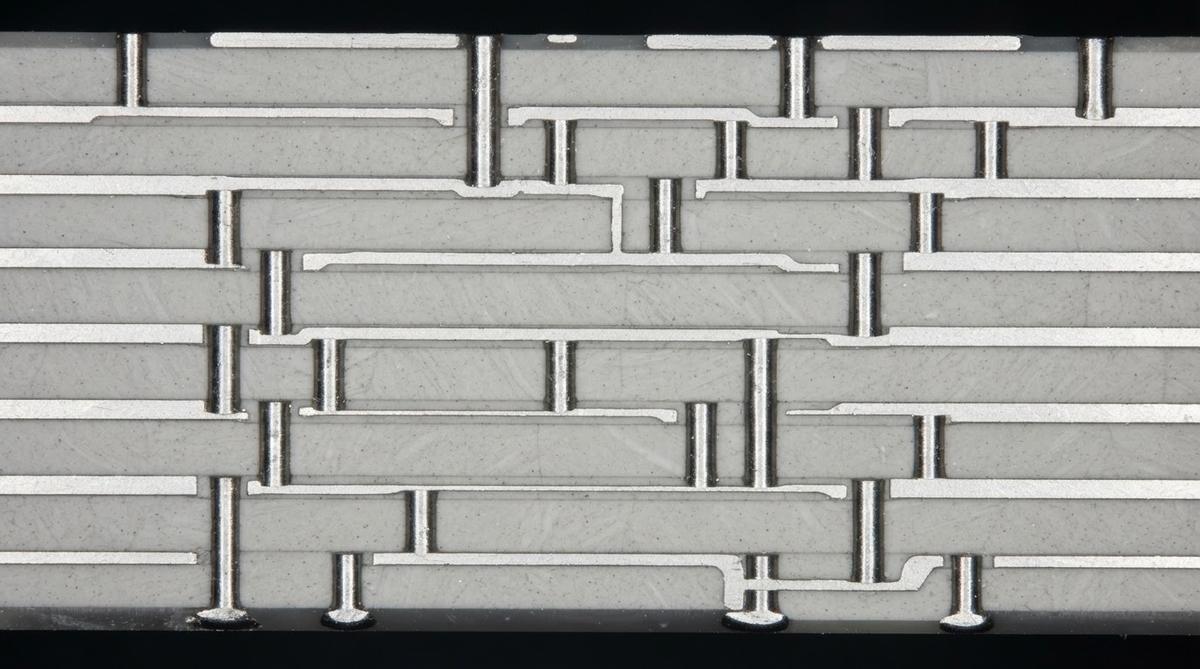
Regardless of whether the target is HTCC or LTCC, every co-fired ceramic build follows the same core sequence:
- Tape casting – Ceramic powder, binder, and solvent are cast into thin, flexible green sheets (typically 50–250 µm per layer).
- Via punching – Mechanical or laser punching creates through-holes for vertical interconnects.
- Via filling and screen printing – Conductive paste (W, Mo for HTCC; Ag, Au, Cu for LTCC) fills vias and prints traces on each layer.
- Stacking and lamination – Layers are aligned, stacked, and pressed under heat and pressure to form a single green block.
- Co-firing (sintering) – The laminated block enters a furnace. Ceramic and metal densify simultaneously, producing the finished monolithic substrate.
This single-fire approach is what separates co-fired ceramic from post-fire metallization methods, where conductors are applied to an already-sintered substrate.
HTCC vs LTCC: How the Co-Fired Ceramic Definition Splits in Practice
| Parameter | HTCC | LTCC |
|---|---|---|
| Sintering temperature | 1 500–1 800 °C | 850–900 °C |
| Typical ceramic body | Al₂O₃ (92–96 %) | Glass-ceramic composites |
| Conductor metals | W, Mo, Mo-Mn | Ag, Au, Cu |
| Dielectric constant (1 MHz) | 9–10 | 5–9 (tunable with glass composition) |
| Thermal conductivity | 18–25 W/mK | 2–5 W/mK |
| Embedded passives | Limited | Resistors, capacitors possible |
Typical values for commercially available material, for comparison only. Confirm against the datasheet for your specific grade.
HTCC fires above the melting point of copper, silver, and gold, so it relies on refractory metals like tungsten. These conductors have higher resistivity (~5.5 µΩ·cm for W vs ~1.7 µΩ·cm for Cu), which matters for RF loss budgets. LTCC fires below 1 000 °C, permitting low-resistivity silver or gold conductors and the integration of passive components directly into the ceramic body.
Where Each Co-Fired Ceramic Type Fits
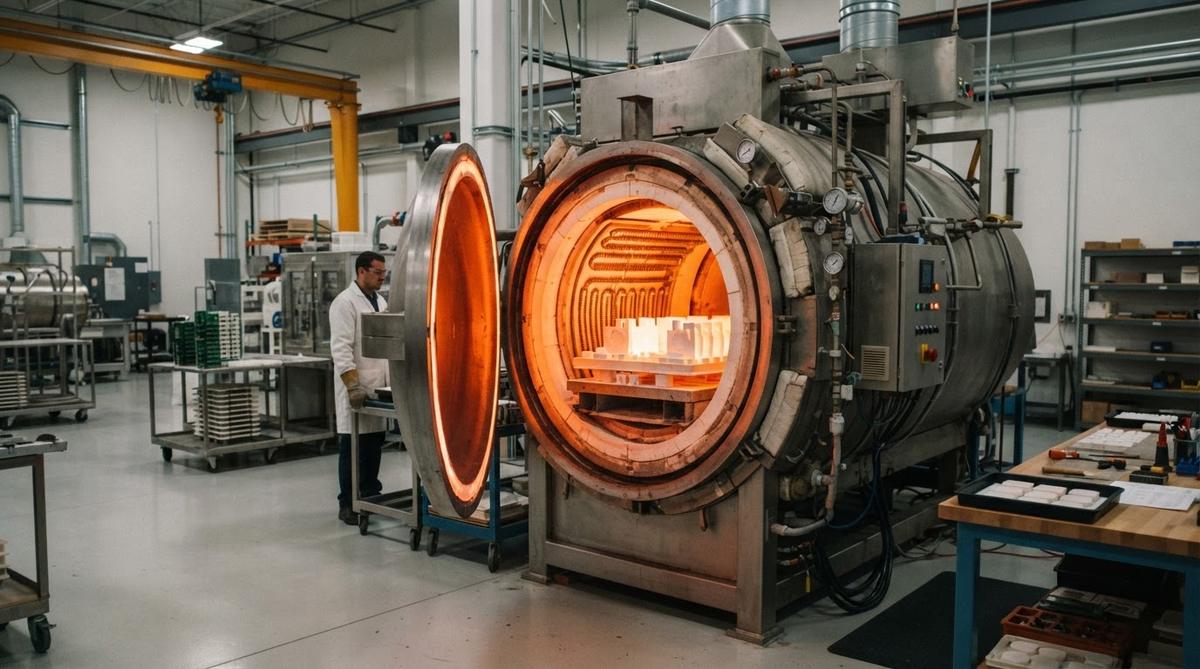
HTCC suits high-power packages, hermetic chip carriers, and aerospace modules where mechanical strength and thermal conductivity outweigh conductor loss. LTCC is preferred for RF front-end modules, millimetre-wave antennas, and sensor packages where low dielectric loss and embedded passives reduce external component count.
Enter your operating frequency, layer count, and required thermal conductivity below to see which co-fired ceramic family best matches your design constraints.
When Co-Fired Ceramic Is Not the Right Choice
Co-fired processes require custom tooling for tape casting and screen printing, so they become cost-effective only at moderate-to-high volumes. For single-layer substrates or fast prototypes, post-fire metallization methods such as DPC or thick-film printing on pre-sintered alumina are faster and cheaper. Standard FR-4 remains the obvious choice when operating temperatures stay below ~130 °C and thermal conductivity is not a constraint.
FAQ
Can co-fired ceramics be made with aluminum nitride?
AlN can be co-fired in an HTCC-type process under nitrogen atmosphere, but it requires specialised binder systems and is far less common than alumina-based co-fire. Most AlN substrates are produced as single-layer blanks with post-fire metallization instead.
How many layers can a co-fired ceramic substrate have?
LTCC substrates routinely reach 20–40 layers. HTCC packages for military hybrids commonly use 10–20 layers. Layer count is limited mainly by lamination uniformity and via registration tolerance.
Is the co-fired ceramic definition the same as “multilayer ceramic”?
Co-firing is the dominant method for making multilayer ceramic substrates, but “multilayer ceramic” can also refer to substrates built by sequential post-fire printing. The co-fired ceramic definition specifically requires that all layers are sintered in a single furnace step.