A ceramic substrate for a single IGBT half-bridge module typically costs $4–$35 per piece at production volumes (1 k+), depending on material, metallization method, copper thickness, and substrate area. That is 3–15× the cost of an equivalent FR-4 board, but FR-4 cannot survive the thermal and voltage demands inside a power module. Understanding exactly where the money goes lets you make smarter trade-offs without over-specifying.
Key Takeaways
- Al₂O₃ DBC substrates are the lowest-cost ceramic option for IGBT modules, typically $4–$10 per piece at volumes above 1,000 units.
- AlN DBC substrates cost roughly 2–3× more than Al₂O₃ DBC due to raw-material and sintering costs, but they cut thermal resistance nearly in half.
- Si₃N₄ AMB substrates are the most expensive option ($15–$35+) yet offer the highest mechanical reliability under thermal cycling.
- Copper thickness (0.3 mm vs. 0.8 mm) can shift per-piece cost by 15–30% because thicker copper requires tighter process control during bonding.
- Panel utilization—how many substrates nest onto a single ceramic blank—often matters more than material grade for total unit cost.
What Drives IGBT Substrate PCB Cost?
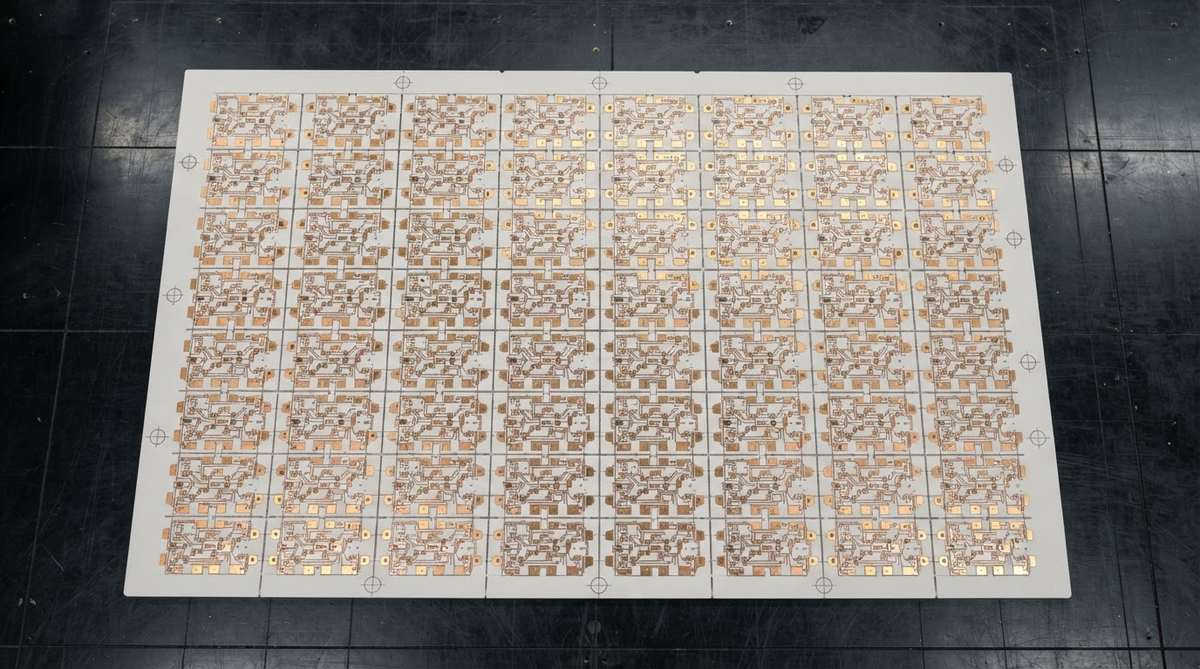
Four factors account for roughly 85% of the final price: the ceramic material, the metallization process, copper thickness, and substrate dimensions. The remaining 15% comes from patterning, surface finish, testing, and yield loss.
Ceramic Material
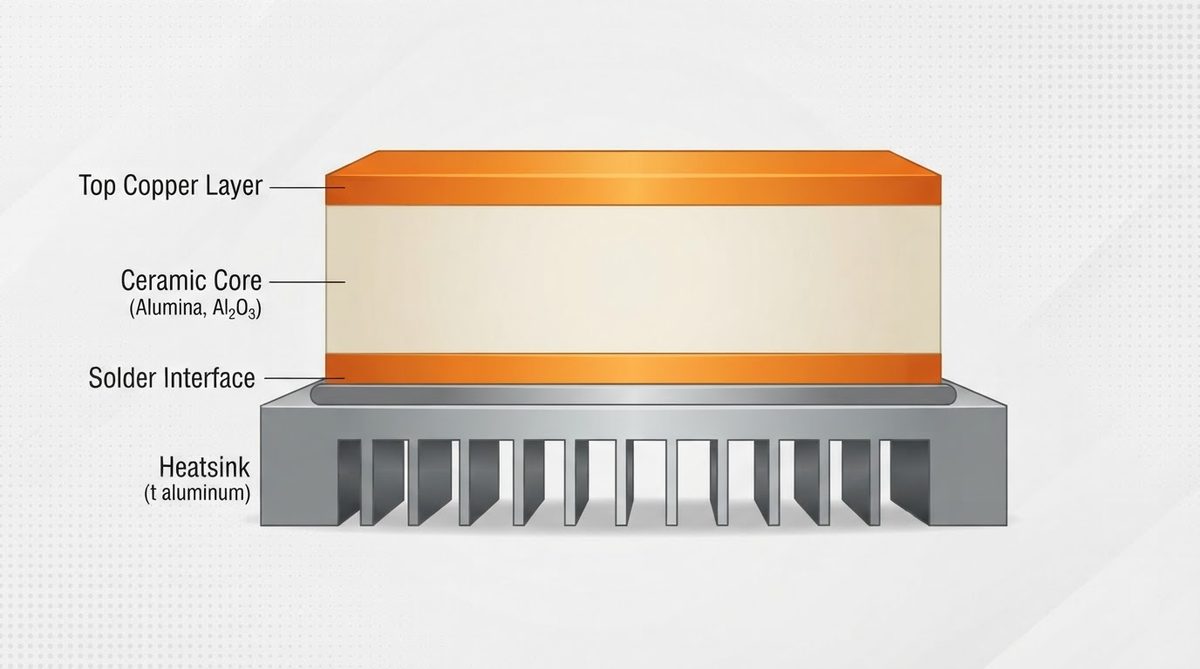
Al₂O₃ (96%) is the workhorse. It offers adequate thermal conductivity (24–28 W/m·K per ASTM E1461) and costs the least to sinter. AlN (170–200 W/m·K) is chosen when the die dissipates more than about 150 W/cm² and the thermal stack needs every advantage. Si₃N₄ (80–90 W/m·K) trades some conductivity for exceptional fracture toughness (≥ 6 MPa·m^0.5 per ASTM C1421), which matters in traction inverters subject to extreme thermal cycling (–40 °C to +175 °C). For a deeper look at Si₃N₄ substrate pricing, see our dedicated cost analysis.
Metallization Process: DBC vs. AMB
Direct Bonded Copper (DBC) fuses oxygen-free copper to the ceramic at ~1,065 °C. It is well-established and cost-effective for Al₂O₃ and AlN. Active Metal Brazing (AMB) uses a Ti-containing braze alloy at ~850 °C, producing a stronger bond that tolerates thicker copper (up to 0.8 mm or more). AMB is required for Si₃N₄ and is increasingly used with AlN for high-reliability applications. AMB adds roughly 30–60% to metallization cost versus DBC on the same ceramic.
Copper Thickness
IGBT modules commonly use 0.3 mm copper for standard industrial drives and 0.5–0.8 mm for high-current traction or wind-power inverters. Thicker copper carries more current but increases residual stress during bonding, raising scrap rates and cost.
IGBT Substrate Cost Comparison Table
| Parameter | Al₂O₃ 96% DBC | AlN DBC | Si₃N₄ AMB | Unit | Condition |
|---|---|---|---|---|---|
| Raw ceramic cost (per 50 × 50 mm blank) | $0.50–$1.20 | $1.80–$4.00 | $3.50–$8.00 | USD | 1 k qty, 0.38 mm thick |
| Metallization cost (per piece) | $2.50–$5.00 | $3.50–$7.00 | $7.00–$15.00 | USD | 0.3 mm Cu, both sides |
| Thermal conductivity | 24–28 | 170–200 | 80–90 | W/m·K | 20 °C, ASTM E1461 |
| Flexural strength | 300–380 | 300–350 | 650–800 | MPa | ASTM C1161 |
| Max continuous use temp. | 300–350 | 300–350 | 300–350 | °C | Ceramic limit; Cu oxidation limits practical use |
| Typical finished piece cost | $4–$10 | $8–$18 | $15–$35 | USD | 50 × 50 mm, 1 k+ qty |
Typical values for commercially available material, for comparison only. Confirm against the datasheet for your specific grade.
Worked Example: Estimating Cost for a 1200 V / 150 A Half-Bridge Module
Assume a substrate footprint of 48 × 34 mm, 0.32 mm Al₂O₃ ceramic, 0.3 mm DBC copper both sides, Ni/Au finish, quantity 5,000 pieces.
- Ceramic blank: A standard 138 × 190 mm panel yields ~12 substrates. Panel cost ≈ $12. Per-piece ceramic ≈ $1.00.
- DBC bonding: Panel-level bonding at $30–$40 per panel → $2.50–$3.30 per piece.
- Patterning (photo-etch): $0.60–$1.00 per piece at volume.
- Ni/Au plating: $0.80–$1.20 per piece (electroless Ni 3–6 µm, immersion Au 0.05–0.1 µm).
- Electrical test + AOI: $0.30–$0.50 per piece.
- Total estimated cost: $5.20–$7.00 per piece.
Switching to AlN ceramic with the same dimensions pushes the total to roughly $10–$14 per piece, primarily because the AlN blank costs 3× more and DBC yield on AlN is slightly lower. If your thermal simulation shows that Al₂O₃ keeps the junction below the rated limit with margin, it is hard to justify the AlN premium. Run the numbers on your specific design before committing. The ceramic PCB cost factors page covers general pricing drivers in more detail.
Enter your substrate dimensions, material, and expected quantity below to get a ballpark cost estimate for your IGBT substrate project.
[pcb_calc type=”pcb-quote”]
How to Reduce IGBT Substrate Cost Without Sacrificing Reliability
Panel utilization is the single biggest lever. Redesigning the substrate outline to nest more pieces per panel can cut cost 10–20% with zero performance impact. Round corners with ≥ 0.5 mm radius also reduce edge chipping and improve yield.
Standardizing on 0.3 mm copper instead of 0.5 mm saves on both material and scrap. If current capacity is the concern, wider traces on 0.3 mm copper often match the ampacity of narrower traces on 0.5 mm copper. For a broader set of tactics, see strategies to reduce ceramic PCB cost.
Consolidating orders across product lines to hit higher volume tiers also helps. A jump from 1,000 to 5,000 pieces typically drops per-piece cost 15–25% because setup and tooling are amortized.
When NOT to Use a Ceramic Substrate for Your IGBT Module
If your module operates below 100 V and dissipates less than 5 W total, an insulated metal substrate (IMS / MCPCB) at $0.50–$2.00 per piece will likely suffice. The thermal conductivity of a 2 W/m·K dielectric IMS is far below ceramic, but at low power densities the difference is irrelevant.
For consumer-grade IGBT drivers that never see more than 50 °C ambient and have generous heatsinking, even high-Tg FR-4 (Tg ≥ 170 °C) can work. Ceramic substrates earn their cost in high-voltage (≥ 600 V), high-temperature, or high-reliability contexts: traction inverters, wind turbines, industrial servo drives, and similar applications. If your project fits a SiC power module design, the cost calculus shifts further toward AlN or Si₃N₄ because SiC junction temperatures run hotter.
Frequently Asked Questions
How much does a single DBC substrate for an IGBT cost?
At production volumes (1,000+ pieces), an Al₂O₃ DBC substrate in a typical half-bridge footprint (≈ 50 × 35 mm) costs $4–$10 per piece, fully patterned and plated. Prototypes in quantities under 50 can run 3–5× higher due to setup charges.
Is AlN always worth the extra cost over Al₂O₃ for IGBT modules?
No. AlN is justified when the thermal path from die to heatsink is the bottleneck and the power density exceeds roughly 100–150 W/cm². Below that threshold, Al₂O₃ with proper heatsinking often keeps junction temperatures within spec at less than half the substrate cost.
Does substrate size affect cost linearly?
Not linearly. Doubling the substrate area roughly doubles material cost but does not double metallization or testing cost. The bigger factor is how many pieces fit on a standard panel. An oddly shaped substrate that wastes 30% of the panel area costs more per piece than a slightly smaller one with 90% utilization.
Can I use the same ceramic substrate for both IGBT and SiC MOSFET modules?
Physically, yes—the same DBC or AMB substrate can carry either die type. However, SiC devices typically run at higher junction temperatures (175–200 °C vs. 150–175 °C for Si IGBTs), which may push the design toward AlN or Si₃N₄ for long-term reliability under thermal cycling. Budget accordingly.
What surface finish is standard for IGBT substrates?
Electroless nickel / immersion gold (Ni 3–6 µm / Au 0.05–0.1 µm) is the most common finish. It provides a solderable, wire-bondable surface and adds roughly $0.80–$1.50 per piece depending on area. Some high-reliability designs specify thicker electrolytic gold (0.5–1.0 µm), which increases finish cost 2–3×.
Next Step
If you have a substrate outline and a target quantity, request a cost-versus-benefit assessment for your specific IGBT module design. Upload your Gerber or DXF files for a fast, itemized quotation.