Aluminum Nitride Definition
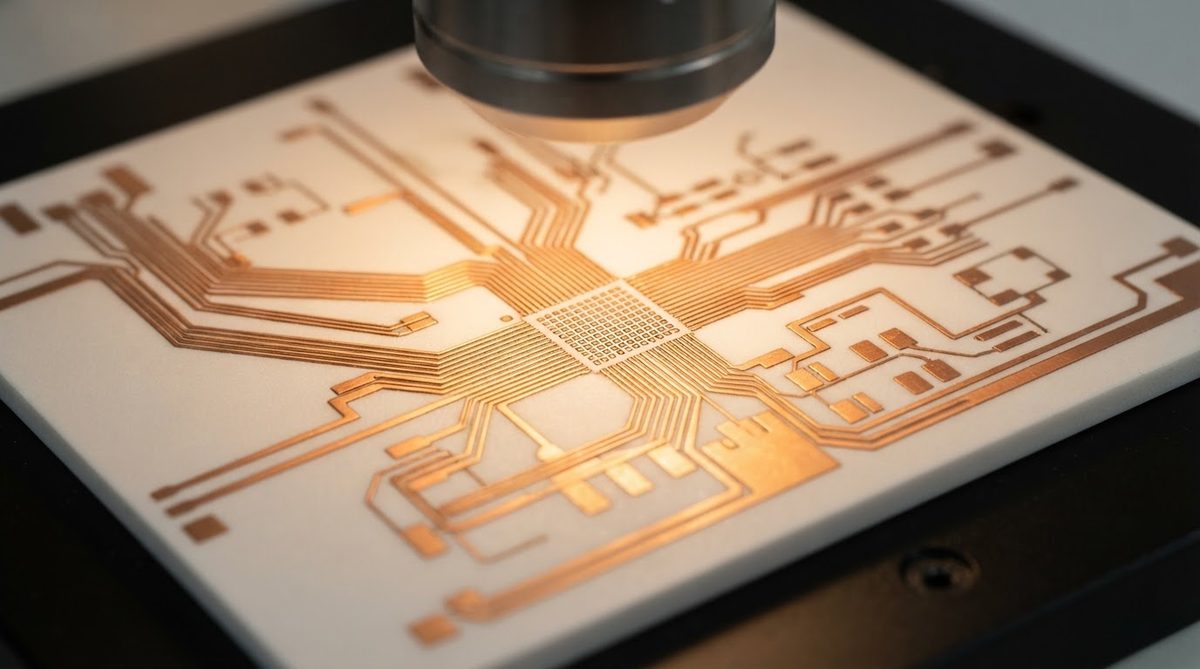
By aluminum nitride definition, AlN is a non-oxide technical ceramic with a thermal conductivity of 170–200 W/mK at 25 °C and a dielectric strength above 15 kV/mm. It combines high electrical resistivity (>1014 Ω·cm) with heat-spreading performance that approaches some metals, making it the substrate of choice for high-power electronics, RF modules, and laser diode carriers. Understanding the aluminum nitride definition and its property set is the first step in deciding whether AlN belongs in your next design.
Key Material Properties
| Parameter | Value | Unit | Condition | Source |
|---|---|---|---|---|
| Thermal conductivity | 170–200 | W/mK | 25 °C, >99% dense | Kyocera SN-220 datasheet |
| Dielectric constant (εr) | 8.5–8.9 | — | 1 MHz, 25 °C | CoorsTek ADS-996 |
| CTE | 4.5–4.8 | ppm/°C | 20–400 °C | Maruwa HA-200 |
| Flexural strength | 300–400 | MPa | ASTM C1161, 3-pt bend | Kyocera SN-220 datasheet |
| Volume resistivity | >1014 | Ω·cm | 25 °C | CoorsTek ADS-996 |
| Max continuous use temp. | ~1 000 | °C | Inert atmosphere | CeramTec Rubalit 710N |
Typical values for commercially available material, for comparison only. Confirm against the datasheet for your specific grade.
The coefficient of thermal expansion of AlN (4.5–4.8 ppm/°C) is a close match to silicon (2.6 ppm/°C) and SiC (4.0 ppm/°C). This CTE match reduces solder-joint stress during thermal cycling, which is why AlN substrates dominate in bare-die attach for IGBT and GaN power devices.
Why the Aluminum Nitride Definition Matters for Substrate Selection
The aluminum nitride definition highlights a rare combination of properties that no single alternative fully replicates. Engineers evaluating ceramic substrates should focus on these distinguishing traits:
- Thermal conductivity 6–8× higher than 96% alumina — 170–200 W/mK versus 24–28 W/mK, critical when heat flux exceeds 30 W/cm².
- CTE near-match to silicon and SiC die — 4.5–4.8 ppm/°C minimizes thermomechanical stress in bare-die attach.
- Full electrical isolation — volume resistivity above 1014 Ω·cm at 25 °C, suitable for high-voltage power modules.
- Stable RF dielectric — εr of 8.5–8.9 at 1 MHz with low loss tangent, used in mmWave and microwave circuits.
- High-temperature capability — continuous operation to ~1 000 °C in inert atmospheres.
Common Substrate Processes for AlN
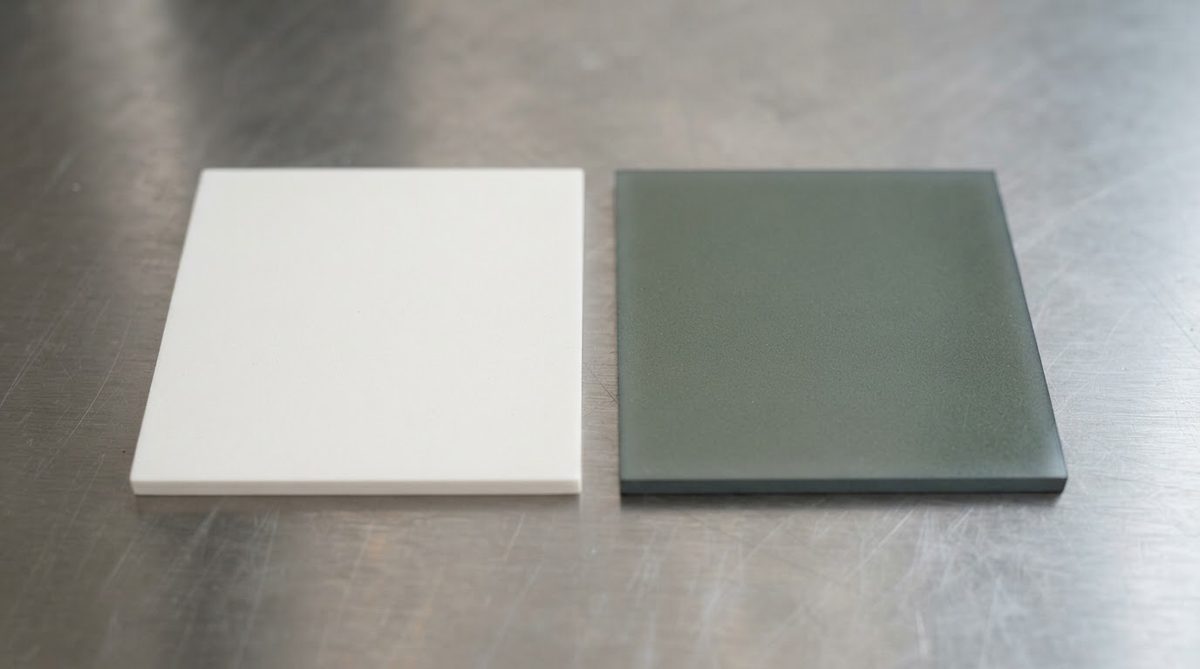
AlN substrates are metallized through several routes. Direct bond copper (DBC) bonds a copper foil to the AlN surface at high temperature, producing a thick copper layer suited to high-current paths. Thin-film sputtering and direct plated copper (DPC) offer finer trace resolution—down to 20–30 µm line/space—for RF and sensor applications. Active metal brazing (AMB) is used where thicker copper (≥0.3 mm) and higher reliability under deep thermal cycling are required, such as in EV traction inverters.
When to Choose Something Else
AlN costs three to five times more per unit area than 96% alumina (Al₂O₃). If your heat flux is below roughly 30 W/cm² and junction temperature targets are not aggressive, alumina at 24–28 W/mK is adequate and far cheaper. For applications that need extreme mechanical toughness rather than peak thermal conductivity, Si₃N₄ (flexural strength 600–800 MPa) is the better pick despite its lower conductivity of 25–90 W/mK. AlN also oxidizes in humid air above 700 °C, so high-temperature use in non-inert atmospheres requires a protective coating or a switch to alumina.
Enter your substrate material, thickness, and operating temperature below to see how AlN compares to alumina and Si₃N₄ under your specific thermal conditions.
FAQ
Is aluminum nitride electrically conductive?
No. AlN is an electrical insulator with volume resistivity above 1014 Ω·cm at room temperature. It conducts heat efficiently but blocks current, which is exactly why it works as a power-electronics substrate.
Can AlN substrates be soldered directly?
Bare AlN cannot be soldered. The surface must first be metallized—typically with a Ti/Cu or Ti/Pt/Au thin-film stack, or via DBC/AMB copper—before standard solder alloys will wet the surface.
Does AlN degrade in moisture?
AlN reacts slowly with water to form aluminum hydroxide, releasing ammonia. In practice, this is only a concern for unmetallized surfaces stored in humid conditions over weeks. Metallized and packaged AlN substrates perform reliably in standard operating environments.
What is the difference between AlN and beryllia for thermal substrates?
Beryllia (BeO) offers comparable thermal conductivity (250–300 W/mK) but its dust is a confirmed human carcinogen that causes chronic beryllium disease. AlN is non-toxic and increasingly preferred wherever its slightly lower conductivity is acceptable. See the full safety discussion in the beryllia glossary entry.