DBC Definition: What Is Direct Bonded Copper?
DBC (Direct Bonded Copper) is a process that bonds a copper foil directly to a ceramic substrate by heating the assembly to approximately 1 065 °C in a controlled atmosphere. Understanding the DBC definition starts with the bonding mechanism: at this temperature a thin copper-oxide (Cu₂O) eutectic liquid forms at the Cu–ceramic interface, wetting the ceramic surface. On cooling the oxide layer solidifies into a permanent bond with no brazing alloy or adhesive required.
The result is a copper-clad ceramic board that combines the high thermal conductivity of copper (≈ 390 W/m·K) with the electrical isolation and mechanical stability of alumina (Al₂O₃) or aluminum nitride (AlN). DBC substrates are the standard platform for IGBT modules, high-power LED arrays, and other applications where heat must move away from a die quickly while maintaining dielectric isolation.
How the DBC Process Works
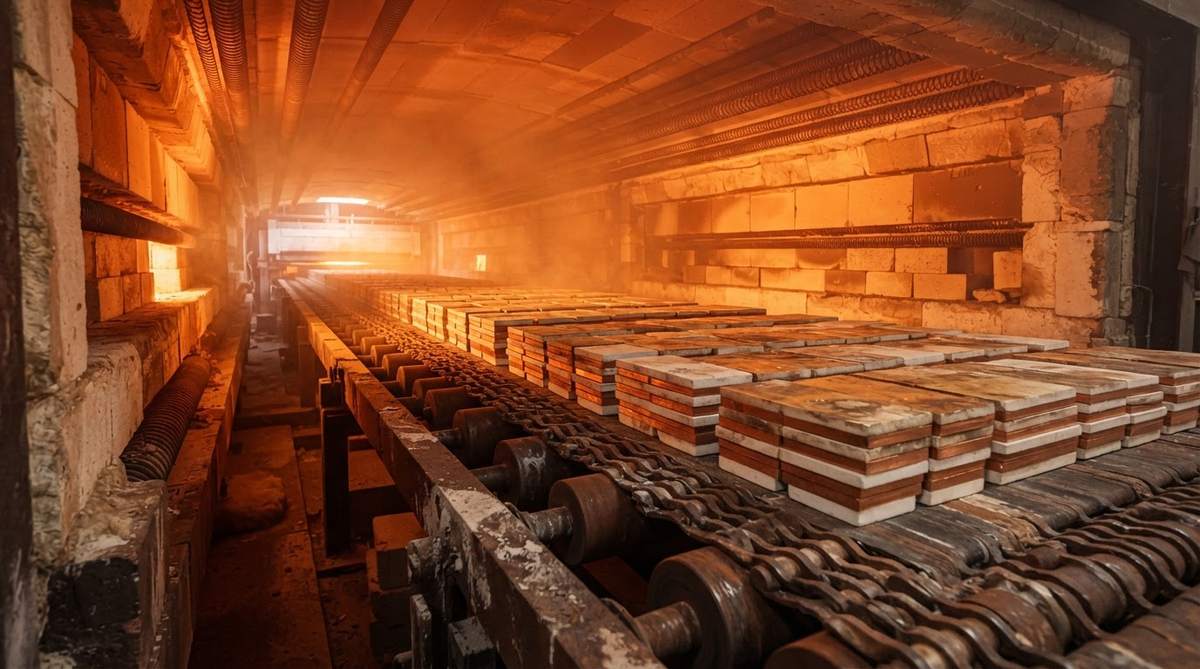
The DBC definition describes the end result, but the manufacturing sequence is equally important to understand. The process involves four main stages:
- Surface preparation. The ceramic sheet (typically Al₂O₃ 96 % or AlN) is cleaned and inspected for flatness and surface defects.
- Copper placement. Oxygen-free copper foil, usually 0.127–0.635 mm (5–25 mil) thick, is placed on one or both faces of the ceramic.
- Oxidation and bonding. The stack enters a furnace at 1 065–1 083 °C in a nitrogen atmosphere with a controlled trace of oxygen. The Cu₂O eutectic wets and bonds to the ceramic.
- Cooling and patterning. After controlled cooling, standard photolithography and etching define the circuit pattern in the copper. A surface finish such as ENIG or Ni/Au is applied for solderability.
Enter your substrate material, copper thickness, and dissipated power below to estimate the thermal resistance of a DBC assembly.
Typical DBC Specifications
| Parameter | Value | Unit | Condition / Notes | Source |
|---|---|---|---|---|
| Ceramic materials | Al₂O₃ 96 %, AlN | — | Most common substrates | Rogers / Kyocera datasheets |
| Copper thickness | 0.127–0.635 | mm | Per side | Industry standard |
| Bond strength (peel) | ≥ 4 | N/mm | 90° peel test, per DIN EN 2243-2 | CeramTec curamik datasheet |
| Thermal conductivity (Al₂O₃ 96 %) | 24–28 | W/m·K | 20 °C | CoorsTek ADS-96R datasheet |
| Thermal conductivity (AlN) | 170–200 | W/m·K | 20 °C | Kyocera SH-170 datasheet |
| Dielectric breakdown | ≥ 15 | kV/mm | Al₂O₃ 96 %, 0.63 mm thick | CoorsTek ADS-96R datasheet |
| Max continuous service temp | 800+ | °C | Ceramic limited; Cu oxidises above ~400 °C in air | General |
Typical values for commercially available material, for comparison only. Confirm against the datasheet for your specific grade.
DBC vs. Other Ceramic Metallization Methods
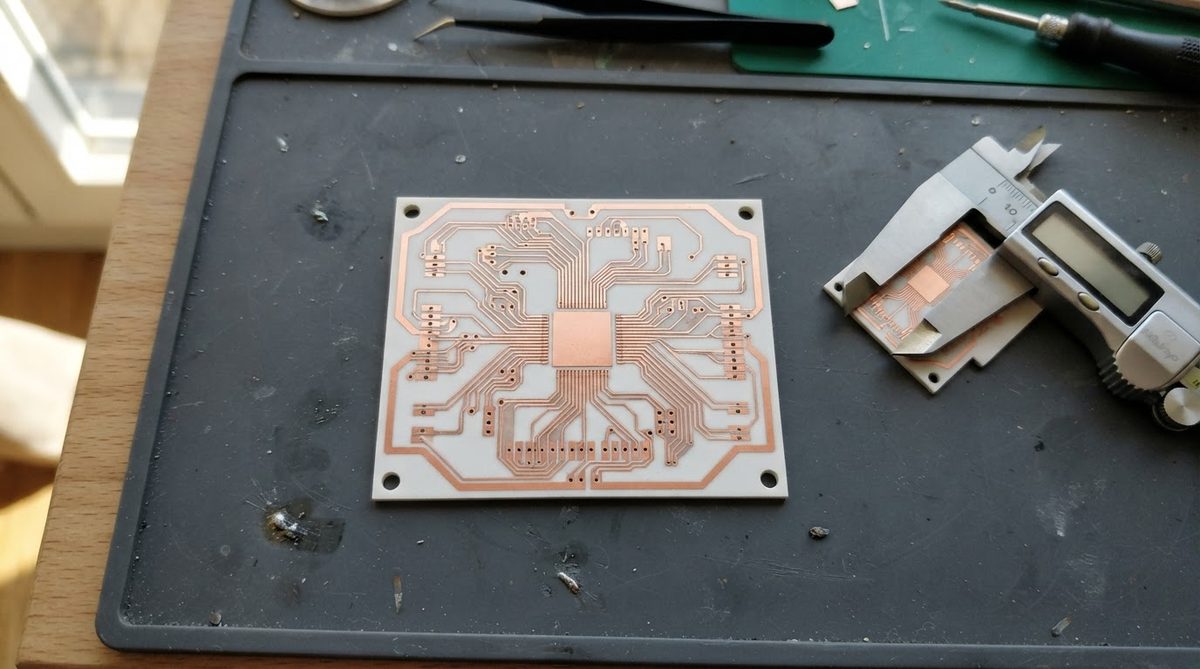
By DBC definition, the process relies on a copper-oxide eutectic—no filler metal. This distinguishes it from both DPC (Direct Plated Copper) and AMB (Active Metal Brazing). DBC handles thick copper well and is cost-effective for power electronics, but its minimum trace/space is coarser than DPC because the copper is etched from foil rather than plated up. AMB uses a Ti-containing braze and bonds reliably to Si₃N₄, which DBC cannot do because the Cu₂O eutectic does not wet silicon nitride effectively.
When DBC Is Not the Right Choice
If your design needs fine traces below roughly 100 µm, DPC or thin-film metallization is a better fit. For substrates that must survive extreme thermal cycling (–55 °C to +250 °C for thousands of cycles), AMB on Si₃N₄ offers superior reliability because of Si₃N₄’s higher fracture toughness. And for low-power RF circuits where copper thickness is irrelevant, LTCC or thin-film processes are more practical. The DBC definition implies thick-copper, high-power use cases—if your project does not match that profile, another method will likely serve you better.
FAQ
What does DBC stand for?
DBC stands for Direct Bonded Copper. The full DBC definition describes the eutectic bonding of copper foil to a ceramic substrate at approximately 1 065 °C without any brazing filler metal.
Can DBC be done on AlN substrates?
Yes. AlN DBC is widely used in IGBT and SiC power modules. The AlN surface is typically pre-oxidised to form a thin alumina layer that the Cu₂O eutectic can wet, since copper oxide does not bond directly to bare AlN.
How thick can the copper be on a DBC board?
Standard DBC copper ranges from 0.127 mm (5 mil) to 0.635 mm (25 mil) per side. Thicker copper carries more current and spreads heat laterally, but increases CTE mismatch stress on the ceramic during thermal cycling.
Is DBC the same as AMB?
No. DBC uses a copper-oxide eutectic bond; AMB uses an active metal braze alloy (typically Ag-Cu-Ti). AMB can bond to Si₃N₄ and tolerates more severe thermal cycling, but it costs more and adds a braze layer to the thermal path.