Yes, beryllia is dangerous. Beryllium oxide (BeO) dust and fume are classified as a confirmed human carcinogen (IARC Group 1) and cause chronic beryllium disease (CBD), an incurable granulomatous lung condition. Engineers evaluating whether beryllia is dangerous should understand that the hazard is specific to inhalation of airborne particles — an intact, polished BeO substrate sitting on a bench poses minimal risk, but any operation that generates dust (machining, grinding, breaking, laser cutting, or even abrasive cleaning) can release respirable particles at concentrations well above regulatory limits.
Is Beryllia Dangerous — and What Makes It So?
Beryllium oxide is a ceramic with outstanding thermal conductivity (260–300 W/m·K at 25 °C, per Materion Brush Ceramics datasheets). That performance is why it appears in high-power RF amplifiers, microwave windows, and legacy military modules. The danger is not the bulk material itself but the beryllium content (roughly 36 % Be by weight in stoichiometric BeO). When beryllium-containing particles reach the lungs, the immune system can become sensitized, leading to two distinct conditions:
- Beryllium sensitization (BeS): An immune response detectable via the beryllium lymphocyte proliferation test (BeLPT). Sensitization can occur after a single high exposure or years of low-level contact. Not all sensitized individuals develop disease, but many do.
- Chronic beryllium disease (CBD): Granulomas form in lung tissue, progressively reducing gas exchange. CBD is irreversible. Treatment (corticosteroids, immunosuppressants) manages symptoms but does not cure the disease. Some studies report CBD prevalence of 2–5 % among chronically exposed beryllium workers (per NIOSH Criteria Document, 2011).
Beryllium and its compounds are also classified as Group 1 carcinogens by the International Agency for Research on Cancer (IARC Monograph Vol. 58, updated Vol. 100C). Long-term inhalation exposure is associated with elevated lung cancer risk.
Regulatory Exposure Limits for Beryllium
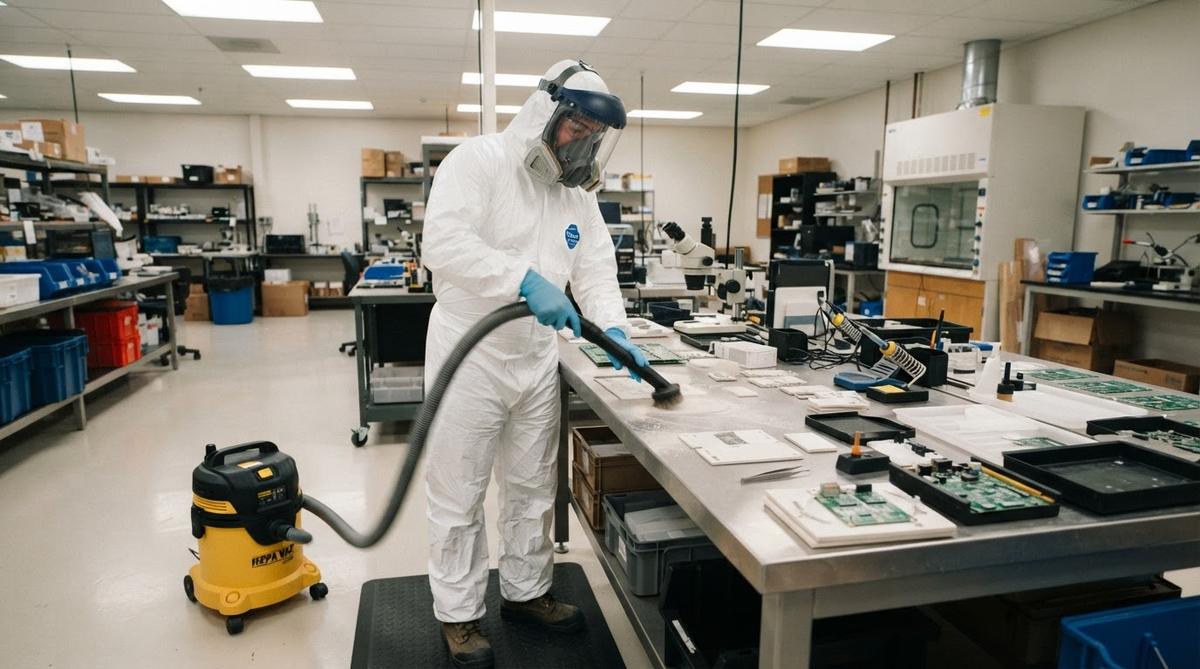
Workplace exposure limits have tightened significantly over the past two decades. The table below summarizes current enforceable and recommended limits for airborne beryllium.
| Authority | Limit | Value | Basis |
|---|---|---|---|
| OSHA PEL (USA, 2017 rule) | 8-hr TWA | 0.2 µg/m³ | 29 CFR 1910.1024 |
| OSHA STEL | 15-min | 2.0 µg/m³ | 29 CFR 1910.1024 |
| NIOSH REL | 8-hr TWA | 0.05 µg/m³ | NIOSH Criteria Document, 2011 |
| ACGIH TLV | 8-hr TWA | 0.05 µg/m³ | ACGIH TLV Documentation, 2024 |
| EU OEL (proposed) | 8-hr TWA | 0.2 µg/m³ | ECHA RAC Opinion, 2019 |
These limits apply to total beryllium in the respirable fraction. A single cut through a BeO substrate with a diamond saw in an unventilated room can exceed the OSHA PEL within seconds.
When the Risk Is Highest
An engineer handling a finished, intact BeO substrate with gloves and no mechanical contact faces negligible inhalation risk. The danger escalates during these operations:
- Machining or grinding — generates fine respirable dust. Requires HEPA-filtered local exhaust ventilation, full respiratory protection (P100 minimum), and wet processing where possible.
- Laser cutting or scribing — produces BeO fume and nanoparticles. Enclosed beam path with filtered extraction is mandatory.
- Breakage or fracture — even snapping a thin substrate by hand releases particles from the fracture surface.
- Soldering and rework — flux residue removal by abrasion on a BeO board creates contaminated dust.
- Disposal — broken or scrap BeO is regulated hazardous waste in most jurisdictions. It cannot go into standard ceramic waste streams.
Any facility processing BeO must maintain a written beryllium exposure control plan, conduct air monitoring, and offer medical surveillance including BeLPT testing to exposed workers, per OSHA 29 CFR 1910.1024.
Safer Ceramic Alternatives to BeO
For many thermal applications, aluminum nitride (AlN) or silicon nitride (Si₃N₄) can replace BeO without the regulatory burden. Neither material is classified as carcinogenic or poses inhalation hazards comparable to beryllium compounds.
| Parameter | BeO | AlN | Si₃N₄ | Unit |
|---|---|---|---|---|
| Thermal conductivity (25 °C) | 260–300 | 170–230 | 70–90 | W/m·K |
| Flexural strength | 230–250 | 300–400 | 600–800 | MPa |
| Dielectric constant (1 MHz) | 6.5–6.7 | 8.5–8.9 | 8.0–9.0 | — |
| Carcinogenic hazard | Yes (IARC Group 1) | No | No | — |
| Regulated waste | Yes | No | No | — |
Typical values from Materion, Kyocera, and Maruwa datasheets, for comparison only. Confirm against the datasheet for your specific grade.
AlN closes roughly 70–80 % of the thermal conductivity gap while eliminating all beryllium-related compliance costs: medical surveillance, air monitoring, HEPA ventilation, hazardous waste disposal, and liability exposure. For most power electronics and ceramic PCB applications, AlN or even high-purity 96 % alumina (24–28 W/m·K) is sufficient once the thermal stack is properly designed.
When BeO Might Still Be Specified
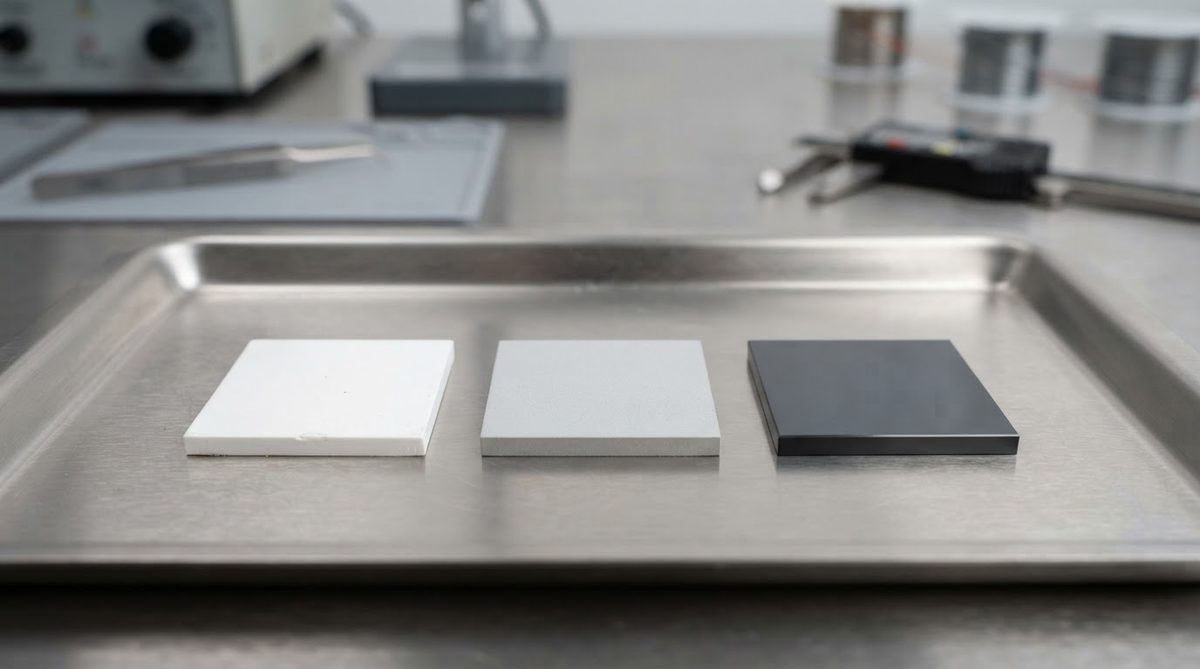
Legacy military and aerospace programs sometimes mandate BeO by drawing callout. Some high-frequency RF windows and traveling-wave-tube assemblies rely on BeO’s specific combination of high thermal conductivity, low dielectric loss, and microwave transparency. If your project requires BeO, ensure your facility or supplier holds the proper environmental permits and worker protection programs. Do not machine, modify, or dispose of BeO substrates without a qualified EHS review.
When Not to Use BeO
If you are starting a new design and considering BeO primarily for thermal performance, choose AlN instead. The compliance overhead for beryllium — exposure monitoring, medical surveillance, training, PPE, and hazardous waste handling — adds significant cost and schedule risk that rarely justifies the 30–40 % thermal conductivity advantage over AlN. For applications where 170–230 W/m·K is adequate, AlN is the straightforward choice. For lower power densities, alumina substrates at a fraction of the cost will do the job. Consult the ceramic PCB FAQ for guidance on selecting the right substrate material.
FAQ
Can I safely handle a BeO substrate with bare hands?
Handling an intact BeO substrate briefly with clean, dry hands poses low inhalation risk, but gloves are still recommended to prevent skin contact and surface contamination. The real danger begins if the substrate is chipped, cracked, or abraded — always wear nitrile gloves and avoid generating dust.
Is beryllia dangerous if it stays inside a sealed module?
A BeO substrate sealed inside an encapsulated power module or hermetic package presents no inhalation hazard during normal operation. The risk returns at end-of-life disassembly, rework, or disposal. Modules containing BeO should be labeled and tracked through their lifecycle.
Does RoHS ban beryllium oxide?
RoHS does not currently restrict beryllium oxide. However, beryllium is on the EU REACH Candidate List of substances of very high concern (SVHC), and reporting obligations apply above 0.1 % w/w in articles. Regulatory pressure is increasing, and future restrictions are plausible.
How do I dispose of scrap BeO substrates?
Scrap BeO is classified as hazardous waste under RCRA (USA) and equivalent regulations in the EU. It must be collected in sealed, labeled containers and disposed of through a licensed hazardous waste handler. Never place BeO in general ceramic or electronic waste streams.
What is the lethal dose of inhaled beryllium?
There is no well-defined single lethal dose for inhaled beryllium. Acute beryllium disease (now rare) historically occurred at concentrations above 25 µg/m³. Chronic disease and sensitization can develop at concentrations far below 1 µg/m³ over time. The hazard is cumulative and individual susceptibility varies — roughly 1–15 % of exposed populations become sensitized, per NIOSH data.
Can AlN fully replace BeO in RF applications?
AlN replaces BeO in many RF power amplifier substrates, but not all. BeO has a lower dielectric constant (6.5–6.7 vs. 8.5–8.9 for AlN at 1 MHz), which matters for impedance matching in some microwave circuits. For new designs below 10 GHz, AlN is usually adequate. Above that, evaluate dielectric loss tangent data for your specific frequency before committing. Review our guide on what beryllia (BeO) is for a broader material comparison.