Knowing how to choose ceramic PCB manufacturer comes down to nine verifiable checks: in-house process coverage, material sourcing transparency, dimensional capability, certification scope, quality infrastructure, prototype turnaround, production scalability, packaging discipline, and total landed cost. Skip any one and you risk late deliveries, out-of-spec boards, or a supplier who cannot scale when your project moves to volume.
Why Manufacturer Selection Matters More for Ceramic Than FR-4
FR-4 fabrication is commoditised. Hundreds of factories run the same laminate through the same drill-and-etch lines, and switching suppliers mid-project is straightforward. Ceramic is different. Each metallisation process—DPC, DBC, AMB, thick film, thin film, HTCC, LTCC—requires dedicated equipment, material-specific know-how, and tighter environmental controls. A factory that excels at DBC on alumina may have no capability for thin-film gold on aluminium nitride. Choosing the wrong manufacturer means re-qualifying from scratch.
The checks below are ordered roughly by how early they should filter your shortlist. Start with process fit; end with cost. Understanding how to choose ceramic PCB manufacturer at each stage prevents costly mid-project supplier switches.
Check 1: In-House Process Coverage
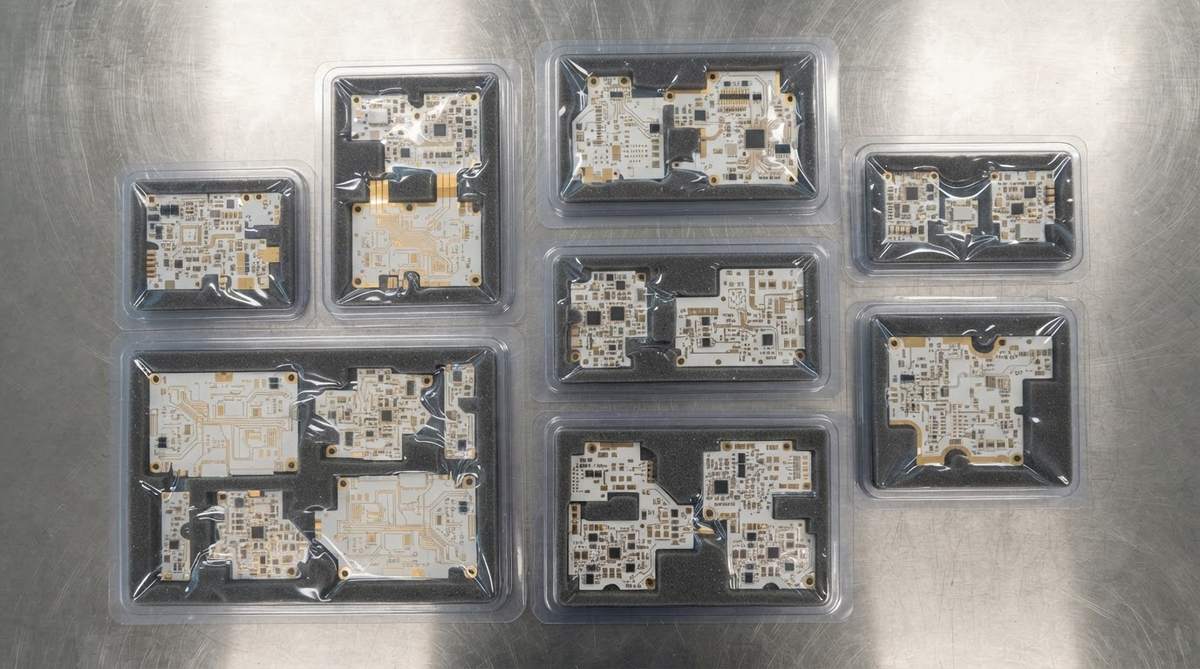
Ask which metallisation and firing processes the factory runs on its own floor, and which it subcontracts. A manufacturer that outsources a critical step—say, AMB bonding or laser drilling—adds lead time, cost, and a quality hand-off you cannot audit directly. Get a straight answer. If the response is vague, move on.
For reference, the main ceramic PCB processes and their typical use cases are:
| Process | Typical substrates | Key strength |
|---|---|---|
| DPC (Direct Plated Copper) | Al₂O₃, AlN | Fine line/space (≤ 50 µm), thin copper |
| DBC (Direct Bonded Copper) | Al₂O₃, AlN, ZrO₂ | Thick copper (≥ 200 µm), high current |
| AMB (Active Metal Brazing) | Si₃N₄, AlN | Highest mechanical reliability, power modules |
| Thick film | Al₂O₃, AlN | Resistors, multi-layer hybrids |
| Thin film | Al₂O₃, AlN, quartz | RF circuits, precision resistors |
| HTCC | Al₂O₃, AlN | Hermetic multi-layer packages |
| LTCC | Glass-ceramic | Embedded passives, RF modules |
Match your design’s process to the factory’s actual in-house list. A good starting point is to review how ceramic PCB manufacturing works from Gerber to finished board so you know which steps to ask about.
Check 2: Material Sourcing and Traceability
The substrate itself accounts for a large share of performance and cost. You need to know: which ceramic grades does the manufacturer stock or procure? From which substrate mills? Can they provide a certificate of conformance (CoC) or mill test report for each lot?
A manufacturer that buys substrates from named mills—CoorsTek, Kyocera, Maruwa, CeramTec—and can trace lots gives you confidence in material consistency. One that buys unmarked blanks from brokers introduces risk you cannot quantify. If your design requires a specific grade, such as 99.6% alumina or Si₃N₄, confirm the supplier actually handles that material. Some factories only carry 96% Al₂O₃ and will quietly substitute. For guidance on selecting the right grade, see how to select the right ceramic substrate.
How to Choose Ceramic PCB Manufacturer by Dimensional and Electrical Capability
Request the factory’s published spec limits—not a sales deck, but the actual capability sheet with tolerances. The numbers that matter most:
- Minimum trace / space: 75 µm is common for DPC; thick film is typically ≥ 100 µm.
- Copper thickness range: DPC usually covers 1–100 µm; DBC starts around 127 µm and goes to 800 µm or more.
- Positional tolerance: ±25 µm is tight; ±50 µm is standard.
- Substrate thickness range and max panel size.
- Via or through-hole capability: minimum diameter and aspect ratio.
Compare these against your design’s tightest feature. If your layout needs 50 µm lines and the factory’s proven minimum is 75 µm, either redesign or find a different supplier. Ask for sample inspection reports from a similar job—not just the spec sheet. You can cross-check against published ceramic PCB spec limits to benchmark what is realistic.
Check 4: Certifications and Quality System
ISO 9001 is table stakes. Beyond that, the certifications that matter depend on your end market:
| End market | Certification to look for |
|---|---|
| Automotive | IATF 16949 |
| Aerospace / defence | AS9100D, ITAR registration |
| Medical | ISO 13485 |
| General industrial | ISO 9001:2015 |
| UL-listed end product | UL recognition on the substrate |
Ask for the certificate number and verify it on the registrar’s website. A surprising number of suppliers list certifications they held years ago or that cover a different facility. This verification step is essential when learning how to choose ceramic PCB manufacturer for regulated industries.
Check 5: Quality Infrastructure and Test Equipment
Certifications describe the management system. Equipment describes what the factory can actually measure. At a minimum, a credible ceramic PCB manufacturer should have:
- AOI (automated optical inspection) for trace geometry.
- X-ray inspection for void analysis under DBC/AMB copper.
- Hi-pot / dielectric withstand tester.
- Profilometer or 3D measurement for surface roughness and copper thickness.
- Thermal shock chamber for reliability screening (per IEC 60068-2-14 or equivalent).
If the factory does not own these instruments, it either skips the test or sends boards out—both add risk and time. Ask which tests are performed on every lot versus on a sampling basis.
Check 6: Prototype Lead Time and Engineering Support
Ceramic prototypes typically take 5–15 working days depending on process complexity. A manufacturer that quotes 3 days for a DBC prototype is either cutting corners on inspection or not being honest. Conversely, one that quotes 6 weeks for a simple DPC board may be brokering the job.
More important than speed is whether the factory has application engineers who review your Gerber files, flag design-for-manufacturing issues, and suggest improvements before production starts. This single capability prevents more scrap than any inspection step downstream.
Check 7: Production Scalability
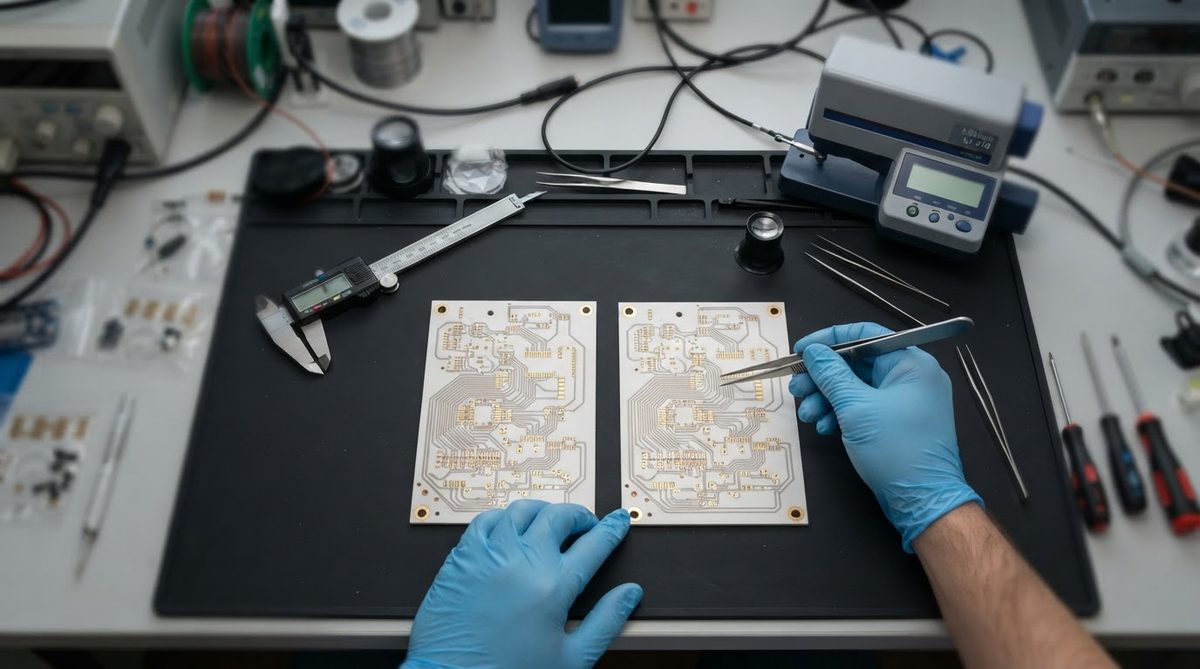
Your prototype supplier is not always your volume supplier. Ask about annual capacity, typical lot sizes, and whether the factory runs your process on a dedicated line or shares equipment across product families. A shared line means your delivery competes with other customers’ orders.
If your project will eventually need thousands of pieces per month, confirm the manufacturer has handled similar volumes. Request references or case-study-level descriptions (without client names) of comparable production runs.
Check 8: Packaging and Shipping Discipline
Ceramic boards are brittle. A 0.38 mm alumina substrate can crack from a 30 cm drop onto a hard surface. Proper packaging means vacuum-sealed trays, anti-static bags, foam inserts, and shock indicators for air freight. A manufacturer that ships boards in bubble wrap and a cardboard box is telling you something about their quality culture. For specifics on what to expect, review ESD-safe ceramic board packaging and shipping practices.
Check 9: Total Landed Cost, Not Unit Price
The quoted unit price is one component. Total landed cost includes:
- Tooling and NRE: screen charges, fixture costs, DPC mask fees.
- Shipping and insurance: ceramic is heavy relative to FR-4 and fragile.
- Tariffs and duties: rates vary by country of origin and HS code. A board manufactured in China and imported to the US may carry a 25% tariff under Section 301. See tariff and country-of-origin implications for ceramic PCBs.
- Scrap and re-order cost: a cheaper supplier with a 15% reject rate is more expensive than a pricier one at 2%.
- Qualification cost: switching suppliers later means re-testing, re-qualifying, and potential schedule delays.
Worked Example: Unit Price vs. Landed Cost
Suppose Supplier A quotes $8.00 per piece for a 96% Al₂O₃ DPC board, FOB Shenzhen, with a historical reject rate of 12%. Supplier B quotes $11.50 per piece, DDP your US warehouse, with a 2% reject rate. For an order of 500 pieces:
| Cost element | Supplier A | Supplier B |
|---|---|---|
| Unit price × 500 | $4,000 | $5,750 |
| Freight + insurance (est.) | $350 | Included (DDP) |
| Tariff at 25% | $1,000 | $0 (shipped from non-tariff origin) |
| Replacement of rejects (60 pcs vs. 10 pcs) | $480 | $115 |
| Total landed cost | $5,830 | $5,865 |
| Effective per-piece cost | $11.66 | $11.73 |
In this scenario the two suppliers land within pennies of each other—but Supplier B delivers fewer headaches, no customs paperwork, and a more predictable yield. The cheapest quote rarely wins on total cost. Factoring in all these elements is the final piece of how to choose ceramic PCB manufacturer wisely.
When You Do Not Need a Specialist Ceramic Manufacturer
If your board operates below 130 °C, carries modest current, has no RF or hermeticity requirements, and fits standard tolerances, FR-4 or metal-core PCB (MCPCB) will cost a fraction of ceramic and ship faster. Choose ceramic only when the application demands it: high temperature, high thermal conductivity, high frequency, high voltage isolation, or long-term reliability in harsh environments. Paying a premium for ceramic when aluminium MCPCB would suffice is a sourcing mistake, not an engineering decision.
A Practical Supplier Evaluation Checklist
Use this as a scoring sheet when comparing shortlisted manufacturers. Rate each item pass/fail or on a 1–5 scale, then weight by your project’s priorities.
- Does the factory run your required metallisation process in-house?
- Can it supply or source your specific ceramic grade with lot traceability?
- Do published tolerances cover your design’s tightest feature with margin?
- Does it hold the certifications your end market requires—verified, not just claimed?
- Does it own the inspection and test equipment to catch defects before shipment?
- Can it deliver prototypes in a timeframe that fits your development schedule?
- Has it demonstrated production volumes comparable to your forecast?
- Does it package ceramic boards in a way that survives international freight?
- Is the total landed cost—including tariffs, scrap, and logistics—competitive?
Any manufacturer that fails checks 1, 2, or 3 should be eliminated regardless of price.
Frequently Asked Questions
Should I visit the factory before placing a large order?
Yes, for any order above a few thousand dollars or for safety-critical applications. A factory visit lets you verify equipment, cleanliness, storage conditions, and whether the staff who answer your emails are the same people running the line. Video audits are a reasonable substitute for initial screening but do not replace an in-person visit for qualification.
Can one manufacturer handle both DPC and DBC?
Some can, but many specialise. DPC requires sputtering and photolithography equipment; DBC requires high-temperature bonding furnaces. Confirm each process is run in-house rather than assuming a single factory covers both.
How do I verify a supplier’s ISO or IATF certification?
Ask for the certificate number, the name of the registrar (e.g., TÜV, SGS, BSI), and the scope of the certificate. Then check the registrar’s online directory. Certificates can be site-specific, so confirm the certified site is the one manufacturing your boards.
What reject rate is normal for ceramic PCBs?
For mature DPC and DBC processes on standard substrates, a well-run factory achieves 2–5% scrap on production lots. Rates above 10% suggest process control issues. For new or complex designs, first-article reject rates may be higher, but should drop sharply after the first two or three lots.
Is it risky to source ceramic PCBs from a single supplier?
Single-sourcing is common during prototyping and low-volume production because qualification costs are high. For volume programs, qualifying a second source reduces supply-chain risk. Budget for the qualification time and cost upfront rather than scrambling after a disruption. Understanding the ceramic substrate supply chain helps you identify where concentration risk sits.