Silicon nitride (Si3N4) substrates offer the highest fracture toughness of any structural ceramic used in power electronics—typically 6–7 MPa·m½, roughly three times that of aluminum nitride and five times that of 96% alumina. That mechanical advantage makes Si3N4 the substrate of choice for high-reliability power modules subject to aggressive thermal cycling, such as EV traction inverters, railway converters, and industrial drives. If you need to buy silicon nitride substrates, this page covers what to specify, which grades matter, and how to avoid common sourcing mistakes.
Key Takeaways
- Si3N4 substrates achieve 70–90 W/mK thermal conductivity (grade-dependent) with fracture toughness of 6–7 MPa·m½ per ASTM C1161.
- Standard substrate thicknesses are 0.25 mm, 0.32 mm, and 0.635 mm; thinner substrates reduce thermal resistance but require careful handling.
- AMB (Active Metal Brazing) is the dominant metallization process for Si3N4; DBC is available but less common because the lower brazing temperature of DBC can limit copper adhesion on Si3N4 surfaces.
- Typical lead times for metallized Si3N4 substrates run 4–8 weeks depending on panel size and copper pattern complexity.
- Si3N4 costs 3–5× more per unit area than AlN and 8–15× more than 96% alumina—justified only when thermal-cycling reliability is the dominant design driver.
Si3N4 Material Grades and Properties
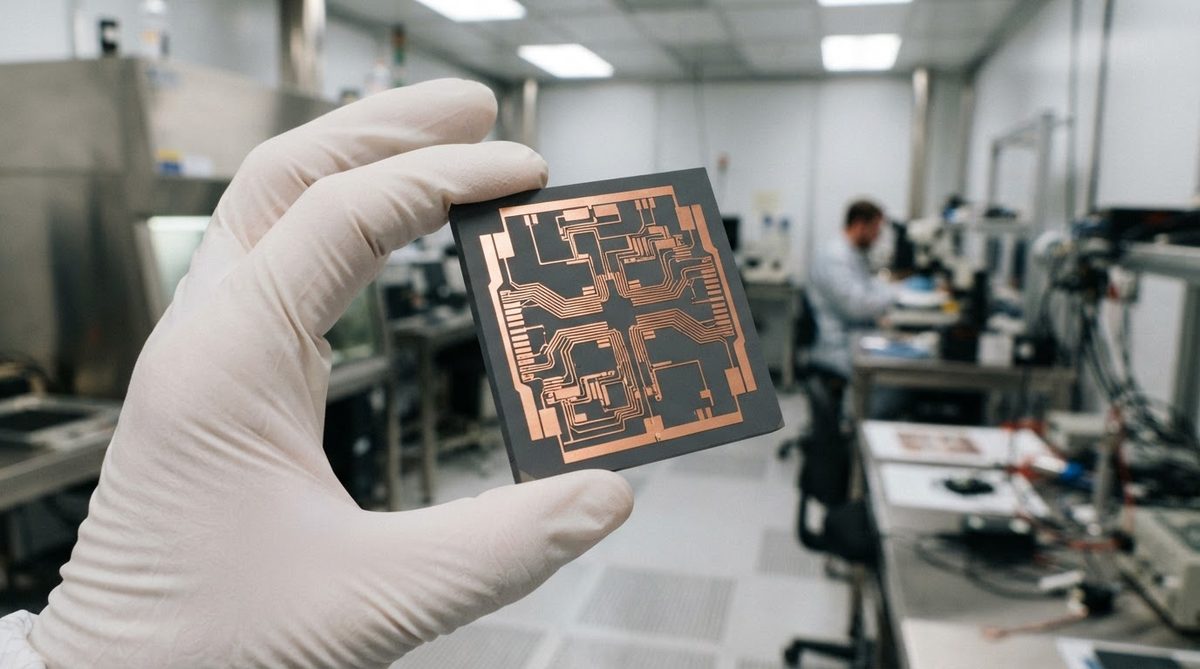
Not all silicon nitride is the same. Substrate-grade Si3N4 is gas-pressure sintered to produce an elongated β-Si3N4 grain structure that interlocks and resists crack propagation. Two broad tiers exist in the market:
- High-thermal-conductivity grade (80–90 W/mK): Optimised grain-boundary chemistry with reduced oxygen content. Supplied by manufacturers such as Toshiba Materials (SN-90) and UBE Industries. Preferred for power modules where both thermal and mechanical performance matter.
- Standard grade (20–30 W/mK): Higher oxygen and alumina sintering-aid content. Lower cost, adequate for structural or wear applications, but generally not suitable for thermal management in electronics.
When you buy silicon nitride substrates for electronics, confirm you are specifying the high-conductivity grade. A purchase order that says only “Si3N4” may deliver standard-grade material at a fraction of the thermal performance you need.
| Parameter | Si3N4 (high-κ grade) | AlN | Al₂O₃ 96% | Unit | Condition |
|---|---|---|---|---|---|
| Thermal conductivity | 80–90 | 170–200 | 24–28 | W/mK | 20 °C, laser flash per ASTM E1461 |
| Flexural strength | 600–900 | 300–400 | 300–380 | MPa | 3-point bend, ASTM C1161 |
| Fracture toughness (KIC) | 6–7 | 2.5–3.0 | 3.5–4.0 | MPa·m½ | SEVNB, ASTM C1421 |
| CTE | 2.5–3.2 | 4.5–5.0 | 7.0–8.0 | ppm/K | 20–400 °C |
| Dielectric strength | 15–18 | 15–17 | 10–15 | kV/mm | per IEC 60672 |
| Density | 3.20–3.25 | 3.25–3.30 | 3.70–3.80 | g/cm³ | Archimedes method |
Typical values for commercially available material, for comparison only. Confirm against the datasheet for your specific grade.
Metallization Options: AMB vs. DBC on Si3N4
Bare Si3N4 substrates are useful for mechanical or structural parts, but power-electronics applications require copper metallization. Two processes are commercially available.
AMB (Active Metal Brazing)
A titanium-containing braze alloy (typically AgCuTi) wets the Si3N4 surface at 800–900 °C under vacuum. The titanium reacts with nitrogen at the ceramic surface, forming a TiN bonding layer. AMB produces copper bond strengths exceeding 30 MPa peel and survives thousands of thermal cycles between −40 °C and +150 °C. This is the preferred process for automotive and traction-grade modules. Explore available configurations on the Si3N4 AMB substrate product page.
DBC (Direct Bonded Copper)
DBC bonds copper to the ceramic using a Cu–Cu₂O eutectic at approximately 1065 °C. On alumina and AlN this works well, but Si3N4’s lower reactivity with Cu₂O makes DBC adhesion more process-sensitive. Some suppliers offer Si3N4 DBC substrates, though AMB dominates the market for reliability-critical designs. DBC may suit lower-cycle-count applications where cost matters more than extreme fatigue life.
Standard Sizes and Thicknesses
Si3N4 substrates are sintered as large panels, then laser-scribed or diamond-cut to final dimensions. Common panel sizes from major suppliers include 114 × 114 mm, 138 × 190 mm, and 178 × 178 mm. Individual substrates are typically diced to customer patterns. Refer to the ceramic substrate thickness chart for a full comparison across materials.
Standard thicknesses for electronics-grade Si3N4:
- 0.25 mm — lowest thermal resistance, used in high-power-density modules. Requires careful handling; mechanical advantage of Si3N4 over AlN is most apparent here.
- 0.32 mm — the most common choice, balancing thermal resistance and mechanical margin. Widely stocked.
- 0.635 mm — higher insulation voltage rating, used where creepage distance or dielectric withstand is the constraint.
Worked Example: Thermal Resistance Comparison
Consider a 20 × 20 mm substrate carrying a SiC MOSFET dissipating 150 W. Thermal resistance through the ceramic alone (Rth = t / (κ × A)):
| Substrate | Thickness (mm) | κ (W/mK) | Area (mm²) | Rth,ceramic (°C/W) |
|---|---|---|---|---|
| Si3N4 (high-κ) | 0.32 | 85 | 400 | 0.0094 |
| AlN | 0.32 | 180 | 400 | 0.0044 |
| Al₂O₃ 96% | 0.32 | 26 | 400 | 0.0308 |
Rth = 0.32 × 10⁻³ / (κ × 400 × 10⁻⁶). Values are substrate-only; total module Rth includes solder, baseplate, and TIM layers.
At 150 W, Si3N4 adds about 1.4 °C across the ceramic versus 0.66 °C for AlN. That 0.74 °C difference is rarely the deciding factor. The real reason to choose Si3N4 is the 2–3× longer thermal-cycling life, documented extensively in Infineon, Danfoss, and Hitachi Energy application notes.
What to Specify When You Order
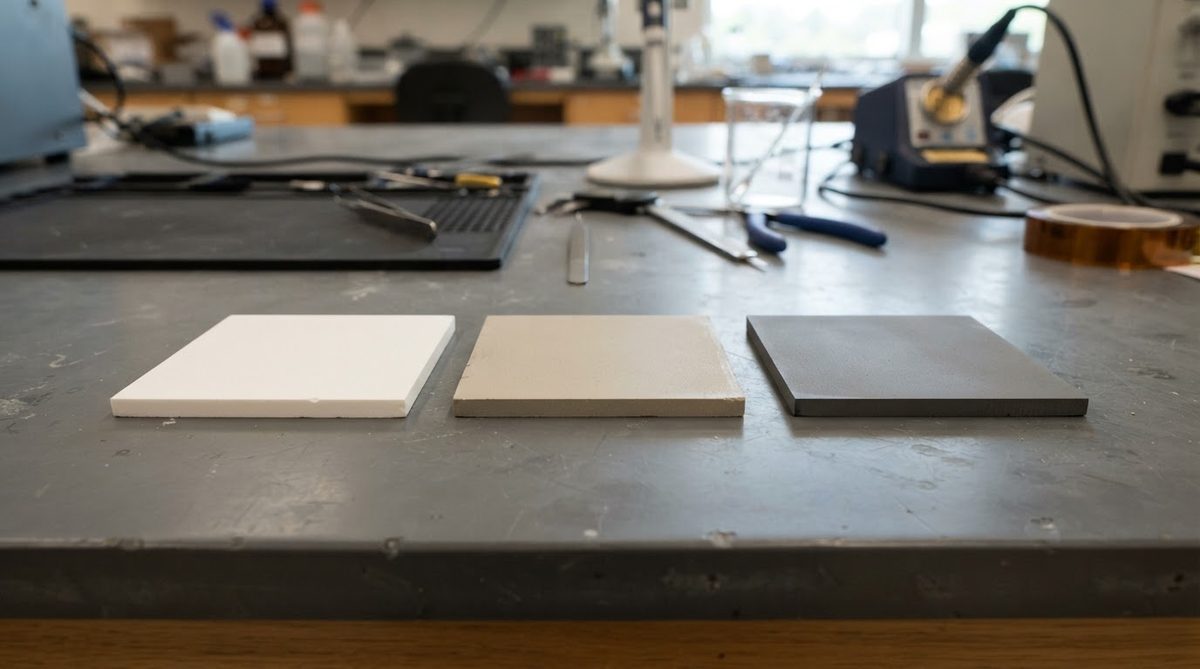
A vague RFQ wastes time on both sides. Include these items in your purchase request:
- Material grade and thermal conductivity target — e.g., “Si3N4, ≥ 80 W/mK.”
- Substrate dimensions and tolerance — length × width ± tolerance, typically ±0.1 mm for diced parts.
- Thickness — 0.25 / 0.32 / 0.635 mm.
- Metallization process — AMB or DBC, copper thickness on top and bottom (e.g., 0.3 mm Cu / 0.32 mm Si3N4 / 0.3 mm Cu).
- Surface finish — bare copper, Ni/Au plating, or Ag plating; specify thickness if critical.
- Circuit pattern — Gerber file or DXF with minimum trace/space noted.
- Quantity and schedule — prototype vs. production volumes; state your target delivery date.
Download material datasheets before finalising your spec from the ceramic substrate datasheet library.
When NOT to Buy Si3N4
Si3N4 is the right substrate for a specific set of problems. It is wrong for many others.
- Cost-sensitive consumer products: If thermal-cycling requirements are mild (fewer than 1,000 cycles, ΔT < 80 °C), AlN or even copper-metallized alumina will do the job at a fraction of the price.
- Maximum thermal conductivity: AlN at 170–200 W/mK outperforms Si3N4 by roughly 2×. If steady-state thermal resistance is your bottleneck and cycling is not severe, AlN is the better pick.
- Low-power or RF applications: 96% alumina or LTCC are far cheaper and perfectly adequate below a few watts per square centimetre.
- Prototyping on a budget: Use AlN or alumina to validate your layout first. Switch to Si3N4 for qualification and production if cycling data demands it.
FAQ
How much does a silicon nitride substrate cost?
Bare high-κ Si3N4 substrates typically cost $3–$8 per cm² depending on thickness, grade, and order volume. AMB metallization adds another $2–$5 per cm². Prices drop significantly at volumes above 1,000 pieces. Request a quote with your exact dimensions for an accurate figure.
Can I get Si3N4 substrates thinner than 0.25 mm?
Some suppliers offer 0.20 mm Si3N4, but availability is limited and lead times are longer. Below 0.20 mm, the substrate becomes difficult to handle in standard module assembly. For most designs, 0.25 mm is the practical minimum.
Is Si3N4 compatible with lead-free solder reflow?
Yes. AMB-metallized Si3N4 substrates survive standard SAC305 reflow profiles (peak 245–260 °C) without delamination. The ceramic itself is stable well beyond 1,000 °C. Ensure your copper surface finish is compatible with your solder paste—Ni/Au or Ni/Ag plating is typical.
How does Si3N4 perform under thermal cycling compared to AlN?
Si3N4 AMB substrates routinely survive 3,000–5,000+ cycles at −40 °C to +150 °C (per IEC 60749-34 or similar) before crack initiation, while AlN DBC substrates typically show cracks at 500–1,500 cycles under the same conditions. The difference comes from Si3N4’s superior fracture toughness absorbing stress at the copper-ceramic interface.
What is the maximum continuous operating temperature for Si3N4?
The ceramic itself is stable to approximately 1,200 °C in air. The practical limit is set by the metallization: AMB braze joints are rated for continuous use up to 300–350 °C, and copper oxidation becomes a concern above 200 °C without protective atmosphere or plating. Most power module designs operate with junction temperatures at or below 175 °C.
Next Step
If Si3N4 fits your thermal-cycling and reliability requirements, the next step is to lock down your substrate dimensions, copper stackup, and surface finish. Send your Gerber files or a dimensioned drawing for a quote—turnaround on pricing is typically 1–2 business days.