A silicon nitride Si3N4 PCB for a SiC power module is the strongest ceramic substrate commercially available, offering 6–7 MPa·m0.5 fracture toughness and survival beyond 3 000 active thermal cycles at ΔT > 200 °C. That combination of mechanical resilience and high-temperature capability makes the silicon nitride Si3N4 PCB SiC power module pairing the default choice for traction inverters, rail converters, and any design where field life must exceed 15 years.
Key Takeaways
- Si3N4 substrates withstand > 3 000 thermal cycles at ΔT = 200 °C (AMB copper on 0.32 mm Si3N4), compared to roughly 500–800 cycles for AlN under the same conditions (per Kyocera SN series datasheets).
- Flexural strength of Si3N4 reaches 600–850 MPa (ASTM C1161, 3-point bend), roughly 3× that of AlN at 300–350 MPa.
- Thermal conductivity of Si3N4 is 80–90 W/mK — lower than AlN’s 170–200 W/mK — so thermal design must compensate with thinner substrates or wider copper areas.
- Si3N4 substrates typically cost 3–5× more than equivalent AlN substrates, and 8–12× more than 96 % Al2O3.
- Active Metal Brazing (AMB) is the standard metallisation process for a silicon nitride Si3N4 PCB in SiC power module applications; DBC does not bond reliably to Si3N4.
Why SiC Modules Need a Tougher Substrate
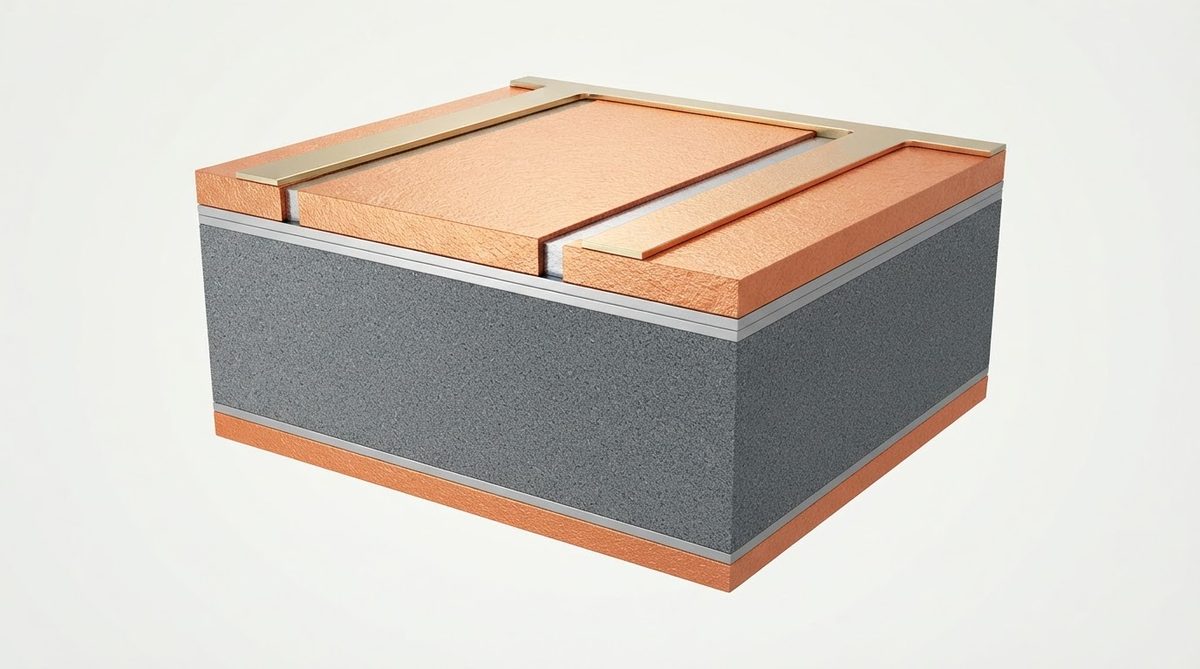
SiC MOSFETs operate at junction temperatures of 175–200 °C, with some device roadmaps targeting 250 °C. Each switching cycle drives a thermal excursion through the die-attach, substrate, and baseplate stack. The CTE mismatch between copper metallisation (~17 ppm/°C) and the ceramic generates stress at every interface. Over thousands of cycles, that stress nucleates cracks in the ceramic.
AlN, with a fracture toughness of only 2.5–3.5 MPa·m0.5, cracks before the module reaches its intended service life in automotive or rail applications. Si3N4’s fracture toughness of 6–7 MPa·m0.5 arrests crack propagation, which is why Infineon’s HybridPACK Drive and several Tier-1 traction inverters specify Si3N4 AMB substrates. Choosing a silicon nitride Si3N4 PCB for a SiC power module addresses this failure mode directly.
Silicon Nitride Si3N4 PCB SiC Power Module Material Properties
| Parameter | Si3N4 | AlN | Al2O3 96 % | Unit | Condition / Source |
|---|---|---|---|---|---|
| Thermal conductivity | 80–90 | 170–200 | 24–28 | W/mK | 20 °C; Kyocera SN series / CoorsTek AlN |
| Flexural strength | 600–850 | 300–350 | 300–380 | MPa | ASTM C1161, 3-pt bend |
| Fracture toughness (KIC) | 6–7 | 2.5–3.5 | 3.5–4.0 | MPa·m0.5 | ASTM C1421 |
| CTE | 2.7–3.2 | 4.5–5.0 | 7.0–8.0 | ppm/°C | 25–400 °C |
| Dielectric strength | 15–18 | 15–17 | 10–15 | kV/mm | IEC 60672 |
| Typical substrate thickness | 0.25–0.63 | 0.50–1.0 | 0.38–1.0 | mm | — |
| Thermal-cycle life (ΔT = 200 °C) | > 3 000 | 500–800 | 200–400 | cycles | AMB Cu, Kyocera SN datasheet |
Typical values for commercially available material, for comparison only. Confirm against the datasheet for your specific grade.
How Si3N4 AMB Substrates Are Built
Si3N4 substrates for SiC modules are metallised using Active Metal Brazing. A thin layer of AgCuTi braze alloy bonds thick copper (0.3–0.8 mm) directly to the ceramic at 800–900 °C in a vacuum furnace. The titanium in the braze reacts with the Si3N4 surface to form a TiN interlayer, creating a chemical bond far stronger than the mechanical bond in a DBC process.
DBC (Direct Bond Copper) works well on AlN and Al2O3 because those ceramics form a copper-oxide eutectic at ~1 065 °C. Si3N4 does not participate in that reaction, so DBC joints on Si3N4 are weak and unreliable. If your process flow requires DBC, AlN ceramic PCBs for SiC power modules are the better fit.
Worked Example: Thermal Resistance Comparison
Consider a 30 × 30 mm SiC half-bridge dissipating 250 W. We compare the substrate contribution to thermal resistance (Rth,substrate) for a silicon nitride Si3N4 PCB and an AlN substrate in a SiC power module context, ignoring spreading and interface resistances for clarity.
Rth = t / (k × A)
- Si3N4 (0.32 mm thick, 85 W/mK): Rth = 0.00032 / (85 × 0.0009) = 0.0042 °C/W
- AlN (0.63 mm thick, 180 W/mK): Rth = 0.00063 / (180 × 0.0009) = 0.0039 °C/W
The results are nearly identical. Si3N4’s lower conductivity is offset by its ability to be used as a thinner substrate (0.25–0.32 mm vs. 0.50–0.63 mm for AlN) without cracking during handling or brazing. In practice, the thermal penalty of choosing Si3N4 over AlN is small — typically < 5 % of the total junction-to-coolant Rth — while the reliability gain is substantial.
Enter your substrate dimensions, thickness, and dissipated power below to estimate junction temperature rise for your own silicon nitride Si3N4 PCB SiC power module design.
When Si3N4 Is the Right Call for a SiC Module
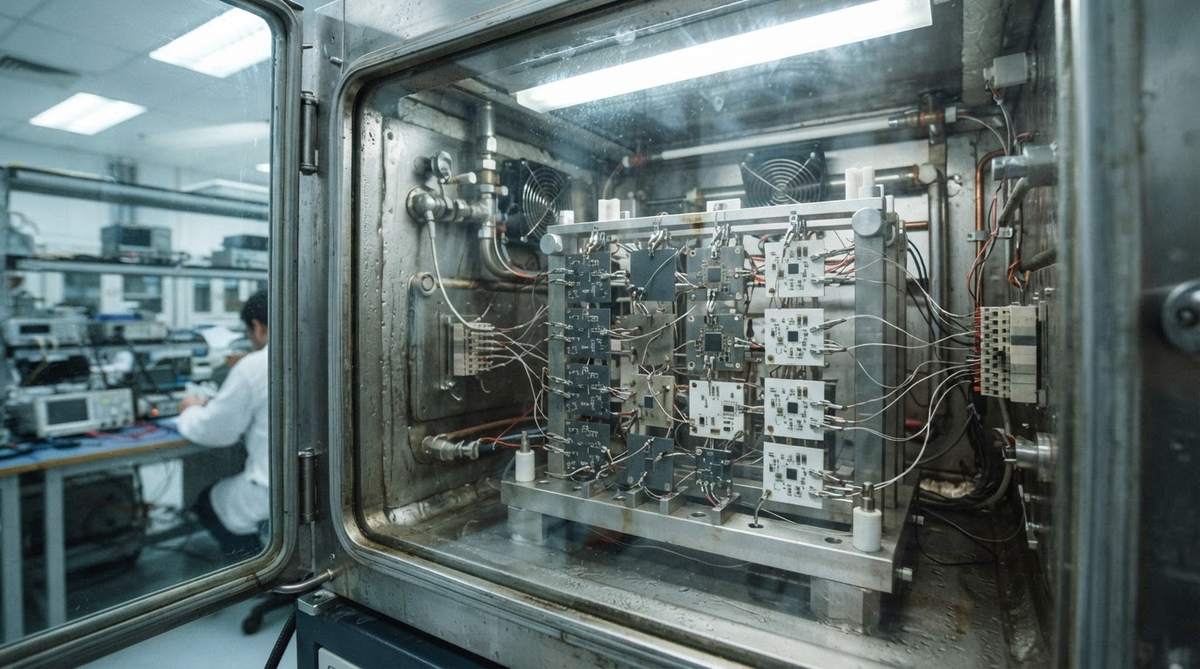
Choose Si3N4 when your module must survive high active-cycle counts: traction inverters with 15+ year service life, rail converters, and industrial drives with frequent load transients. The cost premium is justified when a field failure means a vehicle tow or a production-line shutdown. For a deeper look at ceramic PCB design for SiC power modules, including layout rules and copper balancing, see our design guide.
Si3N4 AMB substrates are also used in EV and traction power modules where automotive qualification (AQG 324) demands thousands of thermal cycles at ΔT ≥ 150 °C.
When NOT to Use Si3N4
Low-cycle or steady-state loads. If your SiC module operates at near-constant power (e.g., a solar inverter with slow ramps), AlN gives equivalent thermal performance at one-third to one-fifth the substrate cost.
Cost-sensitive, moderate-temperature designs. For SiC modules with junction temperatures under 150 °C and cycle counts below 500, 96 % Al2O3 DBC substrates may be sufficient and cost 8–12× less than Si3N4 AMB.
Prototyping and small volumes. Si3N4 AMB substrates have longer lead times and higher NRE than AlN DBC. For early-stage validation, start with AlN, then qualify Si3N4 once the design is frozen.
RF or high-frequency applications. Si3N4’s dielectric constant (~8–9 at 1 MHz) and loss tangent are adequate for power, but for RF signal paths above a few GHz, alumina or specialised low-loss ceramics are better. See our overview of where Si3N4 ceramic PCBs are used for a broader application map.
Frequently Asked Questions
Can you use DBC instead of AMB on Si3N4?
No. DBC relies on a copper-oxide eutectic that forms on oxide ceramics (Al2O3, AlN). Si3N4 does not form this eutectic, so DBC joints are mechanically weak. AMB with an AgCuTi braze is the standard and only reliable metallisation for Si3N4 power substrates.
How much does a Si3N4 AMB substrate cost compared to AlN DBC?
Si3N4 AMB substrates typically cost 3–5× more than AlN DBC substrates of the same footprint. The premium comes from higher raw-material cost, lower sintering yields, and the vacuum brazing step. At volumes above 10 000 pieces per year, the gap narrows somewhat.
Is Si3N4 suitable for double-sided metallisation?
Yes. Double-sided AMB on Si3N4 is standard practice in ceramic substrates for SiC power modules. Both sides are brazed in a single furnace run, with copper thicknesses up to 0.8 mm per side.
What is the maximum continuous operating temperature for a Si3N4 substrate?
Si3N4 ceramic itself is stable above 1 000 °C. The practical limit is set by the AMB braze layer, which begins to soften around 780–800 °C. For assembled modules, the maximum is typically defined by the SiC die-attach solder or sinter layer, usually 200–250 °C continuous.
Does Si3N4 outperform AlN in passive thermal cycling too?
Yes. In passive (temperature-chamber) cycling from −55 °C to +150 °C, Si3N4 AMB substrates routinely survive > 2 000 cycles without delamination, versus 800–1 200 for AlN DBC, per published data from Kyocera and Rogers/curamik.
Next Step
If your SiC module design demands long thermal-cycling life, request a quote for Si3N4 AMB substrates with your specific copper thickness and pattern. Upload your Gerber or DXF files for a quick review and pricing.