The alumina 99.6% Al2O3 thermal conductivity is 28–35 W/mK at 25 °C, measured per ASTM E1461 (laser flash method). That is roughly 20–40% higher than the 24–28 W/mK typical of 96% alumina, because the reduced glass-phase content at grain boundaries cuts phonon scattering. For engineers already using 96% alumina and hitting a thermal ceiling, 99.6% is the next step before jumping to aluminum nitride. Understanding the alumina 99.6% Al2O3 thermal conductivity at your actual operating temperature is critical, since the advantage narrows as temperature rises.
Key Takeaways
- 99.6% Al2O3 thermal conductivity: 28–35 W/mK at 25 °C (source: CoorsTek ADS-996, Kyocera A-493).
- 96% Al2O3 thermal conductivity: 24–28 W/mK at 25 °C — the purity bump gives a measurable but not dramatic improvement.
- Thermal conductivity drops with temperature: expect roughly 20–22 W/mK at 300 °C and 12–15 W/mK at 800 °C for 99.6% grades.
- Cost premium over 96% alumina is typically 1.3–2× per substrate, depending on size and volume.
- If you need more than ~35 W/mK, alumina will not get you there — aluminum nitride (AlN) thermal conductivity starts at 170 W/mK.
Why Purity Affects Alumina 99.6% Al2O3 Thermal Conductivity
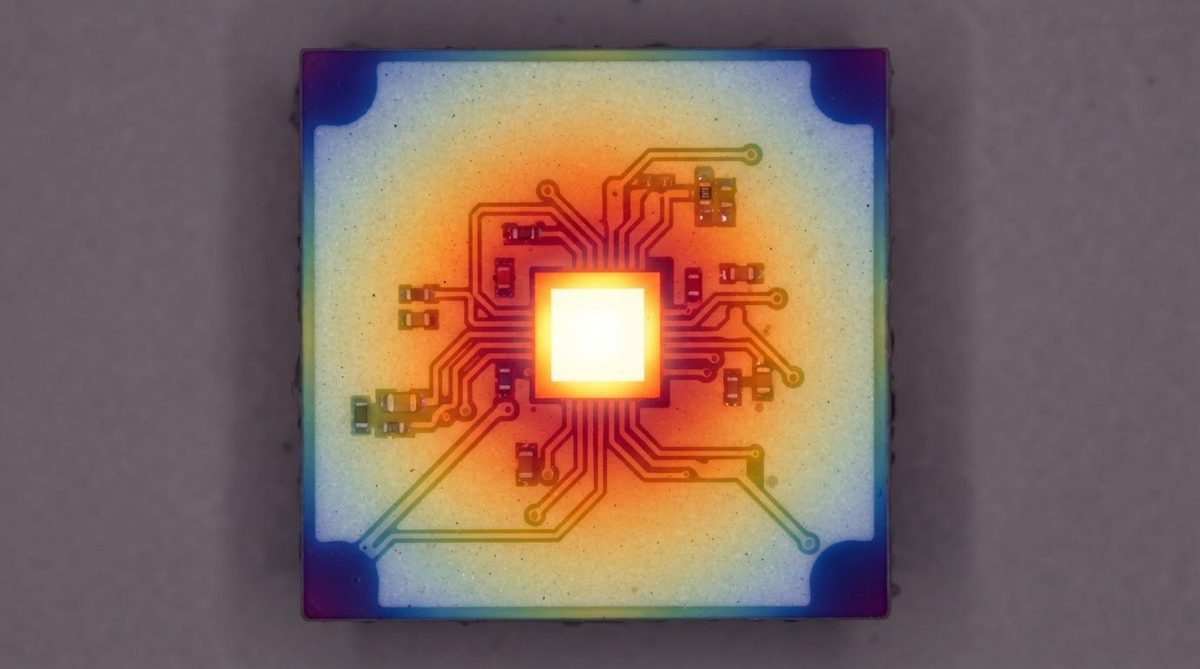
Alumina is a polycrystalline ceramic. Heat moves through it primarily by lattice vibrations (phonons). Anything that disrupts the crystal lattice scatters phonons and lowers conductivity. In 96% alumina, the remaining 4% is a silica-rich glass phase that sits at grain boundaries. This amorphous layer acts as a thermal bottleneck between every grain.
In 99.6% alumina, that glass phase shrinks to a fraction of a percent. Grain-to-grain thermal paths are more direct, and average grain size is often larger (10–25 µm vs. 5–15 µm for 96%), which further reduces boundary scattering. The result is a 4–7 W/mK improvement at room temperature. Single-crystal sapphire (100% Al2O3) reaches ~42 W/mK along the c-axis at 25 °C, which sets the theoretical ceiling for polycrystalline alumina.
Measured Alumina 99.6% Al2O3 Thermal Conductivity by Temperature
Thermal conductivity in alumina is not constant. It falls as temperature rises because phonon-phonon scattering (Umklapp processes) increases. The table below compiles values from two widely available 99.6% alumina grades.
| Temperature (°C) | 99.6% Al2O3 (W/mK) | 96% Al2O3 (W/mK) | Measurement Method |
|---|---|---|---|
| 25 | 28–35 | 24–28 | ASTM E1461 (laser flash) |
| 100 | 25–30 | 21–25 | ASTM E1461 |
| 300 | 20–22 | 16–19 | ASTM E1461 |
| 500 | 15–18 | 12–15 | ASTM E1461 |
| 800 | 12–15 | 9–12 | ASTM E1461 |
Typical values for commercially available material, for comparison only. Confirm against the datasheet for your specific grade. Sources: CoorsTek ADS-996 datasheet; Kyocera A-493 datasheet.
The practical takeaway: at 300 °C, the gap between 96% and 99.6% narrows to about 3–4 W/mK. If your device runs hot, the purity upgrade buys less than the room-temperature numbers suggest. Check the ceramic PCB thermal conductivity comparison table for a side-by-side view across all common substrate materials.
Enter your substrate dimensions, material grade, and power dissipation below to see how the alumina 99.6% Al2O3 thermal conductivity translates into junction temperature rise for your specific design.
Worked Example: Thermal Resistance Through a 99.6% Alumina Substrate
Consider a 10 mm × 10 mm die mounted on a 0.635 mm thick 99.6% alumina substrate. The thermal conductivity is 30 W/mK at the expected operating temperature of 80 °C.
Conduction thermal resistance through the substrate:
Rth = t / (k × A) = 0.000635 m / (30 W/mK × 0.0001 m²) = 0.212 °C/W
For the same geometry on 96% alumina at 25 W/mK:
Rth = 0.000635 / (25 × 0.0001) = 0.254 °C/W
The 99.6% grade saves 0.042 °C/W, which translates to about 0.42 °C per watt dissipated. For a 5 W device, that is a 2.1 °C junction temperature reduction. Meaningful for tightly margined designs; negligible for others. For a deeper walkthrough of this calculation, see how to calculate thermal resistance of a ceramic PCB.
Full Property Comparison: 99.6% vs. 96% Alumina
| Parameter | 99.6% Al2O3 | 96% Al2O3 | Unit | Condition / Standard |
|---|---|---|---|---|
| Thermal conductivity | 28–35 | 24–28 | W/mK | 25 °C, ASTM E1461 |
| Dielectric strength | 16–20 | 14–17 | kV/mm | AC, 60 Hz, ASTM D149 |
| Flexural strength | 350–400 | 300–350 | MPa | ASTM C1161, 4-pt bend |
| CTE (25–300 °C) | 7.2–7.6 | 7.1–7.5 | ppm/°C | ASTM E228 |
| Density | 3.87–3.92 | 3.72–3.78 | g/cm³ | ASTM C373 |
| Dielectric constant (1 MHz) | 9.7–9.9 | 9.3–9.6 | — | ASTM D150 |
| Surface roughness (as-fired) | 0.3–0.8 | 0.5–1.2 | µm Ra | Profilometer |
| Max continuous use temp | 1600 | 1600 | °C | In inert/oxidizing atmosphere |
Typical values for commercially available material, for comparison only. Confirm against the datasheet for your specific grade. Sources: CoorsTek ADS-996, Kyocera A-493, CeramTec Rubalit 710.
When 99.6% Alumina Is the Right Choice
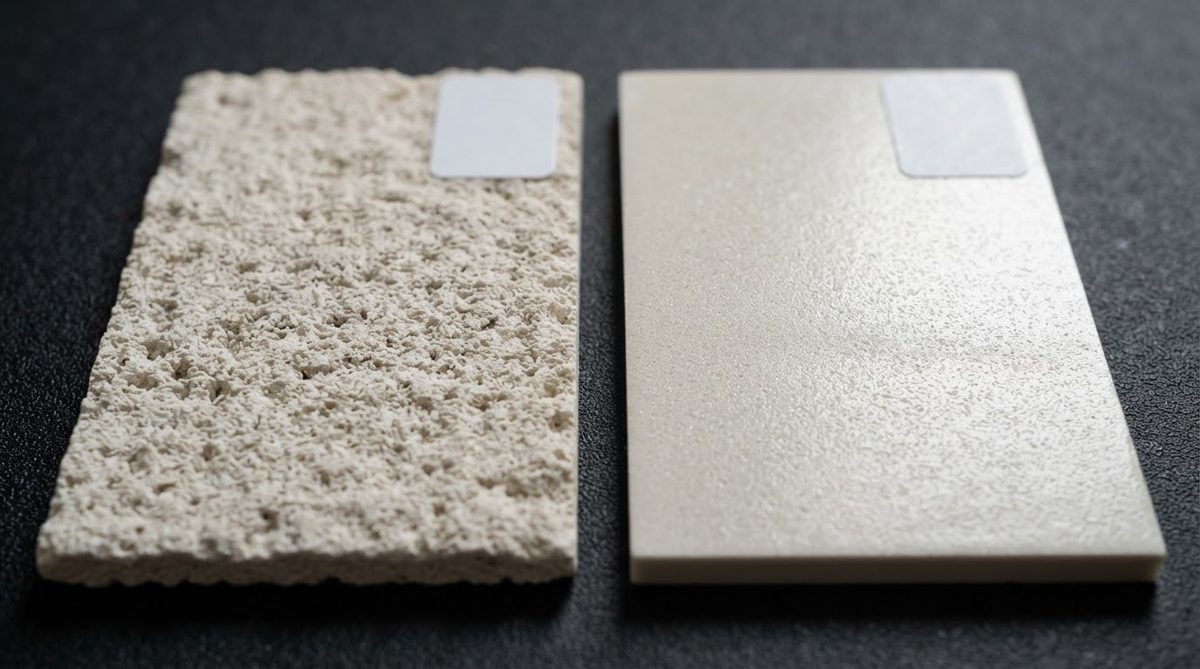
The upgrade from 96% to 99.6% makes sense in a narrow but important set of cases:
- Thin-film metallization (DPC, sputtered films). The finer grain structure and lower surface roughness of 99.6% alumina produce better adhesion and tighter line definition. Many thin-film houses specify 99.6% as a minimum.
- High-voltage isolation. The higher dielectric strength (16–20 kV/mm vs. 14–17 kV/mm) provides extra margin in power modules and medical devices.
- Moderate thermal improvement without an AlN price jump. When 96% alumina is 2–3 °C short of your thermal target and AlN is 4–5× the cost, 99.6% alumina at 1.3–2× the cost can close the gap. The alumina 99.6% Al2O3 thermal conductivity advantage is most cost-effective in this scenario.
For a broader look at how ceramic substrates handle heat across an entire assembly, see thermal management strategies for ceramic PCBs.
When NOT to Use 99.6% Alumina
You need more than 35 W/mK. No alumina grade will reach 40 W/mK in polycrystalline form. If your thermal model demands 50+ W/mK, move to aluminum nitride (170–200 W/mK) or silicon nitride (80–90 W/mK with superior mechanical toughness).
Cost is the primary constraint. For thick-film circuits, LED metal-core boards, or prototypes where thermal margin is generous, 96% alumina does the same job at lower cost. The 4–7 W/mK difference in alumina 99.6% Al2O3 thermal conductivity rarely justifies a 30–100% price increase unless you are already thermally constrained.
You need FR-4-level mechanical toughness in handling. Both 96% and 99.6% alumina are brittle ceramics. If your assembly process involves significant board flexure, consider metal-core PCBs or insulated metal substrates instead.
Frequently Asked Questions
How much more does 99.6% alumina cost compared to 96%?
Expect a 1.3–2× cost premium per substrate in production volumes. The raw powder is more expensive, and sintering temperatures are higher (1600–1700 °C vs. 1500–1600 °C for 96%), which increases kiln energy costs and reduces throughput.
Does 99.6% alumina have a different CTE than 96%?
The difference is negligible. Both grades fall in the 7.1–7.6 ppm/°C range from 25–300 °C. You do not need to redesign solder joints or change your CTE-matching strategy when switching between the two grades.
Can I use 99.6% alumina with thick-film printing?
Yes. Thick-film pastes fire and adhere well on 99.6% substrates. However, the smoother surface and higher density are most beneficial for thin-film processes (sputtering, DPC), where they improve line resolution and adhesion. For standard thick-film work, 96% alumina is usually sufficient and more cost-effective.
Does alumina 99.6% Al2O3 thermal conductivity change with substrate thickness?
Bulk thermal conductivity is an intrinsic material property and does not change with thickness. However, thinner substrates have lower absolute thermal resistance (Rth = t / kA), so a 0.38 mm substrate conducts heat through its cross-section with 40% less resistance than a 0.635 mm substrate of the same grade.
Is 99.6% alumina available in large panel sizes?
Most suppliers offer 99.6% alumina substrates up to about 114 mm × 114 mm (4.5″ × 4.5″) as standard. Larger panels up to approximately 190 mm × 190 mm are available from some manufacturers, but lead times increase and warpage control becomes more critical.
Next Step
If you are evaluating whether 99.6% alumina closes your thermal gap or whether you need to step up to AlN, run your numbers through a thermal simulation for ceramic boards before committing to a substrate grade. When you are ready to get pricing on specific substrate dimensions and metallization, request a quote and include your thermal requirements so the engineering team can recommend the right grade.