Buying alumina 99.6% Al2O3 wholesale gets you measurably better thermal conductivity, dielectric strength, and surface finish than 96% alumina, at roughly 1.5–2.5× the per-piece cost in volume. The purity upgrade is worth it for high-frequency RF circuits, high-power LED arrays, and thick-/thin-film hybrid assemblies where tighter tolerances and lower dielectric loss matter. For general-purpose power boards, 96% alumina usually does the job at lower cost.
Key Properties: 99.6% vs 96% Alumina Substrates
The 3.6-percentage-point purity gap between 96% and 99.6% alumina changes several properties that matter at the board level. The glassy phase in 96% alumina (mostly SiO2 and CaO) lowers thermal conductivity and raises dielectric loss. Removing most of that glass phase in 99.6% grades tightens the grain structure, improves surface roughness after polishing, and pushes thermal conductivity from the mid-20s into the low-to-mid 30s W/mK.
| Parameter | 96% Al2O3 | 99.6% Al2O3 | Unit | Condition | Source |
|---|---|---|---|---|---|
| Thermal conductivity | 24–28 | 30–35 | W/mK | 25 °C | CoorsTek ADS-996 / Kyocera A-493 |
| Dielectric constant (εr) | 9.0–9.5 | 9.7–9.9 | — | 1 MHz, 25 °C | CoorsTek datasheet |
| Dielectric loss (tan δ) | 0.0010–0.0020 | 0.0001–0.0004 | — | 1 MHz, 25 °C | CoorsTek ADS-996 |
| Flexural strength | 330–380 | 350–400 | MPa | ASTM C1161, 4-pt bend | CeramTec Rubalit 710 |
| Surface roughness (as-fired) | 0.5–1.0 | 0.3–0.6 | µm Ra | — | Maruwa HA-series |
| Volume resistivity | >10¹⁴ | >10¹⁴ | Ω·cm | 25 °C | CeramTec Rubalit 710 |
| Max continuous use temp | 1 500 | 1 600 | °C | Inert atmosphere | Kyocera A-493 |
Typical values for commercially available material, for comparison only. Confirm against the datasheet for your specific grade.
The biggest practical difference for circuit designers is dielectric loss. At 1 MHz the 99.6% grade can be 5–10× lower in tan δ, which translates directly into lower insertion loss in RF stripline and microstrip structures above 1 GHz. If your application runs below 500 MHz and does not need tight impedance control, 96% alumina is usually sufficient. For a broader comparison of substrate options, see types of ceramic substrates compared.
When Does Alumina 99.6% Al2O3 Wholesale Actually Pay Off?
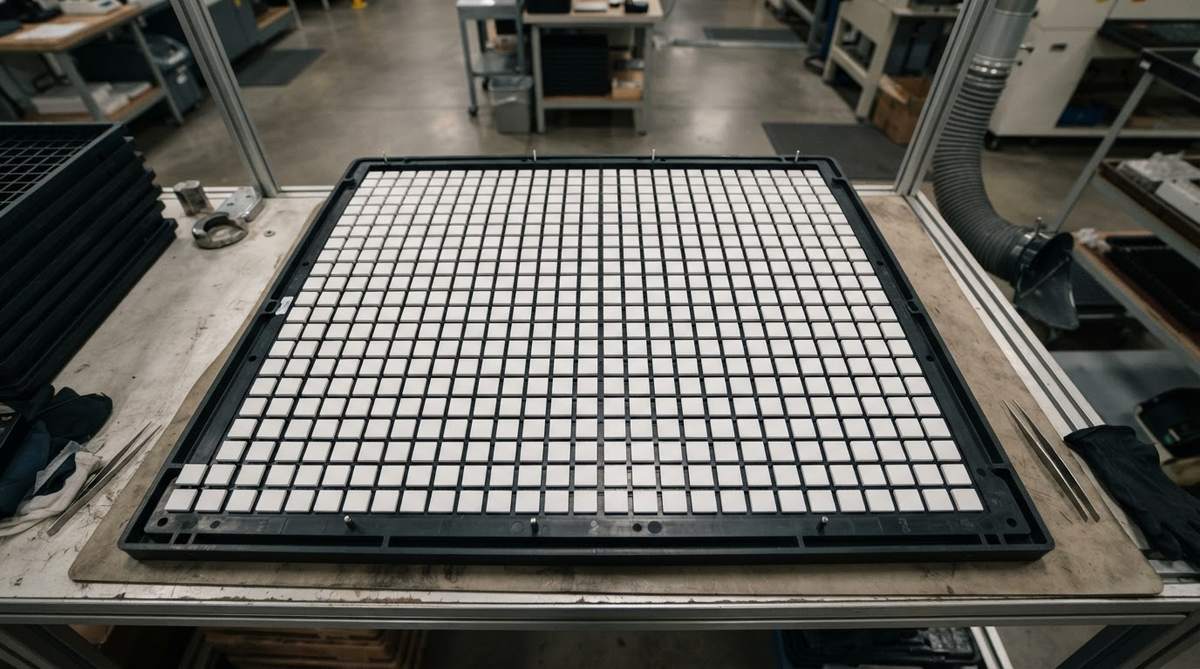
High-purity alumina earns its price premium in a specific set of applications:
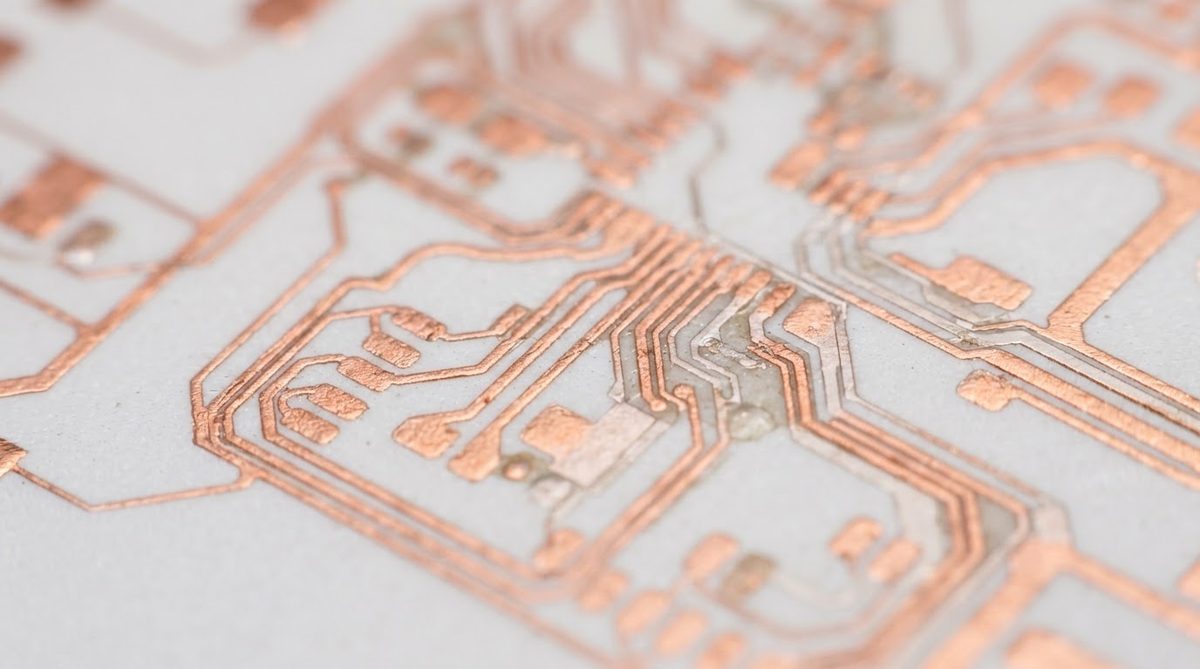
- Thin-film circuits (sputtered or evaporated metallisation). Lower surface roughness means better adhesion and finer line definition. A 0.3 µm Ra surface lets you hold 25 µm lines reliably; on a 0.8 µm Ra 96% substrate you may need 50 µm minimum.
- RF and microwave hybrids above 1 GHz. The 5–10× reduction in tan δ cuts signal attenuation measurably. At 10 GHz, a 50 mm microstrip on 99.6% alumina can save 0.3–0.5 dB compared to the same trace on 96%.
- High-power LED and laser submounts. The jump from ~26 to ~33 W/mK thermal conductivity reduces junction temperature by several degrees at the same heat flux, extending LED lumen maintenance.
- Sensor substrates for harsh environments. Fewer glassy-phase impurities mean less outgassing under vacuum and better chemical resistance to strong acids and alkalis.
If your thermal budget demands more than 35 W/mK, alumina will not get you there regardless of purity. Consider aluminum nitride (AlN) wholesale substrates at 170–200 W/mK, or silicon nitride (Si3N4) wholesale substrates when mechanical toughness is the priority.
Wholesale Pricing Tiers for 99.6% Al2O3
Pricing for alumina 99.6% Al2O3 wholesale orders depends on size, thickness, surface finish, and metallisation. As a rough guide for bare substrates (no metallisation, as-fired finish) at the time of writing:
| Order quantity | Typical unit price (25.4 × 25.4 × 0.635 mm) | Notes |
|---|---|---|
| 1–99 pcs | $3.50–$6.00 | Prototype / sample pricing |
| 100–999 pcs | $1.80–$3.50 | Small production |
| 1 000–9 999 pcs | $0.90–$1.80 | Volume discount starts |
| 10 000+ pcs | $0.50–$1.10 | Full wholesale tier |
Indicative 2024 pricing for unmetallised substrates. Actual cost varies by supplier, tolerances, and surface finish. Polished substrates add 30–80% to the base price.
Metallisation (DPC, DBC, or thick-film printing) typically doubles the per-piece cost. Tighter thickness tolerances (±0.025 mm vs the standard ±0.05 mm) add another 15–25%. These adders apply equally to 96% and 99.6% grades, so the relative premium for high purity stays roughly constant as you add processing steps. Sourcing alumina 99.6% Al2O3 wholesale in consolidated orders across product lines is the simplest way to push unit cost toward the bottom of each tier.
Enter your substrate dimensions, quantity, and finish requirements below to see an estimated price range for your specific configuration.
Worked Example: Cost per Degree of Thermal Improvement
Suppose you need to dissipate 10 W through a 25.4 × 25.4 mm substrate, 0.635 mm thick. Thermal resistance through the substrate alone (ignoring spreader and sink):
Rth = t / (k × A)
For 96% alumina (k = 26 W/mK): Rth = 0.000635 / (26 × 0.000645) = 0.0379 °C/W → ΔT = 0.38 °C at 10 W.
For 99.6% alumina (k = 33 W/mK): Rth = 0.000635 / (33 × 0.000645) = 0.0298 °C/W → ΔT = 0.30 °C at 10 W.
The 99.6% grade saves 0.08 °C at 10 W. At 100 W/cm² heat flux the difference grows to about 0.8 °C. Whether that matters depends on your thermal margin. For most LED applications running 5–15 W per die, the improvement is real but small. For a dense array dissipating 50+ W, it starts to justify the wholesale price premium. If you need help choosing, the guide on selecting the right ceramic substrate walks through the decision tree.
When NOT to Use 99.6% Alumina
General power electronics below 1 GHz. 96% alumina handles most DBC and thick-film power substrates at lower cost. The thermal gain from upgrading to 99.6% is marginal compared to what you get by switching to AlN.
Cost-sensitive consumer products. If your BOM target is under $0.50 per substrate, even alumina 99.6% Al2O3 wholesale pricing at high volumes may still exceed budget. FR-4 or metal-core PCBs are the realistic options here.
Applications needing high fracture toughness. Both 96% and 99.6% alumina are brittle (KIC ≈ 3.5–4.0 MPa·m½). If your substrate faces mechanical shock or thermal cycling beyond 500 °C, silicon nitride substrates with KIC of 6–7 MPa·m½ are a better fit.
Thermal loads above ~35 W/mK equivalent. No alumina grade bridges the gap to AlN’s 170–200 W/mK. If the thermal math does not close on alumina, move to AlN rather than hoping a higher-purity alumina will help.
Frequently Asked Questions
Is 99.6% alumina food-safe or biocompatible?
Yes, 99.6% alumina is widely used in medical implants and FDA-compliant sensor housings. Its low impurity content minimises leachable contaminants. Confirm biocompatibility testing (ISO 10993) for your specific application with the substrate supplier.
Can I solder directly to a bare 99.6% alumina substrate?
No. Bare alumina is not wettable by solder. You need a metallisation layer first — typically Mo-Mn plus Ni/Au, DPC copper, or thick-film silver/gold. The metallisation process is the same for 96% and 99.6% grades.
Does 99.6% alumina need special handling during assembly?
Handle it the same way as 96% alumina: edge support, no point loading, vacuum pick-and-place preferred. The flexural strength is slightly higher (350–400 MPa vs 330–380 MPa), but both grades are brittle ceramics that crack under impact or bending stress.
What is the standard lead time for wholesale 99.6% alumina substrates?
Bare substrates in standard sizes (25.4 × 25.4 mm, 50.8 × 50.8 mm) typically ship in 2–4 weeks from stock or near-stock. Custom sizes, polished finishes, or metallised substrates add 3–6 weeks depending on order volume and process complexity.
Are there export restrictions on 99.6% alumina?
Alumina ceramics are not export-controlled under EAR or ITAR for most commercial applications. Military-specific assemblies may require end-use documentation. Check the Commerce Control List (ECCN 1C007) if your substrate will be integrated into a controlled end item.
Next Step
If 99.6% alumina fits your thermal and RF requirements, request a wholesale quote with your substrate dimensions, thickness tolerance, surface finish, and target quantity. Pricing drops significantly above 1 000 pieces, so consolidating orders across product lines is worth the effort. For projects needing higher thermal conductivity, compare AlN wholesale pricing alongside your alumina quote to see where the crossover makes sense.