A hermetic package is a sealed enclosure for an electronic device that limits moisture and gas ingress to a leak rate at or below 1 × 10⁻⁸ atm·cc/s (helium) as measured per MIL-STD-883, Test Method 1014. Understanding the hermetic package definition matters because the seal prevents internal humidity from reaching levels that cause corrosion, dendrite growth, or parametric drift over the component’s service life. Military, aerospace, medical-implant, and downhole designs rely on this level of protection for missions lasting 20 years or more.
Why the Hermetic Package Definition Matters for Reliability
Moisture inside a package accelerates electrochemical corrosion of bond wires and metallization traces. For high-reliability applications, even parts-per-million increases in internal moisture can degrade performance irreversibly. A hermetic seal keeps internal moisture below 5 000 ppm, the typical failure threshold defined in MIL-PRF-38535. Any enclosure that cannot meet the leak-rate criterion in the hermetic package definition above is classified as non-hermetic, regardless of how well it appears to be sealed.
Common Materials and Sealing Methods
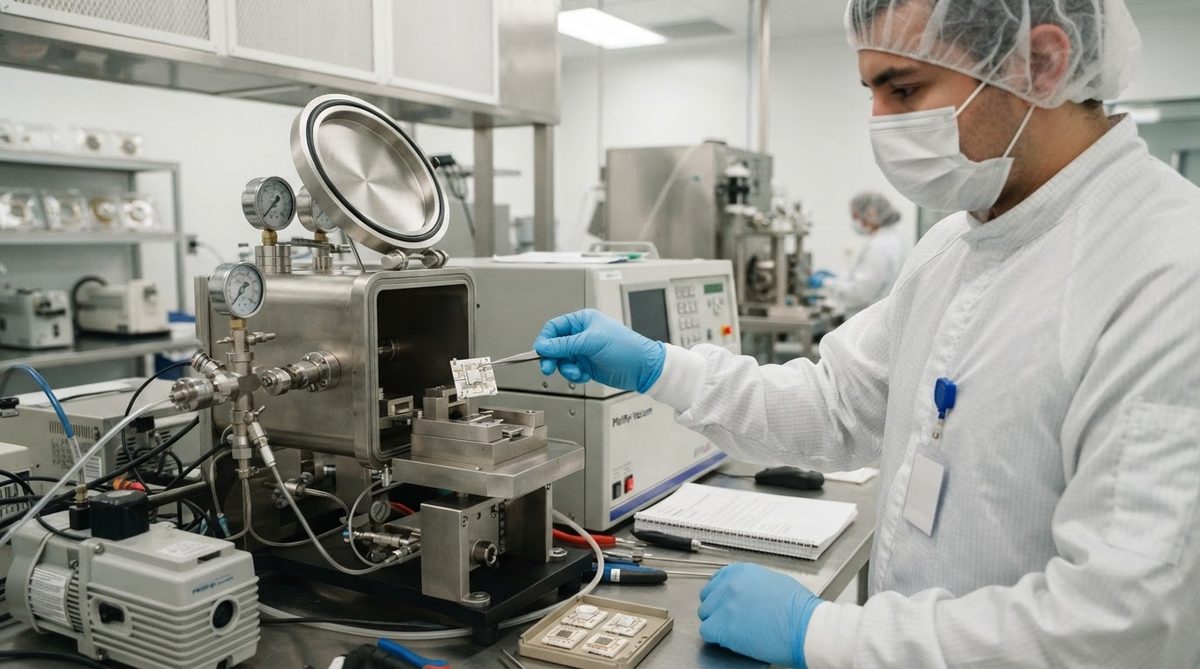
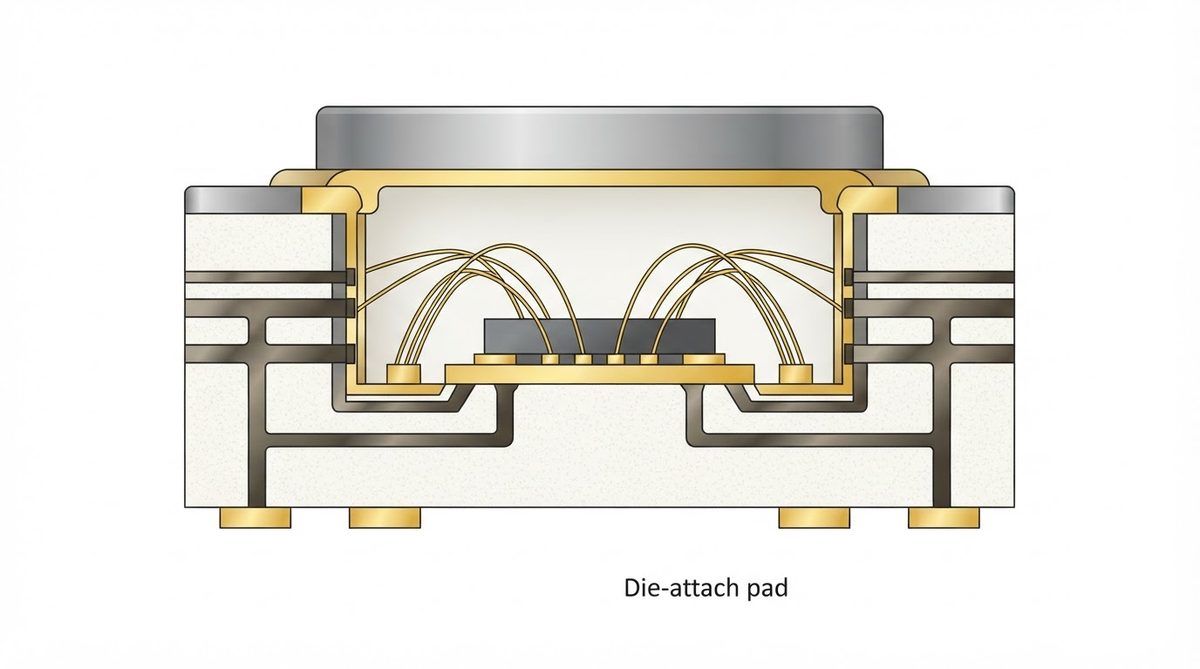
Most hermetic packages use a ceramic body—typically alumina (Al₂O₃ 92–99.6%) or aluminum nitride—because ceramics are inherently impermeable to gas. The ceramic body is often produced by HTCC or LTCC co-firing, which embeds conductor layers and vias directly into the substrate before sintering.
Lid sealing methods include:
- Seam welding — a resistance weld around a Kovar lid, the most common method for military hybrids.
- Solder-seal (AuSn) — an 80Au/20Sn preform reflowed at ~310 °C, used when lower thermal stress is needed.
- Glass-frit seal — a lower-cost option fired at 400–450 °C, suitable for less demanding leak-rate requirements.
How Hermeticity Is Tested
The standard test sequence per MIL-STD-883 TM 1014 includes a helium fine-leak test (for packages with internal volumes above ~0.01 cc) and a gross-leak test using fluorocarbon liquid. Packages must pass both. Fine-leak reject limits range from 1 × 10⁻⁸ to 1 × 10⁻⁷ atm·cc/s depending on internal volume. A package that meets the hermetic package definition will pass this sequence repeatedly across thermal cycling without degradation of the seal.
When a Hermetic Package Is Not Necessary
Hermetic packages add significant cost—often 5–50× the price of a plastic-encapsulated equivalent. For consumer electronics, automotive cabin electronics, or any application with a service life under 10 years in a benign environment, plastic or conformal-coated assemblies are usually sufficient. Choose hermeticity only when the failure consequence or operating environment justifies it. A ceramic thermal management substrate without a hermetic lid may still solve your heat problem at a fraction of the cost.
Frequently Asked Questions
Does every ceramic package qualify as hermetic?
No. A ceramic body is gas-impermeable, but the package is only hermetic if every joint—lid seal, lead seal, and via fill—also meets the ≤1 × 10⁻⁸ atm·cc/s leak-rate threshold. An unsealed or poorly sealed ceramic package will fail gross-leak testing.
Can a hermetic package be reworked after sealing?
It depends on the seal method. Solder-sealed (AuSn) lids can sometimes be removed and re-sealed, though each reflow cycle risks damaging internal wire bonds. Seam-welded lids are generally not reworkable without destroying the lid.
How long does a hermetic seal last?
A properly executed hermetic seal can maintain its leak rate for decades. MIL-spec qualification typically demonstrates stability through 1 000 thermal cycles (−65 °C to +150 °C) and 1 000 hours of steady-state life testing. Field data from aerospace programs confirms 20+ year seal integrity.
What is the difference between a hermetic package and a near-hermetic package?
A near-hermetic package has a measured leak rate above the hermetic package definition threshold but still well below that of a plastic encapsulation. Leak rates in the 1 × 10⁻⁶ to 1 × 10⁻⁷ atm·cc/s range are sometimes called near-hermetic. These packages suit applications where full hermeticity is not required but some moisture protection beyond conformal coating is needed.