What Is Brazing? A Clear Brazing Definition
The brazing definition, per AWS A3.0:2020, is straightforward: brazing is a metal-joining process that uses a filler alloy with a liquidus temperature above 450 °C (840 °F) to bond two or more base materials without melting them. The filler wets the joint surfaces by capillary action, solidifies on cooling, and forms a metallurgical bond. This 450 °C threshold is what distinguishes the brazing definition from soldering, which uses filler metals that melt below that line.
How Brazing Works in Ceramic PCB Manufacturing
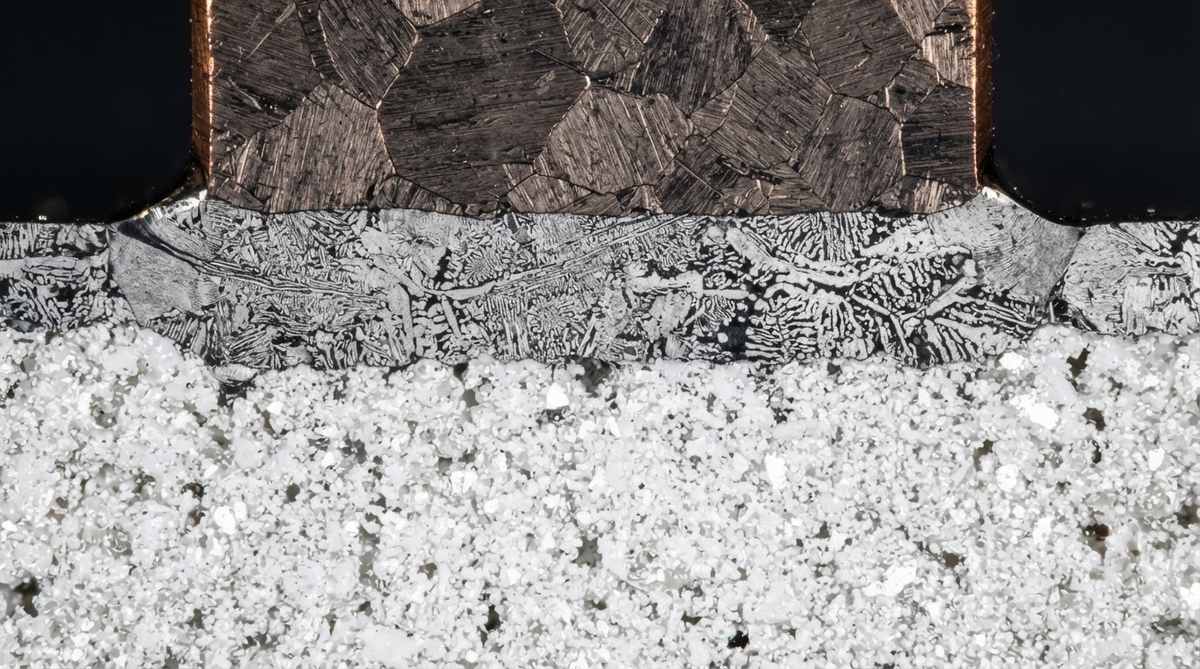
Ceramic substrates such as Al₂O₃ and AlN cannot be soldered or welded directly to copper. Brazing solves this by introducing a filler layer that bonds to both the metal and the ceramic. Two major processes rely on brazing:
- Direct Bonded Copper (DBC): A copper–oxygen eutectic forms at roughly 1 065 °C. The thin oxide layer at the copper–alumina interface acts as the brazing medium, wetting the ceramic and creating a direct bond.
- Active Metal Brazing (AMB): A filler alloy containing an active element—typically titanium—reacts with the ceramic surface at 800–900 °C in a vacuum furnace. This produces a thin reaction layer (often TiN on AlN substrates) that the filler wets, bonding thick copper foil to ceramics that the DBC process cannot handle well, such as AlN and Si₃N₄.
Both methods rely on tightly controlled furnace atmospheres and temperature profiles. The peak temperature, dwell time, and cooling rate determine joint strength, void fraction, and residual stress. For context on how the ceramic substrate itself is prepared before metallization, see the substrate glossary entry.
Brazing Definition Compared to Soldering and Welding
| Parameter | Brazing | Soldering | Welding |
|---|---|---|---|
| Filler liquidus | > 450 °C | < 450 °C | N/A (base metal melts) |
| Base material melted? | No | No | Yes |
| Typical joint strength | High | Moderate | Very high |
| Suitable for ceramic-to-metal? | Yes (with active filler or oxide eutectic) | Only to pre-metallized surfaces | No |
Definitions per AWS A3.0:2020, Standard Welding Terms and Definitions.
Key Variables That Affect a Brazed Joint
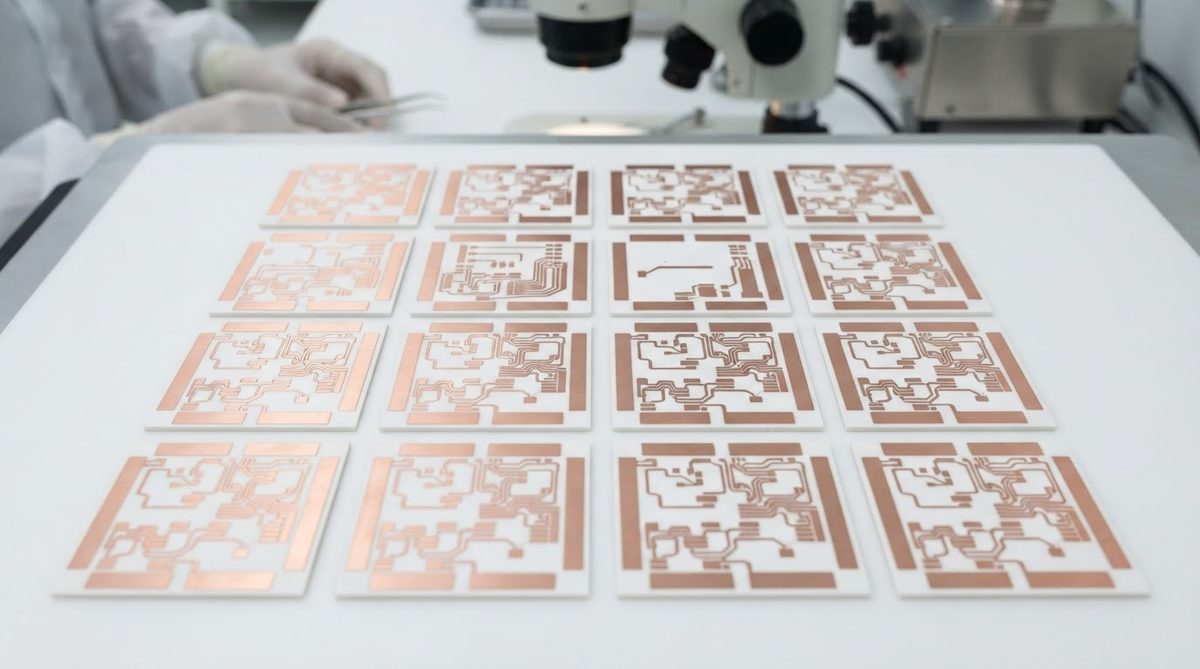
Understanding the brazing definition is only the starting point. The quality of any brazed joint depends on several controllable process variables:
- Filler composition: AgCu-Ti alloys are common for AMB; copper oxide eutectic is used in DBC.
- Atmosphere: Vacuum (≤ 10⁻³ Pa) or inert gas prevents oxidation of active elements.
- Peak temperature and dwell: Too low and the filler won’t wet; too high and CTE mismatch stress rises.
- Surface preparation: Ceramic surfaces must be flat, clean, and free of organics. Pre-firing conditions matter—see ceramic firing for details.
When Brazing Is Not the Right Choice
Brazing adds cost and process complexity. If your design uses a thin-film or DPC (Direct Plated Copper) metallization approach, copper is sputtered and electroplated onto the ceramic at much lower temperatures, avoiding brazing entirely. DPC suits fine-line circuits (trace/space below 50 µm) where the thick copper foil of a brazed DBC or AMB board is unnecessary. For standard FR-4 operating temperatures, soldering remains simpler and cheaper.
Frequently Asked Questions
What temperature does brazing require?
By the brazing definition in AWS A3.0, the filler metal must have a liquidus above 450 °C. In ceramic PCB production, actual peak temperatures range from about 800 °C for AMB to over 1 065 °C for DBC. The exact profile depends on the filler alloy and the ceramic material being bonded.
Can brazing join any ceramic to copper?
Not with a single method. DBC works well for Al₂O₃ but is poorly suited to AlN and Si₃N₄. Active metal brazing handles those tougher ceramics because the titanium in the filler reacts directly with the nitride surface. Choosing the right process depends on the substrate material and the required copper thickness.
Is brazing the same as soldering?
No. The key distinction in the brazing definition is the filler liquidus temperature: above 450 °C for brazing, below 450 °C for soldering. Brazed joints are generally stronger and can withstand higher service temperatures, which is why brazing is preferred for power-electronics ceramic substrates that operate well above solder reflow temperatures.
Does brazing damage the ceramic substrate?
Properly controlled brazing does not crack or degrade the ceramic. However, excessive peak temperatures or overly fast cooling rates can introduce residual thermal stress due to the CTE mismatch between copper and ceramic. Furnace profiles are carefully tuned to minimize this risk, and post-braze inspection typically includes C-SAM or X-ray to check for voids and delamination.