China produces the majority of the world’s 96% alumina (Al₂O₃) ceramic PCBs. The substrate material is mature, well-characterized, and manufactured at scale in Guangdong, Jiangxi, and Hunan provinces. For most thermal, power, and LED applications, sourcing 96% alumina boards from a Chinese manufacturer is the lowest-cost path to a qualified ceramic PCB—provided you verify the right things before committing to a supplier.
Key Takeaways
- 96% alumina substrates offer 24–28 W/mK thermal conductivity at 25 °C, a dielectric strength above 15 kV/mm, and a CTE of ~7.0 ppm/°C (per ASTM E228).
- Chinese factories typically process 96% Al₂O₃ via thick-film, thin-film, or DPC (Direct Plated Copper) metallization, with DBC reserved for higher-purity grades or AlN.
- Landed cost for 96% alumina PCBs from China runs 30–50% lower than equivalent boards from Japanese or European suppliers, but tariffs and freight can narrow that gap significantly.
- Material consistency—not just price—is the critical variable. Request lot-by-lot test reports for camber, surface roughness (Ra), and alumina purity.
What 96% Alumina Actually Means
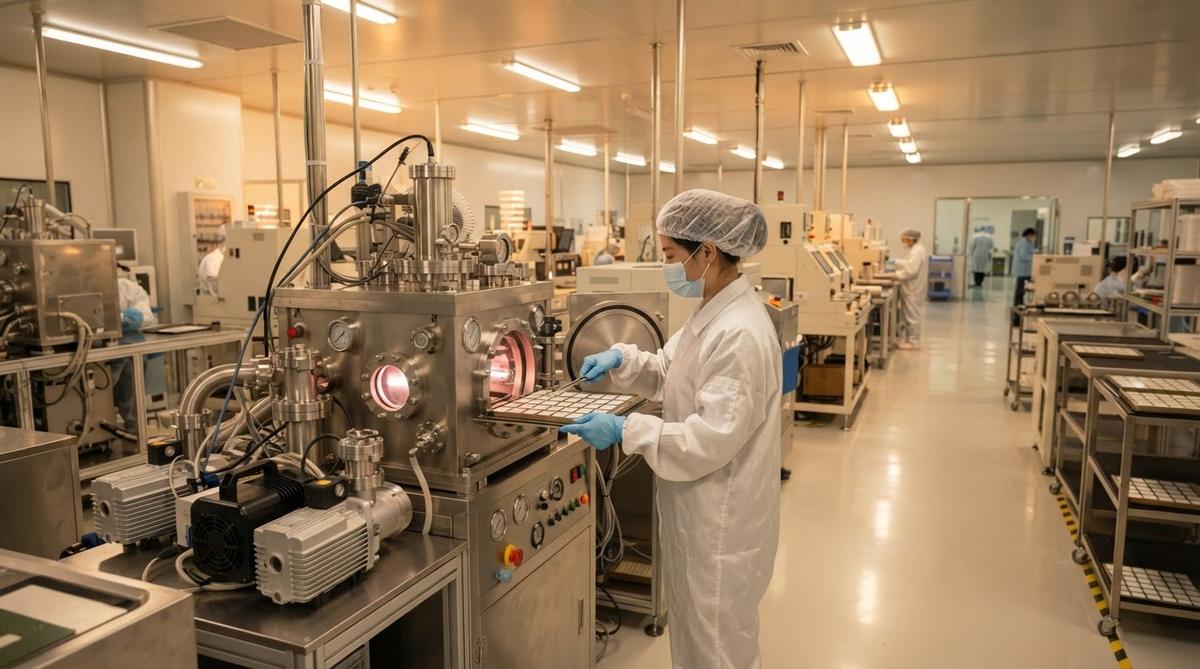
A “96% alumina” substrate is a polycrystalline ceramic body where Al₂O₃ makes up approximately 96% of the composition by weight. The remaining 4% is a glassy phase—typically SiO₂, MgO, and CaO—that acts as a sintering aid and lowers the firing temperature to around 1,550–1,600 °C. This glassy phase is what makes 96% alumina cheaper to produce than 99.6% grades, which require higher sintering temperatures and tighter raw-material control.
The glassy phase also slightly reduces thermal conductivity and increases dielectric loss tangent compared to 99.6% alumina. For most power electronics and LED substrates, the difference is acceptable. For high-frequency RF circuits above 10 GHz, you may need 99.6% alumina from a China-based manufacturer or a different ceramic entirely.
Typical Properties of 96% Al₂O₃ Substrates
| Parameter | Value | Unit | Condition / Standard | Source |
|---|---|---|---|---|
| Thermal conductivity | 24–28 | W/mK | 25 °C, ASTM E1461 | CoorsTek ADS-96R datasheet |
| Dielectric strength | 15–17 | kV/mm | AC, 60 Hz, ASTM D149 | Kyocera A-493 datasheet |
| Dielectric constant (εr) | 9.0–9.5 | — | 1 MHz, 25 °C | CoorsTek ADS-96R datasheet |
| Loss tangent (tan δ) | 0.0002–0.0010 | — | 1 MHz, 25 °C | CoorsTek ADS-96R datasheet |
| CTE | 6.8–7.2 | ppm/°C | 25–300 °C, ASTM E228 | Maruwa HA-96 datasheet |
| Flexural strength | 350–380 | MPa | 3-point bend, ASTM C1161 | CoorsTek ADS-96R datasheet |
| Surface roughness (Ra) | 0.3–0.8 | µm | As-fired, both sides | Industry typical |
| Max continuous use temp. | 1,600 | °C | In inert/oxidizing atmosphere | CeramTec Rubalit 708S |
Typical values for commercially available material, for comparison only. Confirm against the datasheet for your specific grade.
Processes Chinese Manufacturers Run on 96% Alumina
Most Chinese ceramic PCB factories offer one or more of these metallization routes on 96% alumina substrates:
- Thick film: Screen-printed silver, gold, or palladium-silver pastes, fired at 850 °C. Standard for hybrid circuits and resistor networks. Minimum line/space around 100–125 µm.
- Thin film: Sputtered Ti/Cu or Cr/Cu seed layers, followed by photolithographic patterning and electroplating. Achieves line/space down to 20–30 µm. Used for RF filters, MEMS packages, and precision resistors.
- DPC (Direct Plated Copper): A sputtered seed layer with electroplated copper up to 50–100 µm thick. Good thermal performance for LED and mid-power applications. Line/space typically 50–75 µm.
DBC (Direct Bonded Copper) on 96% alumina is possible but less common than DBC on 99.6% alumina or AlN, because the glassy phase can weaken the Cu–Al₂O₃ bond at the eutectic bonding temperature. If you need DBC for high-current power modules, confirm the manufacturer has validated their bonding process specifically on 96% material. For an overview of how these steps fit together, see the ceramic PCB manufacturing process.
What to Verify Before Choosing a Supplier
Substrate source and traceability
Ask whether the factory sinters its own green tape or buys blank substrates from a third party. Many Chinese PCB houses buy pre-fired substrates from dedicated ceramic body manufacturers in Xinhua (Hunan) or Chaozhou (Guangdong), then metallize in-house. This is normal and not a red flag—but you need to know the substrate source so you can trace material lots. Request the substrate manufacturer’s CoC (Certificate of Conformance) per lot.
Inspection and test data
At minimum, require these with every shipment: camber measurement (per ASTM C1161), surface roughness (Ra) by profilometer, visual inspection under 10× magnification for edge chips and cracks, and a hipot or insulation resistance test on metallized boards. A factory that cannot provide these is not ready for production orders.
Tariffs and logistics
Ceramic PCBs from China are classified under HTS 8534.00, which currently carries a 25% tariff for US importers under Section 301. Factor this into your landed-cost comparison. Details on classification and duty rates are covered in the tariff and country-of-origin guide.
Cost Factors: A Rough Breakdown
For a 25.4 × 25.4 mm (1″ × 1″) DPC-metallized 96% alumina board at 0.635 mm thickness, ordered in a quantity of 500 pieces from a mid-tier Chinese manufacturer, expect approximate cost allocation like this:
| Cost element | Approx. share | Notes |
|---|---|---|
| Blank substrate | 30–40% | Depends on substrate source and surface finish |
| Metallization (DPC) | 25–35% | Sputtering + plating + etch |
| Patterning / laser scribing | 10–15% | Complexity-dependent |
| Testing & QC | 5–10% | Hipot, visual, dimensional |
| Margin, packing, freight | 10–20% | FOB Shenzhen; add tariff + shipping for DDP |
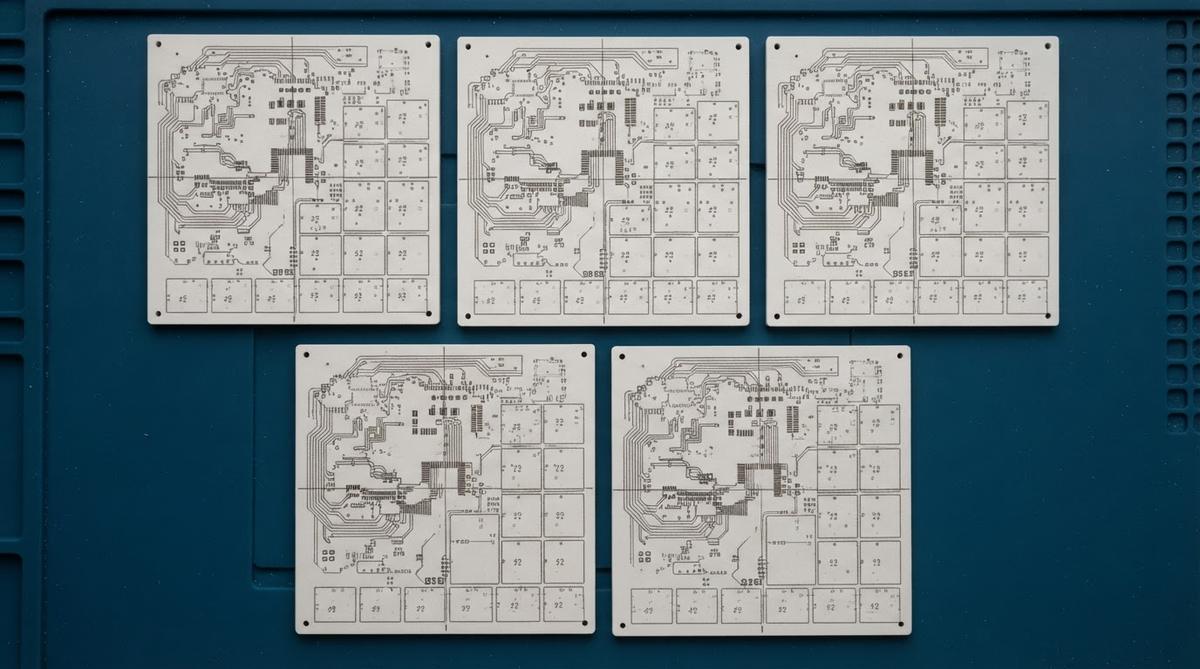
If you need laser-scribed 96% alumina panels for snap-apart arrays, add 5–10% for the scribing step. Volume discounts flatten the per-piece cost significantly above 2,000 units.
When NOT to Use 96% Alumina from China
High-frequency RF above 10 GHz: The higher loss tangent of 96% alumina (tan δ up to 0.001 at 1 MHz, worse at GHz frequencies) makes 99.6% alumina or AlN a better fit. Consider an AlN ceramic PCB from a Chinese factory for millimeter-wave work.
High-power modules above 150 A per device: DBC on 96% alumina has bond-strength limitations. Use 99.6% alumina or AlN DBC substrates instead.
ITAR or defense-restricted programs: Some US and allied defense programs prohibit Chinese-origin substrates regardless of performance. Verify your program’s country-of-origin restrictions before quoting.
Prototyping one or two boards: Minimum order quantities from Chinese factories are typically 10–50 pieces for metallized boards. For true one-off prototypes, a domestic supplier with higher per-piece cost but no MOQ may be faster and cheaper after shipping.
FAQ
Is 96% alumina the same as “standard alumina”?
Yes. In the ceramic PCB industry, “standard alumina” almost always means 96% Al₂O₃. If a datasheet or quote says “alumina” without a purity grade, assume 96% and confirm in writing.
Can I get 96% alumina boards assembled in the same Chinese factory?
Some manufacturers offer SMT assembly and die-attach on the same production line. Others subcontract assembly to a partner facility. Ask for the assembly site’s certifications separately, and audit or request photos of the SMT line before committing.
How long does a typical order take from China?
Prototype orders (10–50 pcs) usually ship in 10–15 business days after design approval. Production runs of 500–5,000 pcs take 3–5 weeks. Add 5–10 days for ocean freight to the US West Coast, or 3–5 days for air freight.
What file formats do Chinese ceramic PCB factories accept?
Gerber RS-274X is universal. Most factories also accept DXF for substrate outlines and drill files in Excellon format. Supply a separate layer for laser-scribe lines if your design uses snap-apart panels.
Does 96% alumina meet MIL-spec requirements?
96% alumina substrates can meet MIL-PRF-55342 for thick-film resistor networks and MIL-STD-883 for hybrid packaging, provided the specific substrate grade and metallization process are qualified. The material itself is not automatically MIL-qualified—the combination of material, process, and manufacturer must pass qualification testing.