Beryllia Definition
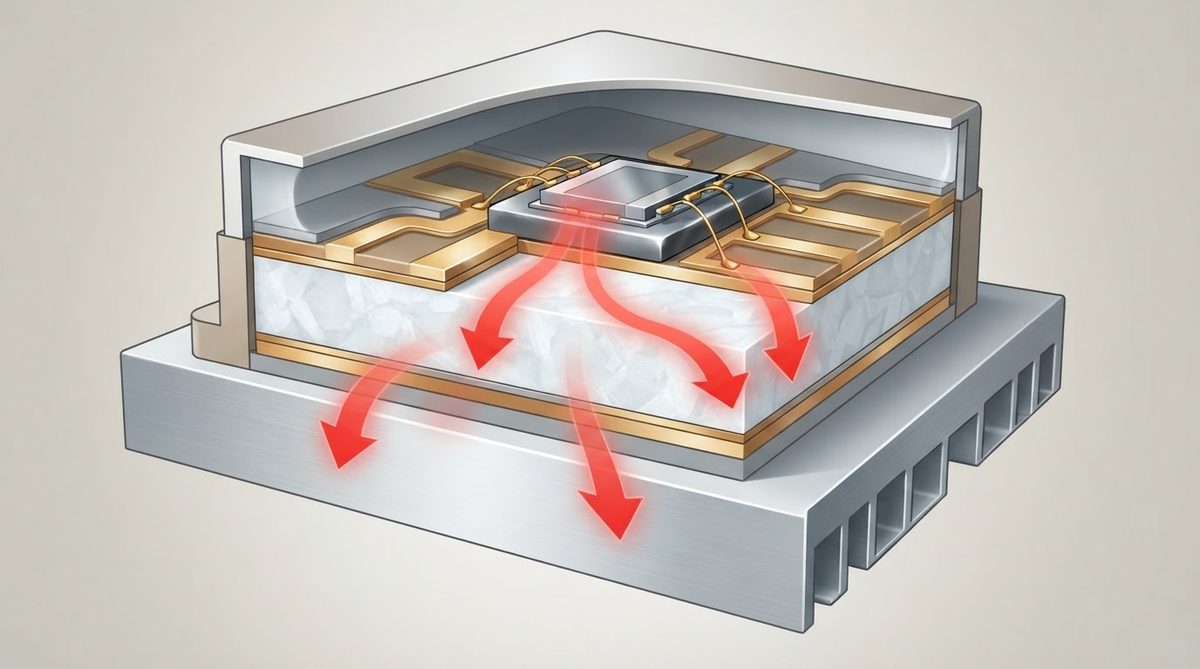
The beryllia definition in electronics is straightforward: beryllia (BeO), also called beryllium oxide, is a white ceramic compound with thermal conductivity of 260–300 W/m·K at 25 °C — the highest of any oxide ceramic and comparable to some metals. Understanding the beryllia definition matters because this material occupies a unique niche as a substrate in high-power RF, microwave, and aerospace electronics where extreme heat dissipation is required.
⚠ Health hazard: Beryllium oxide dust and fume are confirmed human carcinogens and cause chronic beryllium disease (CBD), an incurable lung condition. Any machining, grinding, or breakage of BeO substrates requires strict engineering controls per OSHA’s beryllium standard (29 CFR 1910.1024). For detailed safety guidance, see beryllia safety information.
Key Properties That Follow from the Beryllia Definition
| Parameter | Value | Unit | Condition | Source |
|---|---|---|---|---|
| Thermal conductivity | 260–300 | W/m·K | 25 °C | CoorsTek BeO datasheet |
| Dielectric constant (εr) | 6.5–6.7 | — | 1 MHz, 25 °C | CoorsTek BeO datasheet |
| CTE | 7.5–8.5 | ppm/°C | 25–300 °C | Materion technical data |
| Flexural strength | 230–250 | MPa | ASTM C1161 | Materion technical data |
| Max continuous use temp. | ~1 800 | °C | Inert atmosphere | Materion technical data |
| Volume resistivity | >10¹⁴ | Ω·cm | 25 °C | CoorsTek BeO datasheet |
Typical values for commercially available material, for comparison only. Confirm against the datasheet for your specific grade.
Beryllia’s coefficient of thermal expansion (7.5–8.5 ppm/°C) is a reasonable match to GaAs and some silicon packages, which simplifies solder-joint reliability in power devices.
Why the Beryllia Definition Matters in Substrate Selection
Engineers encounter the beryllia definition most often when comparing oxide ceramics for thermal management. Several characteristics set BeO apart from alternatives:
- Thermal conductivity 260–300 W/m·K — roughly 40–50 % higher than aluminum nitride (AlN, 170–200 W/m·K) and ten times higher than 96 % alumina (24–28 W/m·K).
- Low dielectric constant (6.5–6.7 at 1 MHz) — suitable for RF and microwave circuits up to millimeter-wave frequencies.
- CTE close to GaAs and Si — reduces thermomechanical stress at die-attach interfaces.
- Electrical isolation with metal-like heat spreading — a combination no polymer-based board can match.
These properties explain why the beryllia definition still appears in military specifications and legacy aerospace programs decades after safer alternatives became available.
Common Substrate Processes for BeO
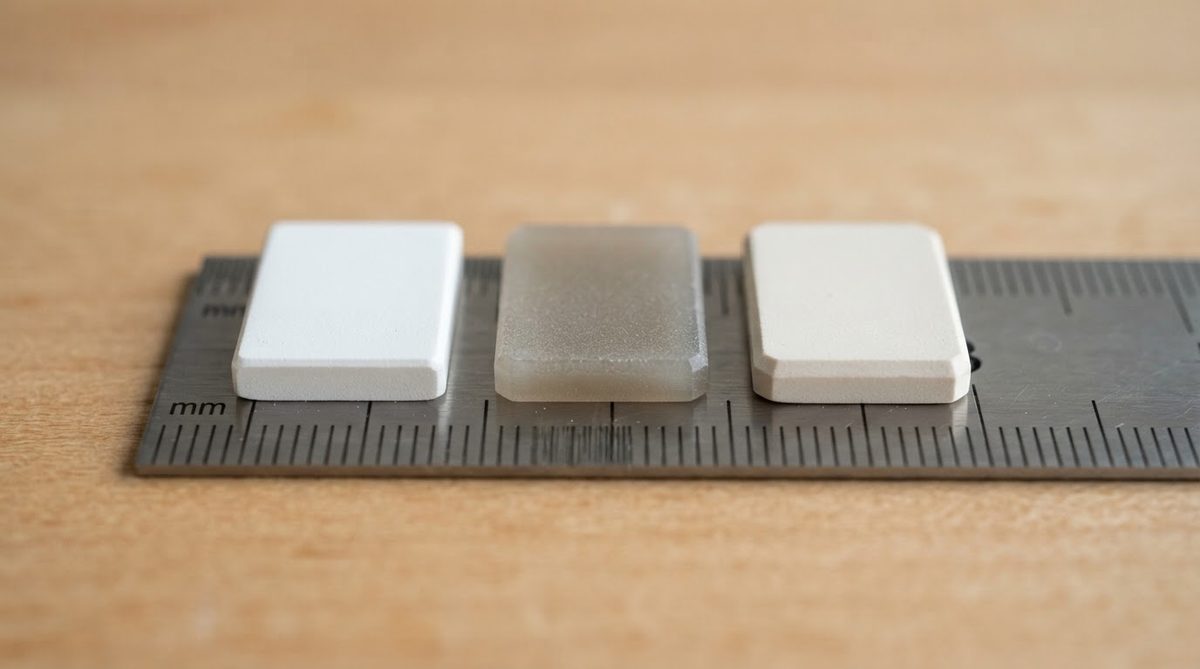
BeO substrates are typically produced by dry-pressing and sintering at 1 500–1 700 °C. Metallization is applied by thin-film sputtering or thick-film screen printing, often with refractory metals (Mo, W, Mo-Mn) followed by nickel and gold plating.
BeO is not processed by LTCC, HTCC co-firing, or DBC bonding in standard industry practice. These combinations do not exist commercially.
When Not to Use Beryllia
For most new designs, aluminum nitride (AlN, 170–200 W/m·K at 25 °C) delivers sufficient thermal performance without the toxicity risk. Choose AlN or 96 % alumina (Al₂O₃, 24–28 W/m·K) unless your thermal budget specifically demands BeO’s conductivity and you can guarantee safe handling throughout the product lifecycle — including end-of-life disposal. Regulatory restrictions on beryllium compounds are tightening in the EU (REACH) and elsewhere, adding long-term supply-chain risk.
FAQ
Is beryllia safe to solder?
Soldering an intact BeO substrate is generally safe because the ceramic surface is not disturbed. The hazard arises from dust generated by cutting, grinding, or breaking the substrate. Always handle BeO with gloves and avoid any mechanical abrasion.
Can beryllia be recycled?
Yes, but only through licensed beryllium recyclers. BeO waste is classified as hazardous in most jurisdictions. Contact your local environmental authority for disposal requirements before discarding any BeO parts.
Why is BeO still used if AlN exists?
BeO’s thermal conductivity (260–300 W/m·K) is roughly 40–50 % higher than AlN (170–200 W/m·K). In legacy military and aerospace designs where thermal margin is critical and handling protocols are already established, replacing a qualified BeO substrate adds requalification cost with no guaranteed benefit.
Does beryllia outgas in vacuum?
Fully sintered BeO has very low outgassing rates and is used in vacuum-tube and satellite applications. Outgassing becomes a concern only with porous or poorly sintered material.