Silicon nitride (Si₃N₄) PCBs typically cost 8–20× more than equivalent 96% alumina boards and 2–5× more than aluminum nitride (AlN). Understanding silicon nitride Si3N4 PCB cost starts with one fact: the raw substrate accounts for 60–75% of the finished board price. Si₃N₄ powder is expensive, sintering requires temperatures above 1,700 °C with long dwell times, and yields on thin substrates (0.32 mm and below) are lower than for alumina or AlN. The exact multiplier depends on substrate thickness, metallization method, panel utilization, and order volume.
Key Takeaways
- Si₃N₄ substrates alone account for 60–75% of the finished PCB cost, compared to 30–40% for alumina boards.
- Active metal brazing (AMB) is the dominant metallization route for Si₃N₄; DBC is possible but less common due to the material’s lower thermal conductivity.
- Fracture toughness of 6–7 MPa·√m (per ASTM C1421) makes Si₃N₄ the only ceramic substrate that reliably survives deep thermal cycling (−55 °C to +250 °C, thousands of cycles).
- The silicon nitride Si3N4 PCB cost premium is justified mainly in high-power modules, traction inverters, and aerospace applications where thermal-cycling reliability outweighs unit price.
- For applications below 150 °C junction temperature with moderate cycling, alumina or AlN is almost always more cost-effective.
Silicon Nitride Si3N4 PCB Cost Breakdown by Element
The table below shows a representative cost split for a 50 mm × 50 mm Si₃N₄ AMB substrate at a quantity of 500 pieces, compared against the same geometry in 96% Al₂O₃ (DBC) and AlN (AMB).
| Cost element | Si₃N₄ AMB | AlN AMB | 96% Al₂O₃ DBC |
|---|---|---|---|
| Raw substrate | 65–75% | 45–55% | 30–40% |
| Metallization (Cu bonding) | 15–20% | 20–25% | 30–35% |
| Patterning and etching | 5–8% | 8–12% | 12–18% |
| Surface finish (Ni/Au or Ag) | 3–5% | 5–8% | 8–12% |
| Testing and inspection | 3–5% | 3–5% | 3–5% |
Typical proportions for comparison only. Actual splits depend on copper thickness, pattern complexity, and finish type. Confirm against your supplier’s quote.
The takeaway is clear: the substrate dominates. Reducing silicon nitride Si3N4 PCB cost means either shrinking the substrate area, increasing panel utilization, or questioning whether you truly need Si₃N₄ at all. For a broader look at what drives ceramic board pricing, see the complete ceramic PCB cost breakdown.
Why Si₃N₄ Substrates Are Expensive to Make
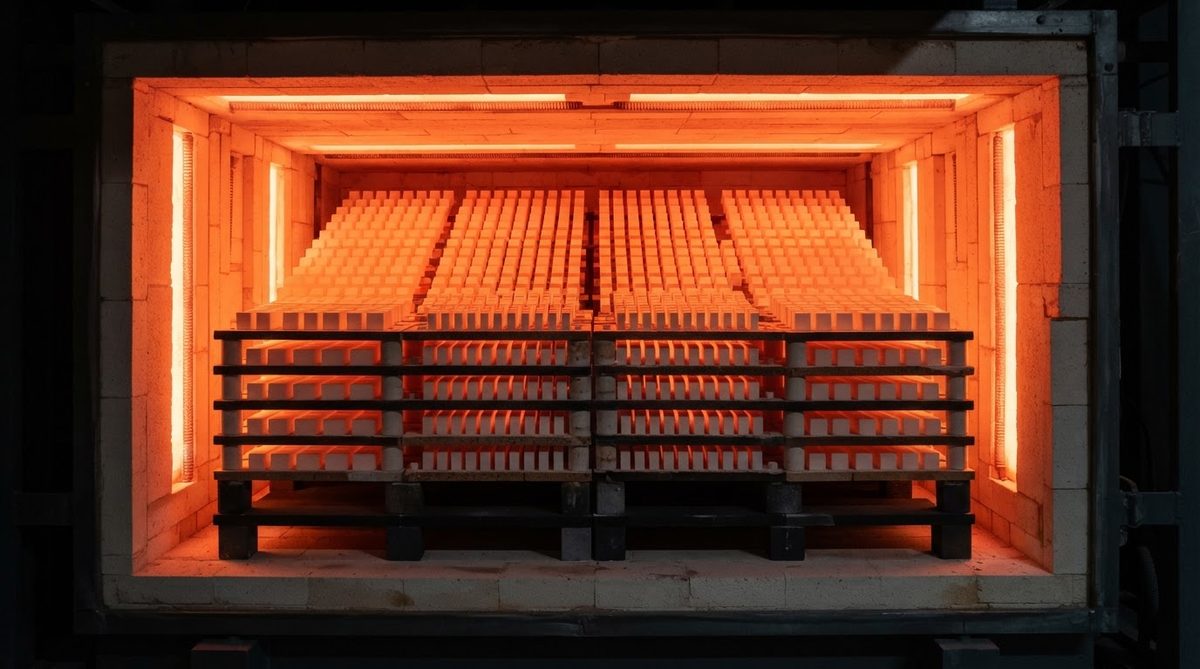
Silicon nitride powder (β-Si₃N₄) requires high-purity synthesis. Sintering uses either gas-pressure sintering (GPS) or hot isostatic pressing (HIP) at 1,750–1,900 °C for 4–12 hours, depending on the target density and grain morphology. Compare that to alumina, which sinters at 1,500–1,650 °C in 1–3 hours with simpler atmosphere control.
Sintering aids—typically Y₂O₃ and MgO—must be precisely dosed. The elongated β-grain microstructure that gives Si₃N₄ its exceptional fracture toughness forms only within a narrow process window. Substrates outside that window are scrapped. Thin substrates (0.25–0.32 mm, the standard for power modules) push yields down further because warpage and micro-cracking rates increase.
Major substrate suppliers—Toshiba Materials, Kyocera, and SRM (formerly Rogers Curamik supply chain)—price Si₃N₄ blanks at roughly $15–$50 per 50 × 50 mm piece at moderate volumes (100–1,000 units), depending on thickness and grade. Alumina blanks in the same size run $1–$3. This raw-material gap is the single largest driver of silicon nitride Si3N4 PCB cost.
Worked Example: Cost Per Power Module Substrate
Assume a half-bridge SiC power module needs a 34 mm × 30 mm substrate, 0.32 mm Si₃N₄ with 0.3 mm Cu on both sides (AMB), Ni/Au finish, at a quantity of 1,000 pieces.
- Substrate blank: Nesting from a 140 × 190 mm panel yields roughly 20 pieces per panel. At a panel cost of ~$280 (Toshiba SN-01 grade, indicative), the substrate cost per piece is ~$14.
- AMB copper bonding: ~$4–$6 per piece at this volume, including braze alloy (AgCuTi) and vacuum furnace time.
- Patterning, etching, finish: ~$2–$3 per piece.
- Test and inspection: ~$1 per piece (ultrasonic scan for delamination, dimensional check).
- Total estimated cost: $21–$24 per substrate.
The same geometry in AlN AMB would run roughly $9–$13. In 96% alumina DBC, roughly $4–$7. The Si₃N₄ version costs about 3× the AlN and 4–5× the alumina option. For details on aluminum nitride pricing, see our silicon nitride pricing and cost factors page.
Si₃N₄ vs. AlN vs. Alumina: Cost-Performance Comparison
| Parameter | Si₃N₄ | AlN | 96% Al₂O₃ | Unit | Source |
|---|---|---|---|---|---|
| Thermal conductivity | 80–90 | 170–200 | 24–28 | W/mK at 25 °C | Kyocera SN series / CoorsTek datasheets |
| Flexural strength | 700–900 | 300–400 | 300–380 | MPa (ASTM C1161) | Toshiba Materials SN-01, CoorsTek ADS-996 |
| Fracture toughness | 6–7 | 2.5–3.5 | 3.5–4.0 | MPa·√m (ASTM C1421) | Kyocera / CeramTec datasheets |
| CTE (25–400 °C) | 2.7–3.2 | 4.5–5.0 | 7.0–8.0 | ppm/K | Maruwa / CoorsTek datasheets |
| Relative substrate cost (indexed) | 10–20× | 3–6× | 1× (baseline) | — | Industry pricing, 2024 |
Typical values for commercially available material, for comparison only. Confirm against the datasheet for your specific grade.
Si₃N₄ has lower thermal conductivity than AlN, so it is not chosen for heat spreading. It is chosen for mechanical toughness and thermal-cycling endurance at extreme temperatures. The elongated grain structure arrests crack propagation, which is why Si₃N₄ AMB substrates survive 3,000+ cycles from −55 °C to +250 °C in qualification tests (per AQG 324 / Infineon power module standards), while AlN DBC substrates typically crack between 500 and 1,500 cycles under the same profile.
When NOT to Use Si₃N₄
Si₃N₄ is overkill—and a waste of budget—in several common scenarios:
- Steady-state thermal loads below 150 °C with mild cycling (ΔT < 80 K): 96% alumina DBC handles this at a fraction of the price.
- High thermal conductivity is the primary need: AlN at 170–200 W/mK outperforms Si₃N₄ at 80–90 W/mK. If your bottleneck is heat spreading rather than cycling survival, AlN is the better spend.
- Low-power RF, sensor, or LED applications: The mechanical toughness of Si₃N₄ adds no value here. Alumina or LTCC substrates serve these applications at far lower cost.
- Prototype budgets under $5,000: Minimum substrate orders from Si₃N₄ suppliers often start at $2,000–$4,000 for blanks alone. If you are validating a concept, prototype on AlN first, then switch to Si₃N₄ for qualification.
Enter your board dimensions, material choice, and quantity below to get a quick comparison of silicon nitride Si3N4 PCB cost against AlN and alumina options.
[pcb_calc type=”pcb-quote”]
How to Reduce Silicon Nitride Si3N4 PCB Cost
You cannot change the price of the raw material, but you can control how much of it you waste and how many process steps you add.
- Maximize panel utilization. Work with your supplier to adjust board outline dimensions by 1–2 mm if it lets you fit one more piece per panel. On a $280 panel, going from 18 to 20 pieces saves $1.50 per board.
- Standardize thickness. 0.32 mm Si₃N₄ is the highest-volume thickness in the market. Specifying 0.25 mm or 0.635 mm may trigger custom sintering runs with longer lead times and higher pricing.
- Simplify copper patterns. Fewer etch steps reduce AMB processing cost. If your design allows, use single-side metallization.
- Combine orders. Si₃N₄ substrate suppliers offer meaningful price breaks at 500+ panels. Coordinate prototype and production buys when possible.
Frequently Asked Questions
How much does a single Si₃N₄ PCB cost?
A finished Si₃N₄ AMB substrate in a typical power-module size (30–50 mm per side) costs roughly $15–$30 per piece at quantities of 500–1,000. Smaller orders or larger boards push the price higher. The raw substrate accounts for most of that cost.
Is Si₃N₄ always more expensive than AlN?
Yes, at every volume level. Si₃N₄ substrates cost 2–5× more than AlN substrates of the same dimensions. The gap narrows slightly at high volumes (10,000+ pieces) because AMB processing costs are similar for both materials, but the substrate price difference never closes.
Can I prototype on AlN and qualify on Si₃N₄?
This is common practice in automotive and industrial power-module development. AlN AMB substrates have similar CTE (4.5–5.0 ppm/K vs. 2.7–3.2 ppm/K for Si₃N₄), so thermal and electrical performance correlates reasonably well. However, you must re-qualify solder joints and thermal-cycling margins because the CTE mismatch with silicon or SiC die changes.
Does thinner Si₃N₄ cost less?
Not necessarily. Thinner substrates (0.25 mm vs. 0.32 mm) use less material per piece but have higher scrap rates during sintering and handling. The net effect is often cost-neutral or even slightly more expensive per good piece.
What minimum order quantity should I expect?
Most suppliers require a minimum substrate panel order of 10–25 panels, which translates to roughly 200–500 finished pieces depending on board size. Some suppliers accept smaller quantities at a significant per-piece premium. Prepare your documentation for an accurate quote before reaching out.